Why Local Concrete Companies Must Address Texas Clay Soil in Tarrant County

Not all concrete jobs are equal — especially in North Texas. Here's what the soil beneath your slab is actually doing, and why it matters more than the concrete itself.

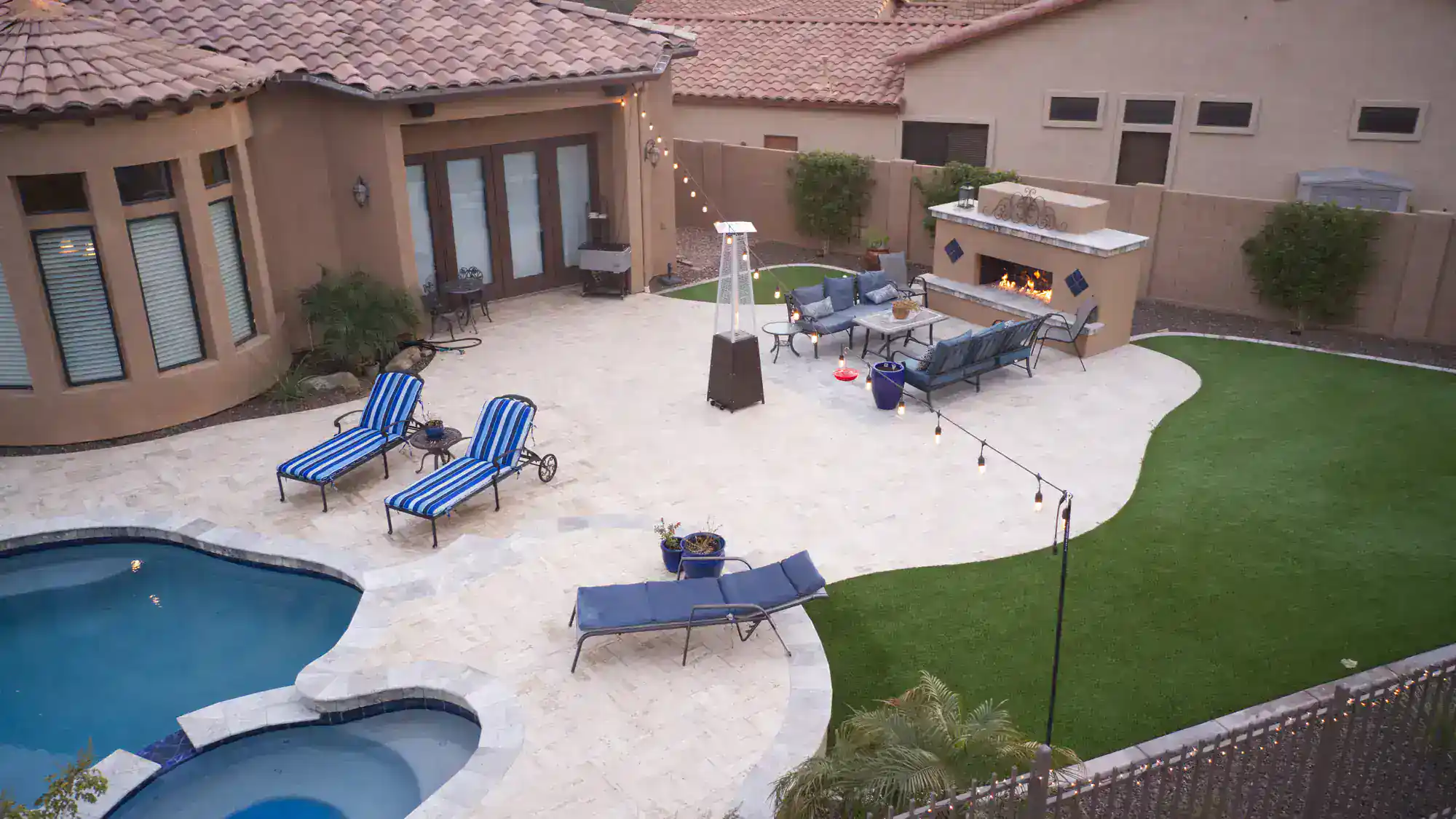
Backyard patio and pool remodel in Tarrant County, Texas with updated outdoor living space

Summary:

In Tarrant County, TX, the ground beneath your driveway or patio is working against it every single season. The clay soil expands when it rains, contracts during drought, and puts constant stress on any concrete slab that wasn’t installed with that movement in mind. This guide breaks down exactly why we approach every project differently in North Texas — and what you should know before hiring anyone to pour a single yard on your property.
Table of contents

If you’ve noticed your driveway starting to crack or your patio shifting after just a few years, the concrete probably isn’t the problem. In Tarrant County, the real culprit is almost always the ground underneath it. North Texas clay soil is some of the most expansive in the entire country, and it moves constantly — swelling when it absorbs moisture, shrinking when it dries out, and pulling concrete in multiple directions at once. Most homeowners don’t find this out until the damage is already done. This page explains what’s actually happening beneath your slab, what proper installation looks like in this specific market, and what to ask before you hire anyone.

How Texas Clay Soil Damages Residential Concrete in Tarrant County

The USDA Natural Resources Conservation Service has identified Tarrant County — along with Wise and Parker Counties — as having some of the highest concentrations of high-plasticity clay in the United States. That’s not a minor regional footnote. It means the soil beneath homes in Fort Worth, Arlington, Haltom City, and Mansfield is in a near-constant state of expansion and contraction, driven by North Texas’s extreme swings between drought and heavy rain.

When different sections of soil beneath a slab absorb or lose moisture at different rates, the concrete gets pushed and pulled unevenly. One section heaves upward during a wet spring, another drops during a summer drought. That uneven movement — called differential movement — is what causes cracking. The concrete itself isn’t failing. The ground beneath it is moving, and the slab has nowhere to go.

This is why two driveways poured in the same neighborhood can look completely different five years later. One contractor prepared for the soil. The other didn’t.

Decorative Concrete Installation in North Texas: What the Soil Means for Your Finish

Stamped and stained concrete has become a popular choice for Tarrant County patios and outdoor living spaces, and for good reason — it looks sharp, holds up well in Texas heat, and adds real visual appeal to a backyard. But decorative concrete installation in North Texas comes with a layer of complexity that plain gray slabs don’t fully expose.

When a decorative slab cracks, the damage is far more visible. A hairline crack through a stamped pattern or a stained surface doesn’t just look bad — it’s expensive to repair in a way that blends with the original finish. That’s why the base preparation underneath decorative concrete matters even more than it does for a standard driveway.

Proper decorative concrete installation in this region starts well below the surface. The existing soil needs to be excavated to the right depth, a compacted gravel base needs to be installed to create a stable, moisture-neutral layer, and the concrete itself should be fiber-reinforced to resist the stress that clay movement generates. Control joints — those intentional cuts you see in finished slabs — need to be placed strategically so that if any movement does occur, the cracking goes exactly where it was planned rather than across the middle of a decorative pattern.

We also use commercial-grade sealers that penetrate deep into the surface rather than sitting on top of it. In a climate where summers regularly hit 100°F and ice storms roll through every few winters, a surface-only sealer wears off quickly and leaves the concrete exposed to moisture intrusion. A deep-penetrating sealer protects the slab from the inside out, which is the only kind of protection that actually lasts in Tarrant County conditions.

If a contractor gives you a quote for decorative concrete without mentioning base preparation, fiber reinforcement, or sealer type — those are gaps worth asking about before you sign anything.

Questions to Ask a Concrete Contractor Before Hiring in Tarrant County

Most homeowners compare concrete quotes by price alone, which makes sense on the surface. But in North Texas, two quotes for the same square footage can represent completely different scopes of work — and the one that skips proper base preparation will almost always be cheaper upfront and far more expensive five years from now.

Here are the questions that actually matter when you’re vetting local concrete companies in this market.

Ask them how they handle the clay soil. A contractor who’s been working in Tarrant County for any real length of time should be able to explain, without hesitation, how they prepare for expansive soil movement. If they look at you blankly or give you a generic answer about “quality concrete,” that’s a red flag.

Ask what’s included in the base preparation. You want to hear specific answers: excavation depth, compacted gravel base, and how they’re accounting for drainage. Skipping the base is the single most common reason concrete fails prematurely in this area.

Ask whether they use fiber-reinforced concrete and where they’ll place control joints. These aren’t optional extras in North Texas — they’re the difference between a slab that handles clay movement and one that cracks unpredictably.

Ask whether they pull permits. In Fort Worth, Arlington, and other Tarrant County municipalities, many concrete projects — especially covered structures and anything near a property line — require permits. Contractors who skip this step are creating a liability problem for you, not just themselves. Unpermitted work can complicate a home sale, affect an insurance claim, and create issues when you want to do future renovations.

Ask for a written estimate with a fixed price. Vague quotes lead to change orders. A contractor who’s confident in their scope should be able to give you a final number in writing before work begins.

Finally, ask for local references — not a general testimonials page, but actual homeowners in Tarrant County you can contact. An established local contractor will have no hesitation providing these.

What Concrete Contractor Residential Work Actually Requires in This Market

Residential concrete contracting in North Texas is not the same as it is in other parts of the country, and it’s not the same as commercial work either. The homes in established Tarrant County neighborhoods — many built between the 1960s and 1990s in areas like Candleridge, Lake Forest, and Kingspoint — have concrete that’s now at or past the end of its useful life. Replacing it correctly the second time requires understanding why it failed the first time.

The short answer, in most cases, is that the original installation didn’t account for the soil. The concrete was poured directly onto inadequately prepared ground, without proper base material, without fiber reinforcement, and without a sealer rated for Texas conditions. It held up for a while, and then the clay did what clay does.

Getting it right the second time means doing the things that were skipped the first time — and making sure the contractor you hire actually knows the difference. We’ve spent over 30 years learning exactly what works in Tarrant County’s soil and climate conditions, and we bring that knowledge to every project we take on.

Why Permits Matter for Concrete Work in Fort Worth and Arlington

Texas does not have a single statewide concrete contractor license. Licensing and permitting are handled at the city or county level, which creates a patchwork of requirements that varies depending on exactly where your property sits. In Fort Worth and Arlington — the two largest cities in Tarrant County — residential building contractors performing structural work must register with the city’s Building Inspection Department. Many concrete projects, particularly covered patios, porch additions, and work near property lines, require permits before a single shovel touches the ground.

This matters for a few reasons that go beyond following the rules. Permitted work is inspected. That inspection process is one of the few external checks on whether a contractor is actually doing the job correctly. When permits are skipped, there’s no inspection, no accountability, and no record that the work was done — which creates real problems when you go to sell your home, file an insurance claim, or pull a permit for a future project.

Some contractors skip permits because it saves time and avoids scrutiny. That’s a benefit to them, not to you. When we take on a concrete project, we handle all permit applications and manage every required inspection as part of the job. You don’t have to track down forms, make calls to the city, or wonder whether your new patio is going to cause problems down the road. It’s included because it’s the right way to do the work — and because we’ve been navigating Tarrant County’s permitting process for over 30 years.

If a contractor tells you a permit isn’t required and you’re not sure, it’s worth a quick call to your city’s building department to verify. Most municipalities have online resources that can tell you exactly what triggers a permit requirement for your project type and size.

How to Compare Local Concrete Companies Without Getting Burned on Price

The most common mistake homeowners make when getting concrete quotes is treating them like apples-to-apples comparisons. Two quotes for a 600-square-foot driveway replacement in Arlington can be thousands of dollars apart — and the lower one almost never includes everything the higher one does.

The gap usually lives in the base preparation. Proper excavation, hauling away the old material, compacting a gravel base, and installing fiber-reinforced concrete with correctly spaced control joints takes more time and costs more than simply pouring concrete over whatever’s already there. A contractor who skips those steps can offer a lower number and still make money. You won’t know what was skipped until the slab starts cracking.

This is why the questions in the earlier section matter so much. When you ask specifically about base depth, compaction method, reinforcement type, and sealer grade, you’re forcing every contractor to show you exactly what they’re quoting. The ones who are doing it right will answer those questions clearly and confidently. The ones who are cutting corners will either deflect or give vague answers.

Price is a real factor — no one is suggesting you ignore it. But in a market where clay soil is actively working against your concrete from the day it’s poured, the cheapest installation is rarely the most affordable one over time. A slab that lasts 30 years costs less per year than one that needs to be replaced in seven.

We offer fixed-price estimates in writing before any work begins. What’s in the estimate is what you pay — no change orders, no surprise costs when the project is wrapping up. That’s just how we think the process should work, and it’s how we’ve operated for more than three decades in Tarrant County.

Choosing the Right Concrete Contractor in Tarrant County, TX

The bottom line is straightforward: concrete in North Texas lives or dies by what happens before the pour. The soil is the variable that most contractors either don’t understand or choose to work around, and homeowners end up paying for that gap later.

If you’re replacing a cracked driveway, adding a patio, or planning any concrete work on your property in the Fort Worth or Arlington area, the contractor you choose should be able to speak specifically to clay soil preparation, not just concrete in general. That local knowledge is the thing that separates a 30-year slab from one you’ll be replacing again in a few years.

We’ve been doing this work in Tarrant County for over 30 years. If you’re ready to talk through your project, we’re happy to take a look and give you a written estimate with no surprises attached.
Share:

Summary:

In Tarrant County, TX, the ground beneath your driveway or patio is working against it every single season. The clay soil expands when it rains, contracts during drought, and puts constant stress on any concrete slab that wasn’t installed with that movement in mind. This guide breaks down exactly why we approach every project differently in North Texas — and what you should know before hiring anyone to pour a single yard on your property.
Table of contents

If you’ve noticed your driveway starting to crack or your patio shifting after just a few years, the concrete probably isn’t the problem. In Tarrant County, the real culprit is almost always the ground underneath it. North Texas clay soil is some of the most expansive in the entire country, and it moves constantly — swelling when it absorbs moisture, shrinking when it dries out, and pulling concrete in multiple directions at once. Most homeowners don’t find this out until the damage is already done. This page explains what’s actually happening beneath your slab, what proper installation looks like in this specific market, and what to ask before you hire anyone.

How Texas Clay Soil Damages Residential Concrete in Tarrant County

The USDA Natural Resources Conservation Service has identified Tarrant County — along with Wise and Parker Counties — as having some of the highest concentrations of high-plasticity clay in the United States. That’s not a minor regional footnote. It means the soil beneath homes in Fort Worth, Arlington, Haltom City, and Mansfield is in a near-constant state of expansion and contraction, driven by North Texas’s extreme swings between drought and heavy rain.

When different sections of soil beneath a slab absorb or lose moisture at different rates, the concrete gets pushed and pulled unevenly. One section heaves upward during a wet spring, another drops during a summer drought. That uneven movement — called differential movement — is what causes cracking. The concrete itself isn’t failing. The ground beneath it is moving, and the slab has nowhere to go.

This is why two driveways poured in the same neighborhood can look completely different five years later. One contractor prepared for the soil. The other didn’t.

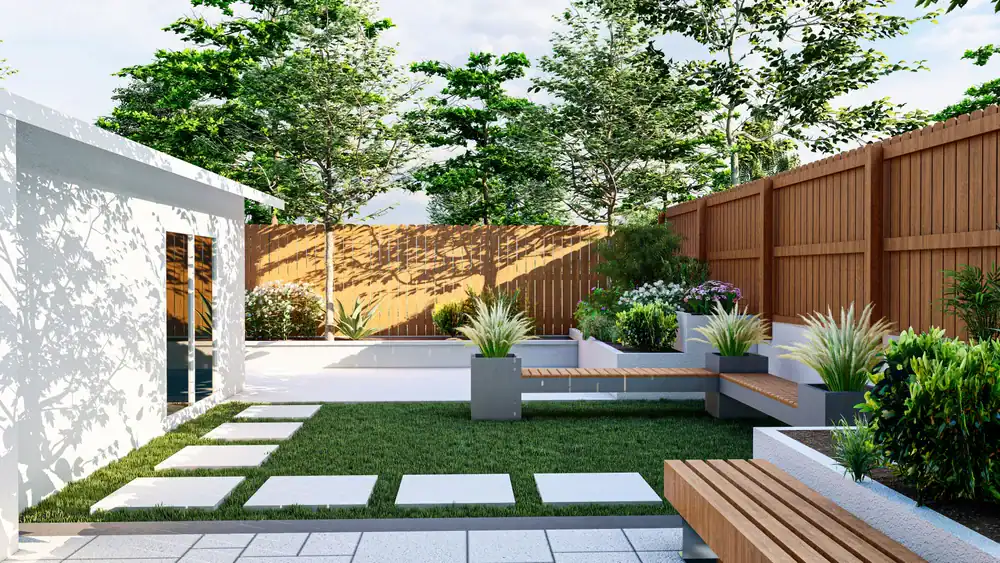
Modern backyard garden with green grass, stepping stones, wooden benches, raised planters with various shrubs, a wooden fence, and tall trees in the background. Sunlight casts shadows across the area.

Decorative Concrete Installation in North Texas: What the Soil Means for Your Finish

Stamped and stained concrete has become a popular choice for Tarrant County patios and outdoor living spaces, and for good reason — it looks sharp, holds up well in Texas heat, and adds real visual appeal to a backyard. But decorative concrete installation in North Texas comes with a layer of complexity that plain gray slabs don’t fully expose.

When a decorative slab cracks, the damage is far more visible. A hairline crack through a stamped pattern or a stained surface doesn’t just look bad — it’s expensive to repair in a way that blends with the original finish. That’s why the base preparation underneath decorative concrete matters even more than it does for a standard driveway.

Proper decorative concrete installation in this region starts well below the surface. The existing soil needs to be excavated to the right depth, a compacted gravel base needs to be installed to create a stable, moisture-neutral layer, and the concrete itself should be fiber-reinforced to resist the stress that clay movement generates. Control joints — those intentional cuts you see in finished slabs — need to be placed strategically so that if any movement does occur, the cracking goes exactly where it was planned rather than across the middle of a decorative pattern.

We also use commercial-grade sealers that penetrate deep into the surface rather than sitting on top of it. In a climate where summers regularly hit 100°F and ice storms roll through every few winters, a surface-only sealer wears off quickly and leaves the concrete exposed to moisture intrusion. A deep-penetrating sealer protects the slab from the inside out, which is the only kind of protection that actually lasts in Tarrant County conditions.

If a contractor gives you a quote for decorative concrete without mentioning base preparation, fiber reinforcement, or sealer type — those are gaps worth asking about before you sign anything.

Questions to Ask a Concrete Contractor Before Hiring in Tarrant County

Most homeowners compare concrete quotes by price alone, which makes sense on the surface. But in North Texas, two quotes for the same square footage can represent completely different scopes of work — and the one that skips proper base preparation will almost always be cheaper upfront and far more expensive five years from now.

Here are the questions that actually matter when you’re vetting local concrete companies in this market.

Ask them how they handle the clay soil. A contractor who’s been working in Tarrant County for any real length of time should be able to explain, without hesitation, how they prepare for expansive soil movement. If they look at you blankly or give you a generic answer about “quality concrete,” that’s a red flag.

Ask what’s included in the base preparation. You want to hear specific answers: excavation depth, compacted gravel base, and how they’re accounting for drainage. Skipping the base is the single most common reason concrete fails prematurely in this area.

Ask whether they use fiber-reinforced concrete and where they’ll place control joints. These aren’t optional extras in North Texas — they’re the difference between a slab that handles clay movement and one that cracks unpredictably.

Ask whether they pull permits. In Fort Worth, Arlington, and other Tarrant County municipalities, many concrete projects — especially covered structures and anything near a property line — require permits. Contractors who skip this step are creating a liability problem for you, not just themselves. Unpermitted work can complicate a home sale, affect an insurance claim, and create issues when you want to do future renovations.

Ask for a written estimate with a fixed price. Vague quotes lead to change orders. A contractor who’s confident in their scope should be able to give you a final number in writing before work begins.

Finally, ask for local references — not a general testimonials page, but actual homeowners in Tarrant County you can contact. An established local contractor will have no hesitation providing these.

Want live answers?

Connect with a A Plus Home Remodel expert for fast, friendly support.

What Concrete Contractor Residential Work Actually Requires in This Market

Residential concrete contracting in North Texas is not the same as it is in other parts of the country, and it’s not the same as commercial work either. The homes in established Tarrant County neighborhoods — many built between the 1960s and 1990s in areas like Candleridge, Lake Forest, and Kingspoint — have concrete that’s now at or past the end of its useful life. Replacing it correctly the second time requires understanding why it failed the first time.

The short answer, in most cases, is that the original installation didn’t account for the soil. The concrete was poured directly onto inadequately prepared ground, without proper base material, without fiber reinforcement, and without a sealer rated for Texas conditions. It held up for a while, and then the clay did what clay does.

Getting it right the second time means doing the things that were skipped the first time — and making sure the contractor you hire actually knows the difference. We’ve spent over 30 years learning exactly what works in Tarrant County’s soil and climate conditions, and we bring that knowledge to every project we take on.

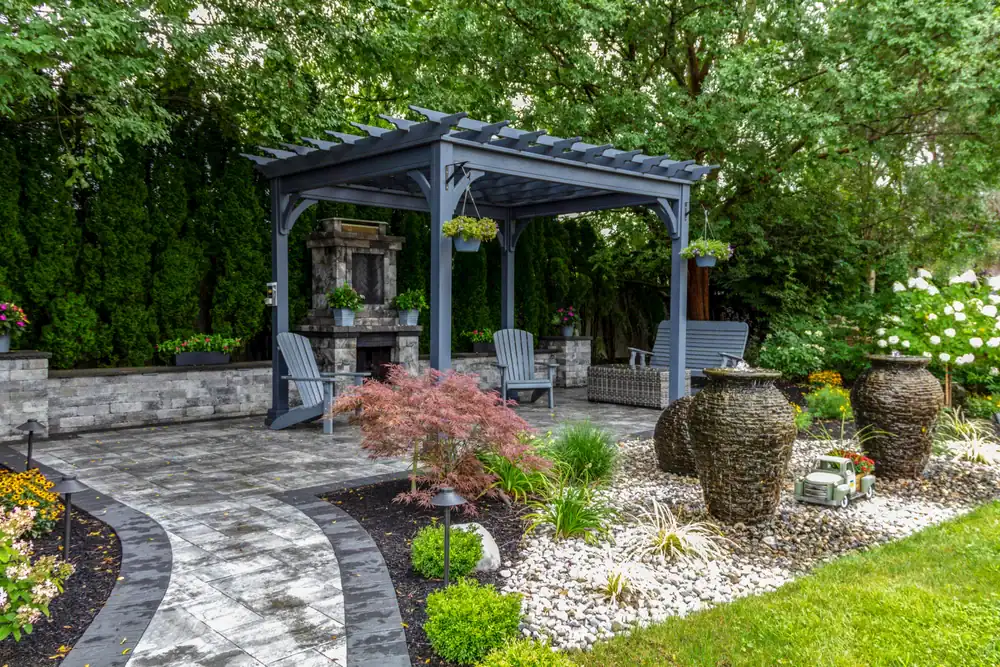
A landscaped backyard features a gray pergola with outdoor chairs on a stone patio, surrounded by lush greenery, bushes, flowers, and two large decorative water fountains on white gravel.

Why Permits Matter for Concrete Work in Fort Worth and Arlington

Texas does not have a single statewide concrete contractor license. Licensing and permitting are handled at the city or county level, which creates a patchwork of requirements that varies depending on exactly where your property sits. In Fort Worth and Arlington — the two largest cities in Tarrant County — residential building contractors performing structural work must register with the city’s Building Inspection Department. Many concrete projects, particularly covered patios, porch additions, and work near property lines, require permits before a single shovel touches the ground.

This matters for a few reasons that go beyond following the rules. Permitted work is inspected. That inspection process is one of the few external checks on whether a contractor is actually doing the job correctly. When permits are skipped, there’s no inspection, no accountability, and no record that the work was done — which creates real problems when you go to sell your home, file an insurance claim, or pull a permit for a future project.

Some contractors skip permits because it saves time and avoids scrutiny. That’s a benefit to them, not to you. When we take on a concrete project, we handle all permit applications and manage every required inspection as part of the job. You don’t have to track down forms, make calls to the city, or wonder whether your new patio is going to cause problems down the road. It’s included because it’s the right way to do the work — and because we’ve been navigating Tarrant County’s permitting process for over 30 years.

If a contractor tells you a permit isn’t required and you’re not sure, it’s worth a quick call to your city’s building department to verify. Most municipalities have online resources that can tell you exactly what triggers a permit requirement for your project type and size.

How to Compare Local Concrete Companies Without Getting Burned on Price

The most common mistake homeowners make when getting concrete quotes is treating them like apples-to-apples comparisons. Two quotes for a 600-square-foot driveway replacement in Arlington can be thousands of dollars apart — and the lower one almost never includes everything the higher one does.

The gap usually lives in the base preparation. Proper excavation, hauling away the old material, compacting a gravel base, and installing fiber-reinforced concrete with correctly spaced control joints takes more time and costs more than simply pouring concrete over whatever’s already there. A contractor who skips those steps can offer a lower number and still make money. You won’t know what was skipped until the slab starts cracking.

This is why the questions in the earlier section matter so much. When you ask specifically about base depth, compaction method, reinforcement type, and sealer grade, you’re forcing every contractor to show you exactly what they’re quoting. The ones who are doing it right will answer those questions clearly and confidently. The ones who are cutting corners will either deflect or give vague answers.

Price is a real factor — no one is suggesting you ignore it. But in a market where clay soil is actively working against your concrete from the day it’s poured, the cheapest installation is rarely the most affordable one over time. A slab that lasts 30 years costs less per year than one that needs to be replaced in seven.

We offer fixed-price estimates in writing before any work begins. What’s in the estimate is what you pay — no change orders, no surprise costs when the project is wrapping up. That’s just how we think the process should work, and it’s how we’ve operated for more than three decades in Tarrant County.

Choosing the Right Concrete Contractor in Tarrant County, TX

The bottom line is straightforward: concrete in North Texas lives or dies by what happens before the pour. The soil is the variable that most contractors either don’t understand or choose to work around, and homeowners end up paying for that gap later.

If you’re replacing a cracked driveway, adding a patio, or planning any concrete work on your property in the Fort Worth or Arlington area, the contractor you choose should be able to speak specifically to clay soil preparation, not just concrete in general. That local knowledge is the thing that separates a 30-year slab from one you’ll be replacing again in a few years.

We’ve been doing this work in Tarrant County for over 30 years. If you’re ready to talk through your project, we’re happy to take a look and give you a written estimate with no surprises attached.

Article details:

Share: