

Contractor Change Orders Exposed: How Costs Quietly Escalate

Change orders are how a $28,000 remodel quietly becomes a $41,000 one. Here's what's really going on — and how to protect yourself before you sign anything.

A Plus Arlington Texas home exterior with clean curb appeal and professional local service branding

Summary:

Most homeowners don’t think about contractor change orders until they’re already mid-project and staring at a bill that looks nothing like the estimate they signed. Understanding what causes them — and what separates a contractor who uses them as a profit tool from one who doesn’t — can save you thousands. This post breaks down how change orders work, why they happen so often, and what a fixed-price estimate actually means for your budget. If you’re planning a remodel in Tarrant County or anywhere in the DFW area, this is worth reading before you hire anyone.
Table of contents

You get an estimate. It sounds reasonable. You sign the contract, demo starts, and then — somewhere around week two — you get the call. “We found something behind the wall.” Or: “The materials you picked aren’t covered in the original quote.” Or simply: “We need to talk about some additional costs.”

That’s a change order. And for a lot of homeowners, it’s the moment a renovation stops feeling exciting and starts feeling like a trap.

This page explains exactly what contractor change orders are, why they happen more than they should, and — most importantly — how to tell the difference between a contractor who’s being straight with you and one who isn’t.

What Are Contractor Change Orders and Why Do They Keep Happening?

A change order is a formal modification to your original construction contract. It adjusts the scope of work, the price, or both — and it requires your signature before any additional work is supposed to proceed. In theory, that sounds reasonable. In practice, it’s where a lot of remodeling budgets fall apart.

Research from construction industry analysts shows that only 31% of construction jobs finish within 10% of their original budget. Change orders are one of the primary reasons. On some projects, they add 10 to 25% to the final cost.

The frustrating part isn’t that change orders exist. Sometimes they’re legitimate. What’s frustrating is that many of them aren’t — they’re the result of a contractor who under-bid the job to win it, then used change orders to make their margin back once you were already committed.

What Causes Most Change Orders in Home Remodeling?

There are really two categories of change orders: the ones that are genuinely unavoidable and the ones that a better contractor would have caught before the project started.

Genuinely unforeseen conditions do happen. In Tarrant County specifically, homes built in the 1970s through the 1990s — and there are a lot of them in Arlington, Fort Worth, and Bedford — often have aging galvanized pipes, outdated electrical panels, or asbestos-containing materials in popcorn ceilings and older floor tile. Texas’s expansive clay soils also cause foundation movement over time, and that can show up unexpectedly when walls come down. We assess for these things before writing an estimate. We won’t always find everything, but we find most of it — and we price for it upfront rather than turning it into a surprise bill later.

Then there are the change orders that shouldn’t happen. These come from contractors who write vague scopes of work, use “allowances” instead of firm pricing, skip the pre-construction site walkthrough, or simply don’t plan well enough before demo day. An allowance in your contract is a placeholder — it says “we budgeted X for materials, but if your actual selection costs more, you pay the difference.” That sounds fine until you realize the allowance was set low on purpose to make the estimate look competitive.

Design changes are another major driver. Industry data suggests that 56.5% of cost overruns come from design changes — meaning someone made a decision mid-project that required rework. This is where pre-construction visualization matters enormously. When you can see your remodel in detail before anything is torn out, you make your design decisions once — not three times at increasing cost.

The subcontractor chain is also worth understanding. When a general contractor subs out portions of the work, each subcontractor brings their own schedule, their own margin, and their own potential for “I found something you need to pay for.” That’s not always bad faith — it’s just the structural reality of how change order risk multiplies when more parties are involved.

How to Read a Remodeling Estimate Before You Sign Anything

The estimate is where most homeowners get into trouble — not because they’re not paying attention, but because they don’t know what to look for. A number on a page feels like a commitment. But depending on how that estimate is written, it might be anything but.

The first thing to look for is specificity. A solid estimate names materials by product, brand, or specification — not just “tile” or “countertops.” When a line item says “allowance: $1,500 for fixtures,” that means the contractor is guessing, and you’ll pay the difference. When it says “Moen Align faucet, brushed nickel, model #XYZ,” that’s a real number you can hold someone to.

The second thing is scope clarity. What exactly is included? Does demo include disposal, or is that extra? Are permits included, or will those show up as an add-on? Does the quote cover the full project from start to finish, or just the labor portion? Contractors who leave these things vague aren’t necessarily being dishonest — but the ambiguity tends to resolve in their favor, not yours.

The third thing — and this is the one most homeowners miss — is whether the estimate is a fixed price or a cost-plus arrangement. A fixed-price contract means the number you sign is the number you pay, barring changes you request. A cost-plus contract means the contractor is billing you for their actual costs plus a markup, and the final number is whatever it turns out to be. For residential remodeling, a fixed-price contract is almost always the better option for the homeowner.

If the bid is significantly lower than the others you received, ask why. Low bids aren’t always a gift. Sometimes they reflect a contractor who plans to win the job on price and make their margin back through change orders once you’re too far in to walk away. Three bids is a good rule. Understanding why they differ is a better one.

How Remodeling Companies in Tarrant County Handle Estimates Differently

Not every contractor operates the same way. The difference between a remodeling company that hands you a fixed price and stands behind it versus one that treats the estimate as a starting point shows up in how they approach the work before construction ever begins.

We avoid change orders by completing thorough pre-construction assessments, finalizing all material selections before demo starts, pulling permits on every project, and keeping one person accountable for the outcome from start to finish. These aren’t complicated ideas — but they require discipline and experience to execute.

In a market like DFW, where contractor demand has grown alongside the region’s population, the gap between contractors who operate this way and those who don’t is wider than most homeowners realize.

What Should a Bathroom Remodel Estimate Include?

A bathroom remodel estimate that’s worth signing should leave very little to the imagination. That means the scope covers demolition and disposal, waterproofing (which is non-negotiable in a wet area and often where corners get cut), tile installation with specified materials and dimensions, fixture installation with named products, vanity and countertop work with specified materials, and any plumbing or electrical work required by the new layout.

If the estimate doesn’t name the tile, it’s an allowance. If it doesn’t specify the waterproofing membrane, that’s a red flag — waterproofing failures are expensive to fix and almost always generate callbacks or change orders down the line. If permits aren’t mentioned, ask directly whether they’re included. In Fort Worth and Arlington, permits are required for most remodeling work. A contractor who skips them is saving time in the short run and creating legal and financial problems for you at resale.

The question of subcontractors matters here too. A bathroom remodel involves plumbing, electrical, tile, and finish work — all of which can be handled by an in-house crew or farmed out to multiple subs. When multiple subcontractors are involved, the coordination gaps between them are where change orders tend to emerge. One sub finishes the rough plumbing and leaves before the next sub arrives, and suddenly there’s a discrepancy in the plan that “wasn’t in the original scope.” With a single in-house crew working under one project manager, that kind of miscommunication doesn’t have room to happen.

For Tarrant County homeowners, it’s also worth noting that Texas humidity is not forgiving of builder-grade materials in bathrooms. Grout that isn’t sealed properly, fixtures that aren’t rated for daily use, or tile that was installed without proper substrate preparation — these are the things that fail within a few years and require costly remediation. A detailed estimate that specifies premium materials isn’t just about aesthetics. It’s about not paying for the same bathroom twice.

What Should a Kitchen Remodel Estimate Include?

Kitchen remodel estimates carry the highest change order risk of any residential project, largely because of the number of moving parts involved: cabinetry, countertops, appliances, plumbing, electrical, lighting, flooring, and sometimes structural changes like removing walls. Each of those categories is an opportunity for an allowance, a vague line item, or a “we’ll figure that out when we get there” placeholder that becomes a change order later.

A solid kitchen remodel estimate names the cabinet brand and line, specifies the countertop material and edge profile, lists the appliances by model number if they’re being supplied by the contractor, and details the electrical and plumbing work required. If the layout is changing — a wall coming out, an island being added, a sink moving to a new location — the permit costs and structural work should be included in the estimate, not treated as a surprise after demo reveals what’s in the wall.

The digital design piece is particularly valuable for kitchens. A kitchen renovation is one of the most visually complex projects a homeowner can undertake, and it’s also the one where mid-project design changes are most common. “I didn’t realize the upper cabinets would feel that heavy” or “the island is bigger than I pictured” — these are the kinds of realizations that generate change orders when they happen during construction. When you can walk through a detailed digital rendering of your finished kitchen before demo starts, those decisions get made once, at no additional cost.

For homes in established Tarrant County neighborhoods — particularly in Arlington and Fort Worth where a significant portion of the housing stock was built before 1990 — kitchen remodels frequently uncover outdated wiring that isn’t up to current code for the electrical load a modern kitchen requires. A contractor with 30 years of experience in this market knows to look for that before writing the estimate, not after the walls are open. That’s the difference between a project that finishes on budget and one that ends with a $3,500 electrical change order three weeks in.

How to Choose a Contractor Who Won't Surprise You With Change Orders

The short version: look for fixed pricing in writing, an in-house crew, permits pulled on every project, and a contractor who’s been doing this work in your specific market long enough to know what’s behind the walls before they open them.

Change orders aren’t inevitable. They’re common because a lot of contractors have built their business model around them — low bids, vague contracts, and a steady stream of “additional costs” once the homeowner is committed. A contractor who gives you a real fixed price, completes a thorough pre-construction assessment, and handles everything with one accountable crew doesn’t need to operate that way.

If you’re planning a remodel in Tarrant County — whether it’s a kitchen in Arlington, a bathroom in Keller, or a patio in Bedford — we’ve been doing this work in this market for over 30 years. Reach out for an estimate, and you’ll get a real number you can plan around.

Share:

Summary:

Most homeowners don’t think about contractor change orders until they’re already mid-project and staring at a bill that looks nothing like the estimate they signed. Understanding what causes them — and what separates a contractor who uses them as a profit tool from one who doesn’t — can save you thousands. This post breaks down how change orders work, why they happen so often, and what a fixed-price estimate actually means for your budget. If you’re planning a remodel in Tarrant County or anywhere in the DFW area, this is worth reading before you hire anyone.
Table of contents

You get an estimate. It sounds reasonable. You sign the contract, demo starts, and then — somewhere around week two — you get the call. “We found something behind the wall.” Or: “The materials you picked aren’t covered in the original quote.” Or simply: “We need to talk about some additional costs.”

That’s a change order. And for a lot of homeowners, it’s the moment a renovation stops feeling exciting and starts feeling like a trap.

This page explains exactly what contractor change orders are, why they happen more than they should, and — most importantly — how to tell the difference between a contractor who’s being straight with you and one who isn’t.

What Are Contractor Change Orders and Why Do They Keep Happening?

A change order is a formal modification to your original construction contract. It adjusts the scope of work, the price, or both — and it requires your signature before any additional work is supposed to proceed. In theory, that sounds reasonable. In practice, it’s where a lot of remodeling budgets fall apart.

Research from construction industry analysts shows that only 31% of construction jobs finish within 10% of their original budget. Change orders are one of the primary reasons. On some projects, they add 10 to 25% to the final cost.

The frustrating part isn’t that change orders exist. Sometimes they’re legitimate. What’s frustrating is that many of them aren’t — they’re the result of a contractor who under-bid the job to win it, then used change orders to make their margin back once you were already committed.

A woman in casual clothes sits on a ladder in an unfinished room, studying architectural blueprints. The walls behind her are partially drywalled, suggesting ongoing renovation or construction work.

What Causes Most Change Orders in Home Remodeling?

There are really two categories of change orders: the ones that are genuinely unavoidable and the ones that a better contractor would have caught before the project started.

Genuinely unforeseen conditions do happen. In Tarrant County specifically, homes built in the 1970s through the 1990s — and there are a lot of them in Arlington, Fort Worth, and Bedford — often have aging galvanized pipes, outdated electrical panels, or asbestos-containing materials in popcorn ceilings and older floor tile. Texas’s expansive clay soils also cause foundation movement over time, and that can show up unexpectedly when walls come down. We assess for these things before writing an estimate. We won’t always find everything, but we find most of it — and we price for it upfront rather than turning it into a surprise bill later.

Then there are the change orders that shouldn’t happen. These come from contractors who write vague scopes of work, use “allowances” instead of firm pricing, skip the pre-construction site walkthrough, or simply don’t plan well enough before demo day. An allowance in your contract is a placeholder — it says “we budgeted X for materials, but if your actual selection costs more, you pay the difference.” That sounds fine until you realize the allowance was set low on purpose to make the estimate look competitive.

Design changes are another major driver. Industry data suggests that 56.5% of cost overruns come from design changes — meaning someone made a decision mid-project that required rework. This is where pre-construction visualization matters enormously. When you can see your remodel in detail before anything is torn out, you make your design decisions once — not three times at increasing cost.

The subcontractor chain is also worth understanding. When a general contractor subs out portions of the work, each subcontractor brings their own schedule, their own margin, and their own potential for “I found something you need to pay for.” That’s not always bad faith — it’s just the structural reality of how change order risk multiplies when more parties are involved.

How to Read a Remodeling Estimate Before You Sign Anything

The estimate is where most homeowners get into trouble — not because they’re not paying attention, but because they don’t know what to look for. A number on a page feels like a commitment. But depending on how that estimate is written, it might be anything but.

The first thing to look for is specificity. A solid estimate names materials by product, brand, or specification — not just “tile” or “countertops.” When a line item says “allowance: $1,500 for fixtures,” that means the contractor is guessing, and you’ll pay the difference. When it says “Moen Align faucet, brushed nickel, model #XYZ,” that’s a real number you can hold someone to.

The second thing is scope clarity. What exactly is included? Does demo include disposal, or is that extra? Are permits included, or will those show up as an add-on? Does the quote cover the full project from start to finish, or just the labor portion? Contractors who leave these things vague aren’t necessarily being dishonest — but the ambiguity tends to resolve in their favor, not yours.

The third thing — and this is the one most homeowners miss — is whether the estimate is a fixed price or a cost-plus arrangement. A fixed-price contract means the number you sign is the number you pay, barring changes you request. A cost-plus contract means the contractor is billing you for their actual costs plus a markup, and the final number is whatever it turns out to be. For residential remodeling, a fixed-price contract is almost always the better option for the homeowner.

If the bid is significantly lower than the others you received, ask why. Low bids aren’t always a gift. Sometimes they reflect a contractor who plans to win the job on price and make their margin back through change orders once you’re too far in to walk away. Three bids is a good rule. Understanding why they differ is a better one.

Want live answers?

Connect with a A Plus Home Remodel expert for fast, friendly support.

How Remodeling Companies in Tarrant County Handle Estimates Differently

Not every contractor operates the same way. The difference between a remodeling company that hands you a fixed price and stands behind it versus one that treats the estimate as a starting point shows up in how they approach the work before construction ever begins.

We avoid change orders by completing thorough pre-construction assessments, finalizing all material selections before demo starts, pulling permits on every project, and keeping one person accountable for the outcome from start to finish. These aren’t complicated ideas — but they require discipline and experience to execute.

In a market like DFW, where contractor demand has grown alongside the region’s population, the gap between contractors who operate this way and those who don’t is wider than most homeowners realize.

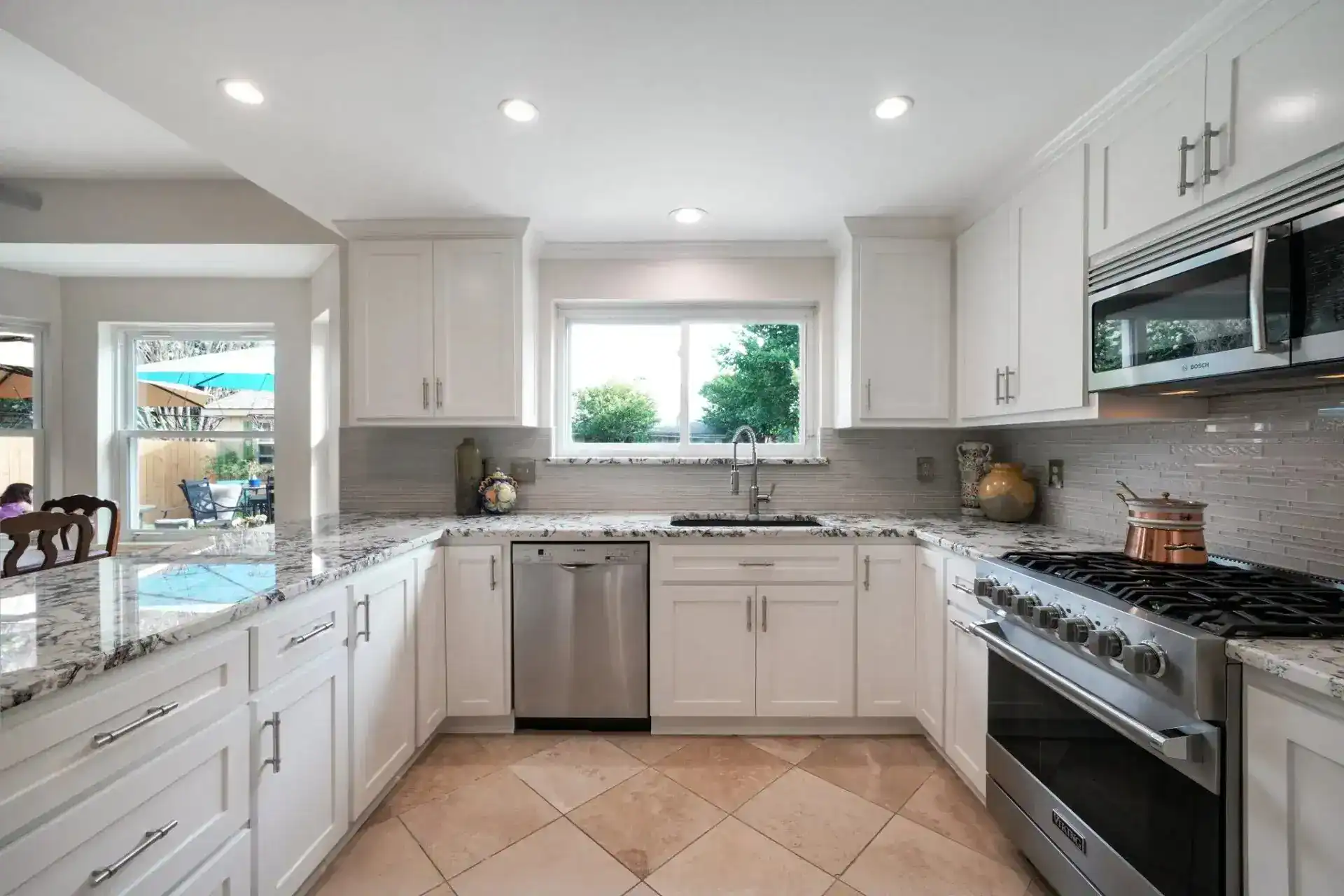
Arlington kitchen remodeling project with updated cabinets, countertops, lighting, and modern home design.

What Should a Bathroom Remodel Estimate Include?

A bathroom remodel estimate that’s worth signing should leave very little to the imagination. That means the scope covers demolition and disposal, waterproofing (which is non-negotiable in a wet area and often where corners get cut), tile installation with specified materials and dimensions, fixture installation with named products, vanity and countertop work with specified materials, and any plumbing or electrical work required by the new layout.

If the estimate doesn’t name the tile, it’s an allowance. If it doesn’t specify the waterproofing membrane, that’s a red flag — waterproofing failures are expensive to fix and almost always generate callbacks or change orders down the line. If permits aren’t mentioned, ask directly whether they’re included. In Fort Worth and Arlington, permits are required for most remodeling work. A contractor who skips them is saving time in the short run and creating legal and financial problems for you at resale.

The question of subcontractors matters here too. A bathroom remodel involves plumbing, electrical, tile, and finish work — all of which can be handled by an in-house crew or farmed out to multiple subs. When multiple subcontractors are involved, the coordination gaps between them are where change orders tend to emerge. One sub finishes the rough plumbing and leaves before the next sub arrives, and suddenly there’s a discrepancy in the plan that “wasn’t in the original scope.” With a single in-house crew working under one project manager, that kind of miscommunication doesn’t have room to happen.

For Tarrant County homeowners, it’s also worth noting that Texas humidity is not forgiving of builder-grade materials in bathrooms. Grout that isn’t sealed properly, fixtures that aren’t rated for daily use, or tile that was installed without proper substrate preparation — these are the things that fail within a few years and require costly remediation. A detailed estimate that specifies premium materials isn’t just about aesthetics. It’s about not paying for the same bathroom twice.

What Should a Kitchen Remodel Estimate Include?

Kitchen remodel estimates carry the highest change order risk of any residential project, largely because of the number of moving parts involved: cabinetry, countertops, appliances, plumbing, electrical, lighting, flooring, and sometimes structural changes like removing walls. Each of those categories is an opportunity for an allowance, a vague line item, or a “we’ll figure that out when we get there” placeholder that becomes a change order later.

A solid kitchen remodel estimate names the cabinet brand and line, specifies the countertop material and edge profile, lists the appliances by model number if they’re being supplied by the contractor, and details the electrical and plumbing work required. If the layout is changing — a wall coming out, an island being added, a sink moving to a new location — the permit costs and structural work should be included in the estimate, not treated as a surprise after demo reveals what’s in the wall.

The digital design piece is particularly valuable for kitchens. A kitchen renovation is one of the most visually complex projects a homeowner can undertake, and it’s also the one where mid-project design changes are most common. “I didn’t realize the upper cabinets would feel that heavy” or “the island is bigger than I pictured” — these are the kinds of realizations that generate change orders when they happen during construction. When you can walk through a detailed digital rendering of your finished kitchen before demo starts, those decisions get made once, at no additional cost.

For homes in established Tarrant County neighborhoods — particularly in Arlington and Fort Worth where a significant portion of the housing stock was built before 1990 — kitchen remodels frequently uncover outdated wiring that isn’t up to current code for the electrical load a modern kitchen requires. A contractor with 30 years of experience in this market knows to look for that before writing the estimate, not after the walls are open. That’s the difference between a project that finishes on budget and one that ends with a $3,500 electrical change order three weeks in.

How to Choose a Contractor Who Won't Surprise You With Change Orders

The short version: look for fixed pricing in writing, an in-house crew, permits pulled on every project, and a contractor who’s been doing this work in your specific market long enough to know what’s behind the walls before they open them.

Change orders aren’t inevitable. They’re common because a lot of contractors have built their business model around them — low bids, vague contracts, and a steady stream of “additional costs” once the homeowner is committed. A contractor who gives you a real fixed price, completes a thorough pre-construction assessment, and handles everything with one accountable crew doesn’t need to operate that way.

If you’re planning a remodel in Tarrant County — whether it’s a kitchen in Arlington, a bathroom in Keller, or a patio in Bedford — we’ve been doing this work in this market for over 30 years. Reach out for an estimate, and you’ll get a real number you can plan around.

Article details:

Share: