

Remodel Permit Requirements in Tarrant County: Project-by-Project

Tarrant County permitting isn't one-size-fits-all. Here's what actually triggers a permit requirement — project by project — before you start demo.

A Plus Arlington Texas home exterior with clean curb appeal and professional local service branding

Summary:

Pulling a permit sounds simple until you realize Tarrant County includes Fort Worth, Arlington, Haltom City, Azle, and a dozen other cities — each with its own building department, fee schedule, and rules. What requires a permit in one jurisdiction may not in another, and skipping one can cost you far more than the permit itself. This guide breaks down remodel permit requirements by project type so you know exactly what to expect before work begins. Whether you’re planning a kitchen overhaul or a bathroom renovation, you’ll walk away with a clearer picture of the process — and what to look for in a contractor who handles it the right way.
Table of contents

Most homeowners don’t think about permits until a contractor brings it up — or doesn’t. And that’s usually where the trouble starts. Tarrant County isn’t a single permitting jurisdiction. It’s a patchwork of cities, each running its own building department with its own rules. Fort Worth has different requirements than Arlington. Azle operates differently than Haltom City. And if your property sits in unincorporated Tarrant County, the rules shift again. Before you commit to a remodel — kitchen, bathroom, or anything structural — it helps to understand what actually triggers a permit requirement and what happens when one gets skipped.

Kitchen Remodel Permit Requirements in Tarrant County

A kitchen remodel can go several directions from a permit standpoint, and the deciding factor is almost always scope. Cosmetic updates — new cabinet doors, fresh paint, replacing a faucet in the same location — generally don’t require a permit. The moment you start moving things, the rules change.

In Fort Worth, we require a building permit for any interior remodel affecting 16 or more square feet, any structural changes, and all electrical, mechanical, or plumbing modifications. So if your kitchen remodel involves relocating a sink, adding a dedicated circuit for a new appliance, or knocking out a wall to open the layout, you’re looking at permits — likely more than one.

What Specifically Triggers a Kitchen Permit in Fort Worth?

The permit triggers that catch homeowners off guard most often are the ones tied to trades. Electrical and plumbing work each require their own separate permits in addition to any general building permit. And in Texas, those trade permits can only be pulled by a TDLR-licensed contractor — not a homeowner acting on behalf of an unlicensed worker, and not a general contractor who hasn’t verified their subs are properly licensed.

That distinction matters more than most people realize. Texas has no state licensing requirement for general contractors. Anyone can legally call themselves a remodeling contractor and start bidding jobs. The permit process is one of the few enforceable quality checkpoints in the system — and it only works if the contractor actually uses it.

For a typical kitchen remodel in Fort Worth that involves moving a gas line, adding circuits for new appliances, and relocating plumbing for an island sink, you’d likely need a building permit, a plumbing permit, an electrical permit, and possibly a mechanical permit if HVAC ductwork is involved. Each of those requires a separate inspection at the right project milestone — before walls are closed up, not after.

Fort Worth’s inspection scheduling works on a same-day basis if your request is submitted before 6:30 AM. After that, you’re on the next business day’s schedule. A contractor who doesn’t plan around that window can easily add a day or two of unnecessary downtime to your project. It’s a small detail that experienced local contractors build into their timelines automatically — and one that out-of-area contractors often miss entirely.

Fort Worth’s development fees increased 12.5% on October 1, 2024, so if you’re working from an older estimate or a quote that doesn’t itemize permit costs, it’s worth asking your contractor to confirm current figures before you sign anything.

What About Homeowners Outside Fort Worth City Limits?

This is where Tarrant County gets complicated fast. If your property is inside Fort Worth, you use Fort Worth’s permitting portal and follow Fort Worth’s adopted codes — currently the 2021 International Residential Code and the 2023 National Electrical Code. But if you’re in Arlington, you go through Arlington’s building department. Haltom City has its own. So does Azle. Lake Worth operates separately from Fort Worth even though it sits right next to it.

If your address is outside any city limit — in unincorporated Tarrant County — the rules shift again. Some accessory structures under 200 square feet don’t require permits in unincorporated areas. But plumbing and electrical work still do, regardless of where your property sits. A lot of homeowners assume that being outside city limits means fewer rules across the board. That assumption has cost people real money.

There’s also the ETJ question. Fort Worth and several other Tarrant County cities have Extra-Territorial Jurisdiction zones — areas outside city limits where the city still has some regulatory authority. If your property sits in an ETJ, you may be subject to city permit requirements even without a city address. The safest way to confirm which rules apply to your specific property is to check with the relevant building department before any work starts — or work with a contractor who already knows.

One more thing worth flagging for homeowners near NAS Fort Worth Joint Reserve Base: properties in certain proximity to the base fall within AICUZ (Air Installation Compatible Use Zone) designations that can affect what you’re allowed to build or modify. It’s a niche detail, but if it applies to your property, it’s not something you want to discover mid-project.

Bathroom Renovation Permit Requirements: What Changes and What Doesn't

Bathroom remodels follow similar logic to kitchens — cosmetic work stays under the radar, but anything involving plumbing, electrical, or structural changes requires permits. Replacing a toilet, swapping out a vanity light, or retiling a shower floor in the same footprint? Typically no permit needed. Moving a toilet, adding a bathroom where one didn’t exist, or installing a new exhaust fan with wiring? Different story.

The most common mistake homeowners make with bathroom permits is assuming that because the room is small, the work is simple. A full bathroom renovation in Tarrant County can easily touch three separate permit categories — building, plumbing, and electrical — each with its own inspection sequence.

Building Permit for a Bathroom Remodel: When You Need One and When You Don't

In Fort Worth, a building permit for a bathroom remodel is required any time the scope involves structural changes, layout modifications, or work that affects 16 or more square feet of the structure. A bathroom addition — converting a closet or expanding into adjacent square footage — almost always triggers a building permit, a plumbing permit, and an electrical permit simultaneously.

Even within an existing bathroom footprint, the permit triggers add up quickly. Installing a new GFCI circuit for a heated floor requires an electrical permit. Adding a dedicated circuit for a whirlpool tub does too. Relocating a shower drain requires a plumbing permit. If you’re adding a ventilation fan where one didn’t previously exist and running new wiring to it, that’s an electrical permit.

The inspection sequence for a bathroom remodel matters as much as the permits themselves. Inspectors need to see plumbing and electrical work before walls are closed. If drywall goes up before the rough-in inspection, you’re looking at opening it back up — which is exactly the kind of costly rework that proper scheduling prevents. A contractor who coordinates inspections at the right milestones isn’t just following the rules; they’re protecting your budget.

Fort Worth’s current electrical standard — the 2023 NEC, effective March 1, 2024 — updated several requirements around bathroom circuits and GFCI protection. If you’re getting quotes from multiple contractors and one of them isn’t referencing current code, that’s worth paying attention to.

What Happens If You Remodel Without a Permit in Tarrant County?

The consequences of skipping permits aren’t hypothetical — they’re well-documented and they tend to surface at the worst possible time. In Fort Worth, general violations carry fines of $500 per day. Violations related to fire safety or public health can reach $2,000 per day. And if an inspector catches unpermitted work in progress, a stop-work order halts everything immediately — no exceptions — until proper permits are obtained and any non-compliant work is addressed.

Beyond the fines, there’s the resale problem. Texas real estate transactions require disclosure of known unpermitted work. Buyers who discover it during inspection — and their inspectors are specifically looking for it — will either walk away, demand a price reduction, or require the work to be brought into compliance before closing. Sellers who inherited unpermitted work from a previous owner face the same problem, even if they had nothing to do with it.

There’s also the insurance angle. If unpermitted electrical or plumbing work is connected to a claim — a fire, a flood, a structural failure — your insurance company has grounds to deny the claim entirely. That’s a documented outcome that happens to real homeowners.

Some contractors skip permits because it makes their quote look lower. The permit fee for a residential remodel in Fort Worth starts at $112 and increases based on the number of trades involved. That’s not a significant cost relative to a full kitchen or bathroom remodel. A contractor who avoids permits to shave their apparent price is transferring risk to you — and the risk is substantial. Fines alone can run 10 times the cost of the permit itself, and that’s before you account for forced demolition, remediation, or the impact on your home’s value.

How to Handle Remodel Permits the Right Way in Tarrant County

The permit process in Tarrant County isn’t designed to slow you down — it’s designed to make sure the work is done safely and that your home’s value is protected when you eventually sell. The complexity comes from the jurisdictional patchwork: Fort Worth, Arlington, Haltom City, Azle, Lake Worth, and the rest each run their own process. Knowing which rules apply to your specific property, and building permit timelines into the project schedule from day one, is what separates a smooth remodel from a stalled one.

We don’t treat permits as an afterthought or an add-on. We pull every required permit before work begins, coordinate all inspections at the right milestones, and use licensed tradespeople for electrical and plumbing work — because Texas law requires it and because it protects you. We’ve been handling remodels in Tarrant County since 1990, and that experience means we know the specific requirements for Fort Worth, Arlington, and every other jurisdiction in the county.

If you’re planning a kitchen or bathroom remodel in Tarrant County and want to work with a contractor who handles the permit process as part of the job — not as an extra conversation — reach out when you’re ready to talk through your project.

Share:

Summary:

Pulling a permit sounds simple until you realize Tarrant County includes Fort Worth, Arlington, Haltom City, Azle, and a dozen other cities — each with its own building department, fee schedule, and rules. What requires a permit in one jurisdiction may not in another, and skipping one can cost you far more than the permit itself. This guide breaks down remodel permit requirements by project type so you know exactly what to expect before work begins. Whether you’re planning a kitchen overhaul or a bathroom renovation, you’ll walk away with a clearer picture of the process — and what to look for in a contractor who handles it the right way.
Table of contents

Most homeowners don’t think about permits until a contractor brings it up — or doesn’t. And that’s usually where the trouble starts. Tarrant County isn’t a single permitting jurisdiction. It’s a patchwork of cities, each running its own building department with its own rules. Fort Worth has different requirements than Arlington. Azle operates differently than Haltom City. And if your property sits in unincorporated Tarrant County, the rules shift again. Before you commit to a remodel — kitchen, bathroom, or anything structural — it helps to understand what actually triggers a permit requirement and what happens when one gets skipped.

Kitchen Remodel Permit Requirements in Tarrant County

A kitchen remodel can go several directions from a permit standpoint, and the deciding factor is almost always scope. Cosmetic updates — new cabinet doors, fresh paint, replacing a faucet in the same location — generally don’t require a permit. The moment you start moving things, the rules change.

In Fort Worth, we require a building permit for any interior remodel affecting 16 or more square feet, any structural changes, and all electrical, mechanical, or plumbing modifications. So if your kitchen remodel involves relocating a sink, adding a dedicated circuit for a new appliance, or knocking out a wall to open the layout, you’re looking at permits — likely more than one.

A woman in casual clothes sits on a ladder in an unfinished room, studying architectural blueprints. The walls behind her are partially drywalled, suggesting ongoing renovation or construction work.

What Specifically Triggers a Kitchen Permit in Fort Worth?

The permit triggers that catch homeowners off guard most often are the ones tied to trades. Electrical and plumbing work each require their own separate permits in addition to any general building permit. And in Texas, those trade permits can only be pulled by a TDLR-licensed contractor — not a homeowner acting on behalf of an unlicensed worker, and not a general contractor who hasn’t verified their subs are properly licensed.

That distinction matters more than most people realize. Texas has no state licensing requirement for general contractors. Anyone can legally call themselves a remodeling contractor and start bidding jobs. The permit process is one of the few enforceable quality checkpoints in the system — and it only works if the contractor actually uses it.

For a typical kitchen remodel in Fort Worth that involves moving a gas line, adding circuits for new appliances, and relocating plumbing for an island sink, you’d likely need a building permit, a plumbing permit, an electrical permit, and possibly a mechanical permit if HVAC ductwork is involved. Each of those requires a separate inspection at the right project milestone — before walls are closed up, not after.

Fort Worth’s inspection scheduling works on a same-day basis if your request is submitted before 6:30 AM. After that, you’re on the next business day’s schedule. A contractor who doesn’t plan around that window can easily add a day or two of unnecessary downtime to your project. It’s a small detail that experienced local contractors build into their timelines automatically — and one that out-of-area contractors often miss entirely.

Fort Worth’s development fees increased 12.5% on October 1, 2024, so if you’re working from an older estimate or a quote that doesn’t itemize permit costs, it’s worth asking your contractor to confirm current figures before you sign anything.

What About Homeowners Outside Fort Worth City Limits?

This is where Tarrant County gets complicated fast. If your property is inside Fort Worth, you use Fort Worth’s permitting portal and follow Fort Worth’s adopted codes — currently the 2021 International Residential Code and the 2023 National Electrical Code. But if you’re in Arlington, you go through Arlington’s building department. Haltom City has its own. So does Azle. Lake Worth operates separately from Fort Worth even though it sits right next to it.

If your address is outside any city limit — in unincorporated Tarrant County — the rules shift again. Some accessory structures under 200 square feet don’t require permits in unincorporated areas. But plumbing and electrical work still do, regardless of where your property sits. A lot of homeowners assume that being outside city limits means fewer rules across the board. That assumption has cost people real money.

There’s also the ETJ question. Fort Worth and several other Tarrant County cities have Extra-Territorial Jurisdiction zones — areas outside city limits where the city still has some regulatory authority. If your property sits in an ETJ, you may be subject to city permit requirements even without a city address. The safest way to confirm which rules apply to your specific property is to check with the relevant building department before any work starts — or work with a contractor who already knows.

One more thing worth flagging for homeowners near NAS Fort Worth Joint Reserve Base: properties in certain proximity to the base fall within AICUZ (Air Installation Compatible Use Zone) designations that can affect what you’re allowed to build or modify. It’s a niche detail, but if it applies to your property, it’s not something you want to discover mid-project.

Want live answers?

Connect with a A Plus Home Remodel expert for fast, friendly support.

Bathroom Renovation Permit Requirements: What Changes and What Doesn't

Bathroom remodels follow similar logic to kitchens — cosmetic work stays under the radar, but anything involving plumbing, electrical, or structural changes requires permits. Replacing a toilet, swapping out a vanity light, or retiling a shower floor in the same footprint? Typically no permit needed. Moving a toilet, adding a bathroom where one didn’t exist, or installing a new exhaust fan with wiring? Different story.

The most common mistake homeowners make with bathroom permits is assuming that because the room is small, the work is simple. A full bathroom renovation in Tarrant County can easily touch three separate permit categories — building, plumbing, and electrical — each with its own inspection sequence.

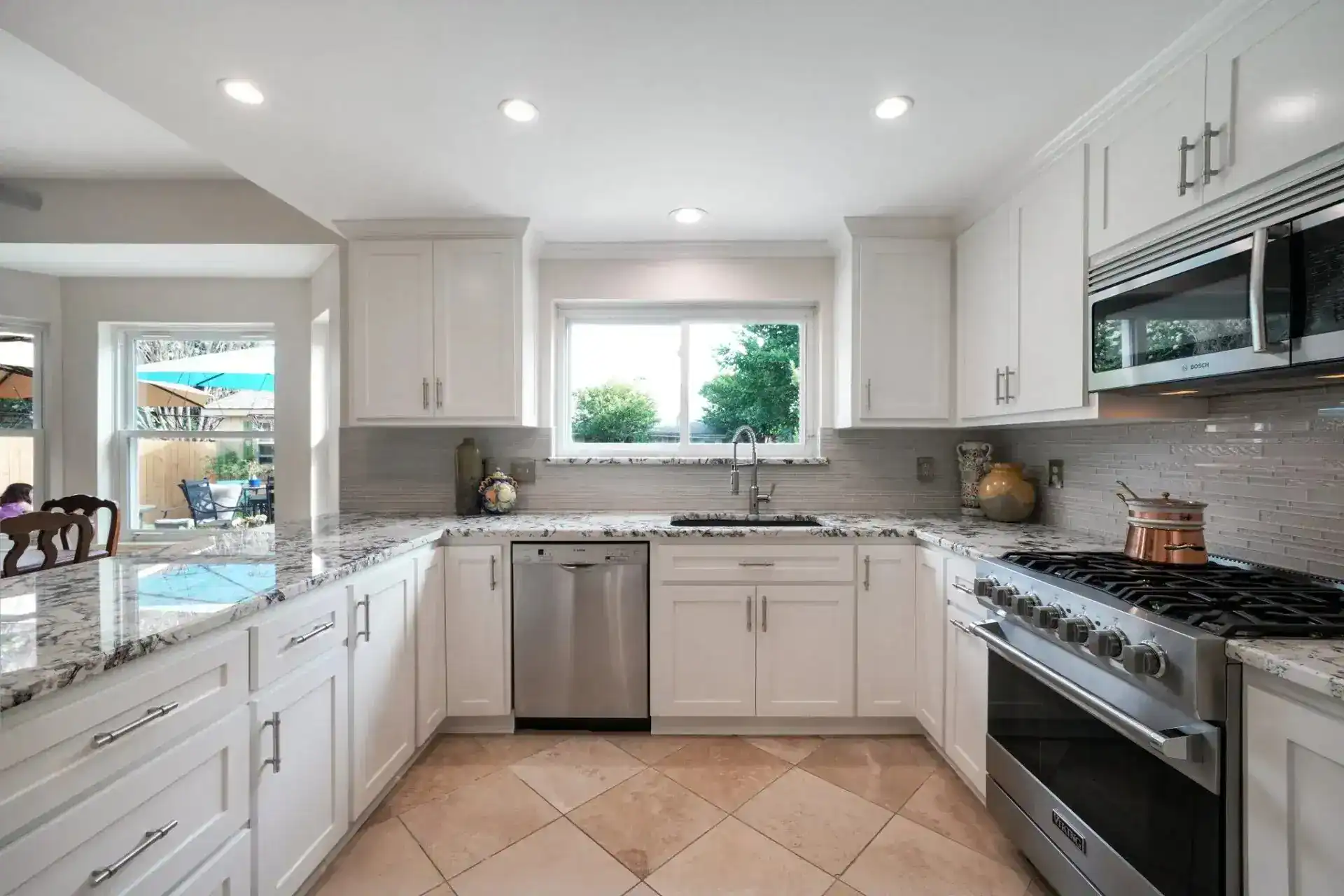
Arlington kitchen remodeling project with updated cabinets, countertops, lighting, and modern home design.

Building Permit for a Bathroom Remodel: When You Need One and When You Don't

In Fort Worth, a building permit for a bathroom remodel is required any time the scope involves structural changes, layout modifications, or work that affects 16 or more square feet of the structure. A bathroom addition — converting a closet or expanding into adjacent square footage — almost always triggers a building permit, a plumbing permit, and an electrical permit simultaneously.

Even within an existing bathroom footprint, the permit triggers add up quickly. Installing a new GFCI circuit for a heated floor requires an electrical permit. Adding a dedicated circuit for a whirlpool tub does too. Relocating a shower drain requires a plumbing permit. If you’re adding a ventilation fan where one didn’t previously exist and running new wiring to it, that’s an electrical permit.

The inspection sequence for a bathroom remodel matters as much as the permits themselves. Inspectors need to see plumbing and electrical work before walls are closed. If drywall goes up before the rough-in inspection, you’re looking at opening it back up — which is exactly the kind of costly rework that proper scheduling prevents. A contractor who coordinates inspections at the right milestones isn’t just following the rules; they’re protecting your budget.

Fort Worth’s current electrical standard — the 2023 NEC, effective March 1, 2024 — updated several requirements around bathroom circuits and GFCI protection. If you’re getting quotes from multiple contractors and one of them isn’t referencing current code, that’s worth paying attention to.

What Happens If You Remodel Without a Permit in Tarrant County?

The consequences of skipping permits aren’t hypothetical — they’re well-documented and they tend to surface at the worst possible time. In Fort Worth, general violations carry fines of $500 per day. Violations related to fire safety or public health can reach $2,000 per day. And if an inspector catches unpermitted work in progress, a stop-work order halts everything immediately — no exceptions — until proper permits are obtained and any non-compliant work is addressed.

Beyond the fines, there’s the resale problem. Texas real estate transactions require disclosure of known unpermitted work. Buyers who discover it during inspection — and their inspectors are specifically looking for it — will either walk away, demand a price reduction, or require the work to be brought into compliance before closing. Sellers who inherited unpermitted work from a previous owner face the same problem, even if they had nothing to do with it.

There’s also the insurance angle. If unpermitted electrical or plumbing work is connected to a claim — a fire, a flood, a structural failure — your insurance company has grounds to deny the claim entirely. That’s a documented outcome that happens to real homeowners.

Some contractors skip permits because it makes their quote look lower. The permit fee for a residential remodel in Fort Worth starts at $112 and increases based on the number of trades involved. That’s not a significant cost relative to a full kitchen or bathroom remodel. A contractor who avoids permits to shave their apparent price is transferring risk to you — and the risk is substantial. Fines alone can run 10 times the cost of the permit itself, and that’s before you account for forced demolition, remediation, or the impact on your home’s value.

How to Handle Remodel Permits the Right Way in Tarrant County

The permit process in Tarrant County isn’t designed to slow you down — it’s designed to make sure the work is done safely and that your home’s value is protected when you eventually sell. The complexity comes from the jurisdictional patchwork: Fort Worth, Arlington, Haltom City, Azle, Lake Worth, and the rest each run their own process. Knowing which rules apply to your specific property, and building permit timelines into the project schedule from day one, is what separates a smooth remodel from a stalled one.

We don’t treat permits as an afterthought or an add-on. We pull every required permit before work begins, coordinate all inspections at the right milestones, and use licensed tradespeople for electrical and plumbing work — because Texas law requires it and because it protects you. We’ve been handling remodels in Tarrant County since 1990, and that experience means we know the specific requirements for Fort Worth, Arlington, and every other jurisdiction in the county.

If you’re planning a kitchen or bathroom remodel in Tarrant County and want to work with a contractor who handles the permit process as part of the job — not as an extra conversation — reach out when you’re ready to talk through your project.

Article details:

Share: