Thinking about a tub-to-shower conversion in Rendon? Walk-in showers offer better accessibility, easier maintenance, and a modern look that fits your lifestyle.
Share:
Summary:
The reasons behind this bathroom renovation trend are straightforward. Traditional bathtubs require you to step over a wall that’s often 14 to 18 inches high. That might not seem like much until mobility becomes an issue—whether temporarily after an injury or gradually as you age.
Walk-in showers eliminate that barrier entirely. Most feature low or no thresholds, making entry and exit significantly safer. You’re not twisting your body to climb in, and you’re not risking a slip on a wet surface while trying to get out. For many Rendon homeowners, this simple change makes the difference between staying in their homes comfortably and facing difficult decisions about moving.
Beyond safety, there’s the maintenance factor. Bathtubs collect soap scum, develop stubborn stains, and feature grout lines that seem to attract mildew no matter how often you clean. Showers with seamless wall panels or large-format tiles cut your cleaning time considerably. A quick wipe-down replaces the deep scrubbing sessions you’re probably tired of. That time savings adds up week after week.
If you’re planning to stay in your Rendon home long-term, accessibility matters more than you might think. The bathroom is where most home accidents happen, and a standard bathtub is one of the biggest culprits.
Walk-in showers address this directly. A curbless or low-threshold design means you can enter without lifting your leg high or worrying about balance. Add grab bars installed into proper blocking, and you’ve got stability exactly where you need it. A built-in bench lets you sit while showering, which isn’t just convenient—it’s essential for anyone dealing with fatigue, recovery from surgery, or limited stamina.
These features aren’t just for seniors. Young families appreciate them too. Parents bathing small children find the open layout easier to manage. Anyone recovering from a sports injury or dealing with temporary mobility limitations benefits immediately.
The term “aging in place” gets thrown around a lot, but it really just means staying comfortable and independent in your own home as your needs change. Bathroom modifications are often the first step. A tub-to-shower conversion done right gives you that flexibility without making your bathroom look institutional or clinical.
Tarrant County has plenty of homeowners thinking ahead. The investment you make now in accessibility features saves you from more expensive modifications later—or worse, being forced to move because your home no longer works for you. That’s not speculation. It’s the reality many people face when they put off practical upgrades.
You can design a walk-in shower that looks modern and stylish while still incorporating safety features. Grab bars come in finishes that match your other fixtures. Benches can be built into the design seamlessly. Non-slip flooring doesn’t have to look medical-grade. The point is creating a space that works for everyone in your household, regardless of age or ability.
Aesthetics matter, and outdated bathrooms drag down your entire home’s appeal. A worn bathtub with chipped enamel or yellowed caulk tells potential buyers—or just your own eyes every morning—that the space needs work.
Walk-in showers offer a clean, contemporary look that fits current design preferences. Glass enclosures create an open feel. Large-format tiles reduce grout lines and make the space appear larger. You can choose from countless materials—ceramic, porcelain, natural stone—to match your style and budget.
The visual impact goes beyond just looking nice. Open shower designs make small bathrooms feel more spacious. Light flows better without a bulky tub blocking the room. Even a modest bathroom can feel significantly more inviting after a conversion.
From a resale perspective, bathroom remodels consistently deliver strong returns. Industry data shows bathroom renovations recouping around 70% of their cost when you sell. That’s better than many other home improvements. Walk-in showers specifically appeal to a wide range of buyers—young professionals, families, and empty nesters all appreciate the convenience and modern aesthetic.
But here’s something important: if you only have one bathroom in your home, keeping a tub somewhere is usually smart for resale. Families with young children often want at least one bathtub. If you have multiple bathrooms, converting one to a walk-in shower while keeping a tub elsewhere gives you the best of both worlds.
The design flexibility with shower conversions is substantial. You’re not locked into a standard prefab unit (though those work fine if budget is tight). Custom tile work lets you create exactly the look you want. Frameless glass doors provide that high-end feel. Rain showerheads, handheld sprayers, built-in niches for toiletries—you can include the features that matter to you.
In Rendon and the surrounding Tarrant County area, homes with updated bathrooms simply move faster when they hit the market. Buyers notice. They’re comparing your home to others, and a modern walk-in shower signals that the property has been maintained and updated. It’s one less thing they’ll need to tackle themselves.
Want live answers?
Connect with a A Plus Home Remodel expert for fast, friendly support.
Let’s talk about what this actually involves and what you’ll spend. Tub-to-shower conversions aren’t as complicated as full bathroom remodels, but they’re not simple DIY projects either.
The process starts with removing your existing bathtub and surround. That’s demolition work—messy but necessary. Once the space is cleared, we assess the plumbing, subfloor, and walls for any hidden damage. Water damage behind old tubs is common, especially in older homes. Addressing those issues now prevents bigger problems later.
Next comes the actual shower installation. This includes a new base or pan, waterproofing, wall surfaces, fixtures, and doors or a curtain rod. The complexity varies based on whether you’re doing a simple replacement or a custom design with tile work. Timeline-wise, most conversions take one to two weeks from start to finish, though simpler projects can wrap up faster.
Cost is probably your biggest question. In 2026, most homeowners in the Tarrant County area spend between $2,200 and $7,400 on tub-to-shower conversions, with the average landing around $4,100.
That range exists because several factors influence your final price. The type of shower you choose matters most. A basic prefab shower stall with acrylic walls runs $1,000 to $2,300. Mid-range options with better materials and some customization fall in the $3,000 to $5,000 range. Custom tile work with frameless glass doors and premium fixtures can push $7,000 to $10,000 or more.
Size affects cost too. Larger showers require more materials and labor. If you’re expanding beyond the existing tub footprint, expect to pay more. Plumbing modifications add expense as well. Moving drain locations or rerouting water lines increases both complexity and cost. Most conversions use existing plumbing locations to keep expenses down.
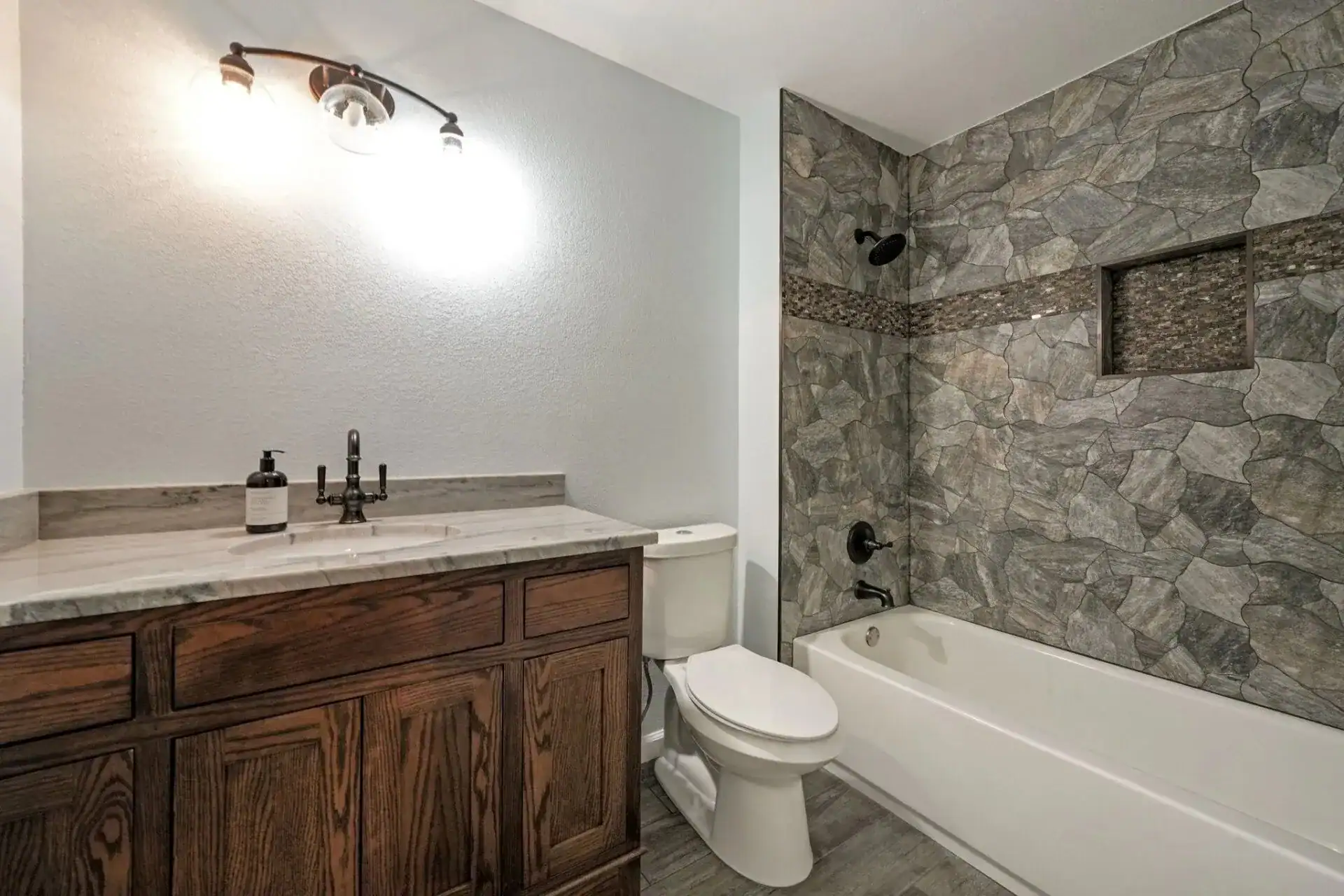
Material choices create another variable. Fiberglass and acrylic are budget-friendly and easy to maintain. Ceramic or porcelain tile offers more design flexibility at a moderate price point. Natural stone like marble or granite looks stunning but costs significantly more and requires more maintenance.
Don’t forget the extras that improve functionality. Grab bars installed properly into blocking add $100 to $300. Built-in benches or shelving run $200 to $600. Upgraded showerheads and fixtures can add several hundred dollars. These aren’t just nice-to-haves—they’re the features that make your shower work better for your specific needs.
Labor typically accounts for about half your total project cost. In the Arlington and Rendon area, expect to pay $45 to $200 per hour for skilled plumbers and tile installers. The complexity of your project determines how many hours you’ll need. Simple conversions might take 10 to 20 hours of labor. Custom tile work can require 40 hours or more.
Hidden costs sometimes surprise homeowners. Permits usually run $200 to $2,000 depending on your municipality and project scope. Tub removal and disposal costs $150 to $800, with heavier cast iron tubs on the high end. Water damage repairs discovered during demolition can add $1,500 to $9,000 if you’re dealing with rotted subfloors or moldy drywall.
The smart approach is getting detailed estimates from experienced contractors who can assess your specific situation. A written quote should break down materials, labor, permits, and potential issues clearly. That transparency helps you budget accurately and avoid surprises mid-project.
Homeowners considering this upgrade usually have similar questions. Let’s address the most common ones directly.
“How long does installation actually take?” Most tub-to-shower conversions complete in one to two weeks. Simple prefab installations might finish in three to five days. Custom tile work typically needs seven to ten days once materials arrive. Delays can happen if we discover water damage or if special-order materials take longer than expected. We provide a realistic timeline upfront and communicate any changes immediately.
“Can I use my bathroom during the work?” Not really. The bathroom will be out of commission from demolition through final installation. Plan accordingly if this is your only bathroom. We can schedule work to minimize disruption, but you’ll need alternate arrangements for showering during the project.
“What about water damage behind my tub?” It’s common, especially in bathrooms over 15 years old. Small leaks over time cause rot in subfloors and mold behind walls. We inspect thoroughly during demolition and give you options for repairs. Yes, it adds cost, but addressing it now prevents structural issues later.
“Do I need permits?” Most municipalities require permits for bathroom remodeling that involves plumbing or electrical work. We handle permit applications and inspections. Skipping permits might save a few hundred dollars upfront but can cause serious problems when you sell your home or if an insurance claim arises.
“Will this hurt my home’s resale value?” Not if you have another bathroom with a tub. Buyers appreciate modern walk-in showers, especially in master bathrooms. If you’re converting your only tub, you might limit your buyer pool slightly—families with young children often want at least one bathtub. But for most Rendon homes with multiple bathrooms, a conversion in one bathroom while keeping a tub elsewhere is the ideal setup.
“Can I customize the design?” Absolutely. That’s one of the biggest advantages over keeping your old tub. You choose the size, materials, fixtures, and features. Want a rain showerhead? Built-in bench? Specific tile pattern? You can create exactly what works for your space and budget. Prefab units offer less flexibility but cost less and install faster. Custom tile work gives you complete control over the final look.
“How do I choose a contractor?” Look for licensed, insured professionals with specific experience in bathroom remodeling. Ask for references from recent projects. Check that they pull proper permits and handle inspections. Get detailed written estimates that break down all costs. And pay attention to communication—a contractor who responds promptly and answers questions clearly during the estimate process will likely maintain that throughout your project.
“What’s the best material for low maintenance?” Acrylic and fiberglass wall panels require minimal upkeep—just regular wiping with mild soap. Large-format porcelain or ceramic tiles reduce grout lines, making cleaning easier than small tiles. If you go with tile, using a quality grout sealer and keeping up with basic maintenance prevents most problems.
A tub-to-shower conversion isn’t about following trends. It’s about creating a bathroom that actually fits how you live—safer access, easier maintenance, and a modern look that makes your daily routine better.
Whether you’re focused on accessibility for aging in place, tired of scrubbing an old tub, or simply ready to update your Rendon home’s bathroom, a walk-in shower addresses those needs directly. The investment typically ranges from $2,200 to $7,400, delivers strong returns when you sell, and makes your home more functional immediately.
The key is working with experienced Texas bathroom remodeling professionals who understand local building codes, provide transparent pricing, and deliver quality work. We’ve been helping Tarrant County homeowners with bathroom renovation projects for over three decades, managing every aspect from permits to final cleanup so you get results that exceed expectations without the typical contractor headaches.
Article details:
Share:
Continue learning: