
Summary:
Every January, a lot of Tarrant County homeowners find themselves in the same spot — refund check coming, a mental list of things around the house that need attention, and no clear idea where to start. The kitchen that’s felt dated for years. The bathroom that’s never quite right. The backyard that could be something if someone would just do something with it.
The average federal tax refund is $3,453. That’s real money. And if you spend it on the right project, it doesn’t just improve your home — it adds measurable value to it. Here’s how to make that budget work as hard as possible.
Home Improvements That Actually Return What You Spend
Not every renovation pays you back. Some projects feel great in the moment and do almost nothing for your resale value. Others return more than they cost. Knowing the difference is the first step to spending your home renovation budget wisely.
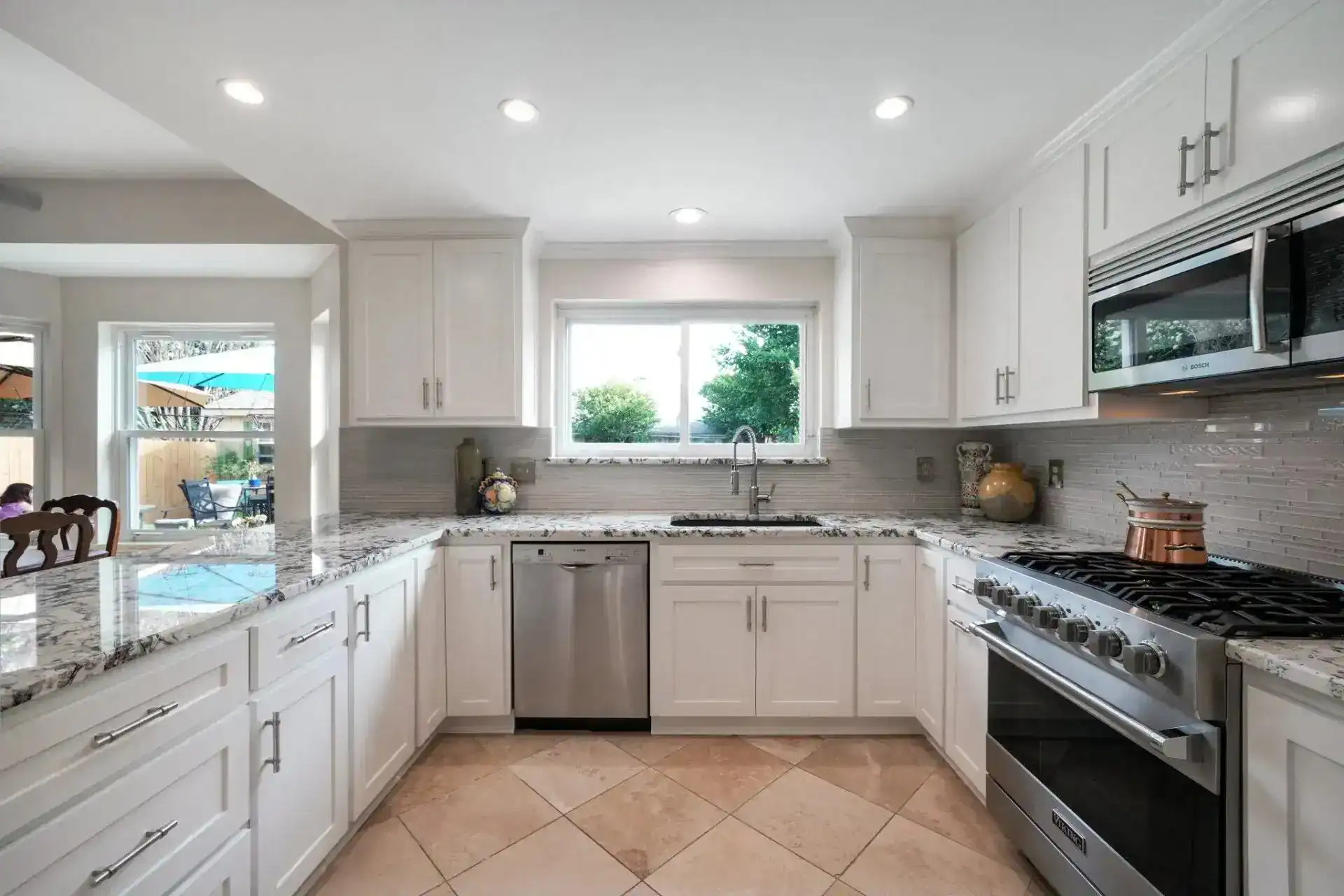
The data here is pretty clear. A minor kitchen remodel — refreshing cabinets, swapping out countertops, updating fixtures, without blowing out walls or changing the layout — currently returns around 113% of its cost at resale. You spend $15,000, you add more than $15,000 in value. Bathroom renovations follow close behind, recouping roughly 72–74% of their cost on average.
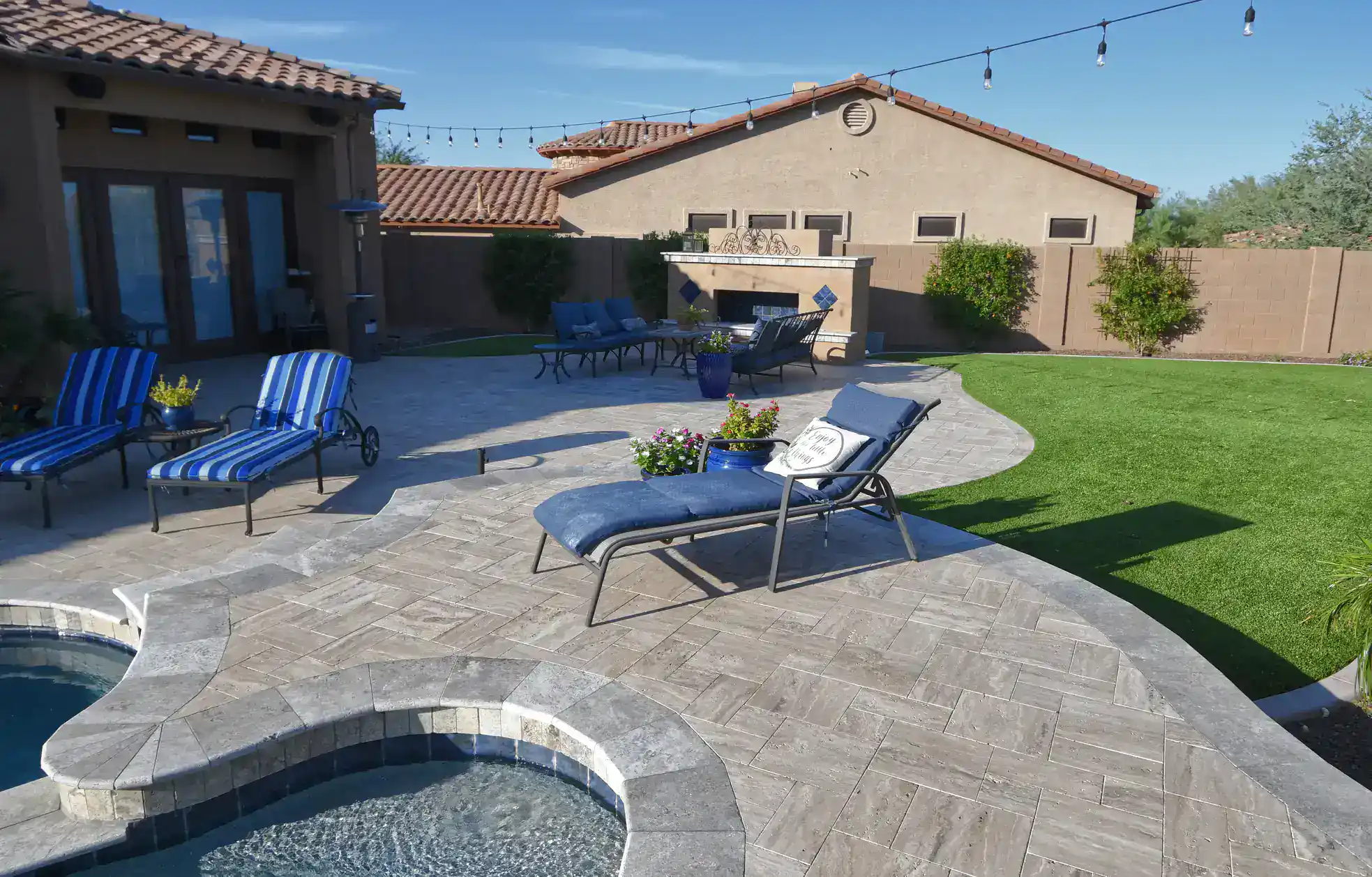
Outdoor projects like concrete patios, cedar fencing, and backyard living spaces also hold up well, especially in Texas where outdoor living is practically a year-round activity. The point is: a thoughtful home renovation budget, spent on the right project, isn’t an expense. It’s an investment with a documented return.
What Can a $3,000–$5,000 Home Renovation Budget Actually Get You in Tarrant County?
This is the question most homeowners in Tarrant County are actually asking, and the answer is more encouraging than you might expect.
Home remodeling costs in the Dallas-Fort Worth area run approximately 5–12% below the national average. That gap matters. The same project that costs $18,000 in a coastal market might come in at $15,500 here. Your tax refund goes further in Arlington, Mansfield, or Colleyville than it does in Austin, and significantly further than it would in Los Angeles or New York.
At the $3,000–$5,000 range, you’re looking at a full tile installation, a bathroom refresh that modernizes fixtures, flooring, and finishes, a concrete patio pour, board and batten exterior work that completely changes the character of a home’s front face, or popcorn ceiling removal throughout the main living areas. These aren’t minor cosmetic tweaks. They’re the kind of changes that make a home feel newer, cleaner, and more valuable — both to you and to any future buyer.
If your refund is on the higher end, or if you’re combining it with savings or a small home equity line, a minor kitchen remodel becomes realistic. Budget kitchen remodels in the DFW area start around $15,300–$16,050, which is well within reach for homeowners who use their refund as a down payment and finance the rest. That’s a project with a 113% ROI, funded in part by money the IRS sent you.
The key is knowing what you’re working with before you call anyone. Have a number in mind. Know which room matters most to you. And find a contractor who will give you a fixed price — not a range, not an estimate with asterisks, but an actual number you can plan around.
Why January and February Are the Best Months to Book a Renovation in Tarrant County
Most homeowners think of spring as renovation season. Contractors are busy, lead times stretch out, and by the time the project wraps up, you’ve lost half your summer. There’s a smarter way to approach this.
January through March is genuinely the best window to book a renovation in Tarrant County, and it has nothing to do with sentiment. Texas summers arrive fast and hit hard. Once June rolls in, outdoor work becomes miserable — for the crew and for the materials. Concrete, cedar, and decorative finishes all perform better when they’re not being installed in 100-degree heat. Booking your patio, fencing, or exterior project in January means it’s done and fully cured before Memorial Day. You’re actually using your outdoor space while your neighbors are just starting to call contractors.
There’s also a practical scheduling advantage. The first quarter of the year is when contractors have more availability. You’re more likely to get your preferred start date, your project gets more focused attention, and the timeline tends to run tighter. By April and May, that flexibility disappears.
For interior projects — kitchens, bathrooms, tile, ceilings — the timing matters less from a weather standpoint, but the same scheduling logic applies. Get in early, lock in your start date, and avoid the spring backlog that pushes projects into summer.
Much of Tarrant County’s housing stock was built between the 1970s and 1990s. If your home is in that range, it’s between 25 and 55 years old. That’s not a problem — it’s an opportunity. These homes have good bones, established neighborhoods, and real character. They also have kitchens, bathrooms, and outdoor spaces that are overdue for a refresh. The refund you’re holding right now is a reasonable starting point for making that happen.
Affordable Home Remodeling Without the Budget Horror Stories
Nearly 80% of homeowners go over budget on their renovations. Two-thirds end up going into debt to cover the difference. These aren’t outliers — they’re the norm, and they’re almost always the result of the same few problems: vague estimates, unlicensed contractors, no written agreement, and zero accountability when things go sideways.
Affordable home remodeling doesn’t mean cheap. It means getting exactly what you agreed to pay for, with no surprises on the back end. That distinction matters a lot when you’re working with a defined budget like a tax refund.
The homeowners who stay on budget are the ones who hire contractors who put everything in writing — fixed price, defined scope, clear timeline — before a single tool is picked up.
How to Avoid Going Over Budget on a Home Renovation
The single most effective thing you can do is get a fixed-price estimate from your contractor before the project starts. Not a range. Not a ballpark. A number with a line-item breakdown that both parties sign off on. If a contractor won’t give you that, move on.
The second thing is understanding what’s included. Change orders — additions or modifications to the original scope — are how renovation budgets spiral. A contractor who manages the project well, pulls the right permits upfront, and accounts for the realistic scope of work shouldn’t need to come back to you mid-project with a revised number. That kind of surprise is a process failure, not an inevitability.
Third, make sure permits are part of the conversation from day one. Unpermitted work is one of the most common and costly problems homeowners discover when they go to sell. If the renovation wasn’t permitted properly, a buyer’s lender may require it to be retroactively permitted — which can mean opening walls, redoing inspections, or crediting the buyer at closing. In Texas, unpermitted work must be disclosed as a material defect. That’s not a technicality. It’s a real financial risk that a good contractor eliminates by handling permits correctly the first time.
We pull proper permits for every project we take on. It’s not optional, and it’s not something we charge extra for as a surprise line item. It’s just part of doing the job right.
Home Remodel Financing: When Your Tax Refund Is the Starting Point, Not the Whole Budget
For some homeowners, the tax refund covers the whole project. For others, it’s the down payment that makes a bigger renovation possible. Both approaches are valid, and knowing your options makes the decision a lot easier.
The most common financing route for home renovations in Texas is a home equity line of credit, or HELOC. If you’ve owned your home for several years — especially if you bought before 2022 — there’s a good chance you’re sitting on significant equity. Tarrant County home values have appreciated substantially over the past decade, and many homeowners who bought in the 2015–2020 window have more equity than they realize. A HELOC lets you borrow against that equity at a relatively low rate, use it for the renovation, and pay it back over time. The interest may also be tax-deductible if the funds are used for home improvement, though you’ll want to confirm that with a tax professional.
Home equity loans work similarly but give you a lump sum at a fixed rate rather than a revolving line of credit. If you know exactly what the project will cost — which you will if you’re working with a fixed-price contractor — a home equity loan can be a clean, predictable way to fund it.
Some homeowners also use personal loans or contractor financing programs for smaller projects. These tend to carry higher interest rates than equity-based options, so they’re better suited for shorter-term payoff plans.
The lock-in effect is real in this market. Many Tarrant County homeowners are holding pandemic-era mortgage rates between 2.5% and 4%. Selling and buying a new home right now would mean doubling that rate. Instead of moving, a lot of people are doing exactly what makes financial sense: staying put, using their equity wisely, and investing in the home they already own. A tax refund paired with a HELOC is one of the most practical ways to fund a meaningful renovation without disrupting a mortgage rate you’d never get back.
Ready to Put Your Home Renovation Budget to Work in Tarrant County?
The refund window is short. Contractor schedules fill up. And the longer a renovation sits on the list, the longer you’re living in a space that doesn’t work as well as it should.
The homeowners who come out ahead are the ones who start with a clear budget, pick the right project for that number, and hire a contractor who puts everything in writing before work begins. No vague estimates. No subcontractor surprises. No permits skipped because it seemed easier at the time.
If you’re in Arlington, Mansfield, Colleyville, Euless, Keller, or anywhere else in Tarrant County, we’ve been doing this work since 1990. Reach out and tell us what you’re thinking — we’ll give you a fixed-price estimate, walk you through the digital design so you can see the result before we start, and take it from there.