
Summary:
You’ve probably already seen the reviews that sound too good to be true, gotten a quote that ballooned by the time the job was done, or heard a story from a neighbor whose contractor disappeared mid-project. That’s the reality of hiring in this industry — and it’s why so many homeowners in the Arlington–Fort Worth area spend weeks researching before they ever pick up the phone.
This page is here to make that process faster and more useful. By the end of it, you’ll know what to look for, what questions actually matter, and what separates a contractor worth hiring from one worth avoiding.
What Home Renovation Companies in Arlington–Fort Worth Actually Do
A full-service home renovation company handles the entire project — not just one piece of it. That means the consultation, the design, the permitting, the construction, and the final walkthrough all flow through one team and one point of contact. For homeowners, that matters more than it sounds.
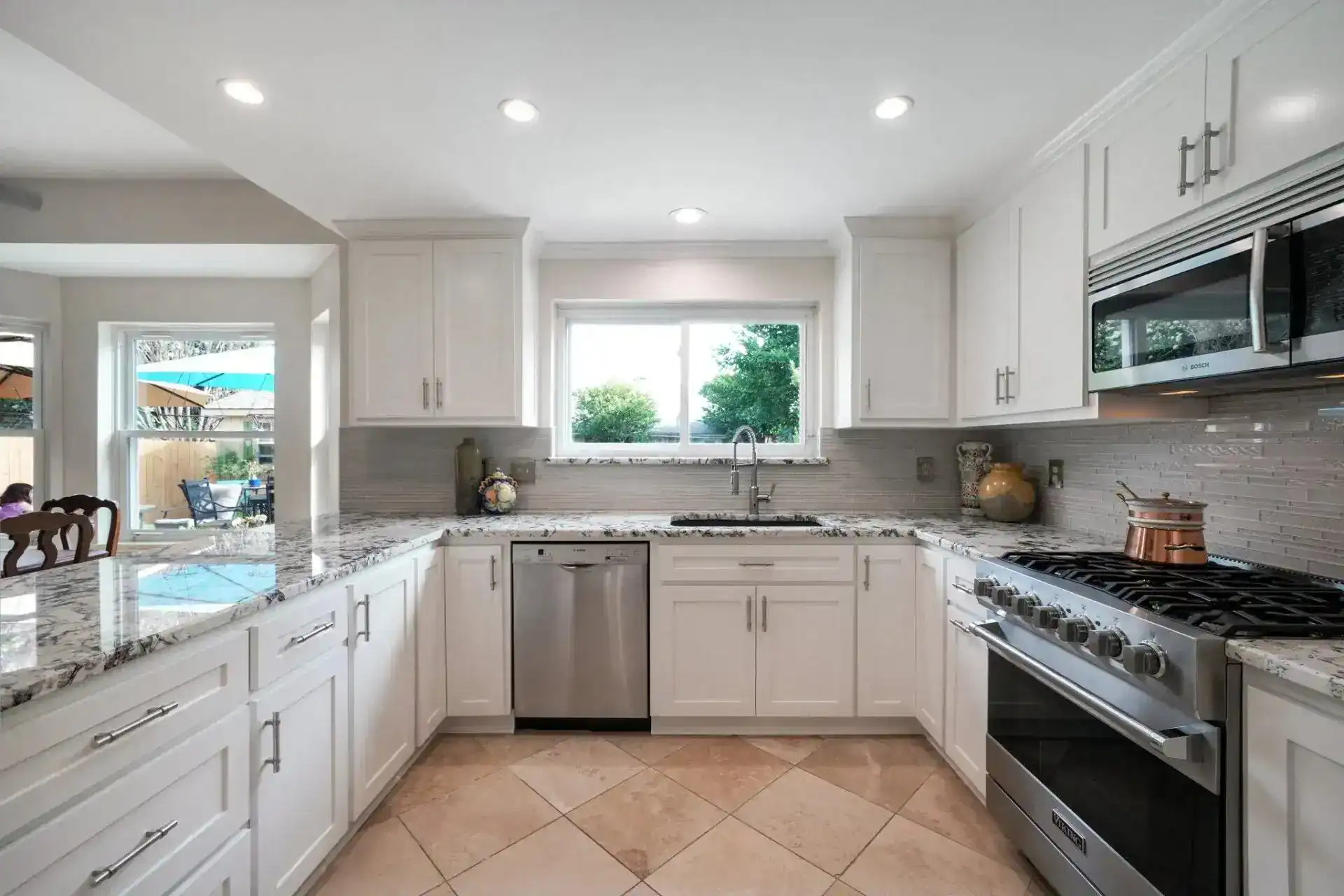
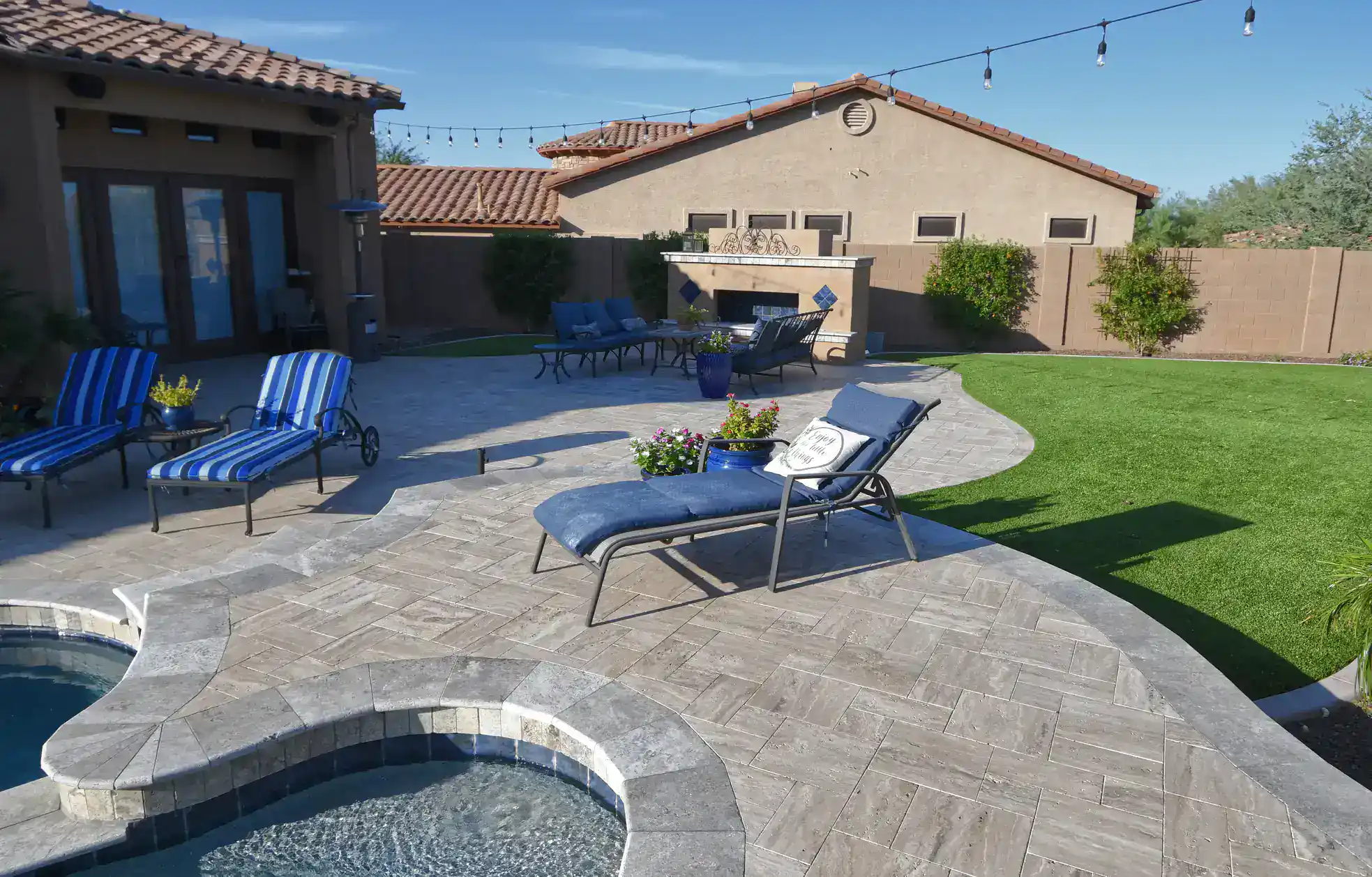
When you’re dealing with a kitchen remodel or a concrete patio addition in Tarrant County, the last thing you want is to play coordinator between three different contractors who don’t communicate with each other. We remove that burden entirely and keep the timeline, the budget, and the quality of work under one roof.
What Does a Renovation Company Handle From Start to Finish?
The scope of what we cover varies — and that gap matters when you’re comparing quotes. Some contractors will give you a price for labor only, then hand you a list of materials to source yourself. Others will show up, do the work, and leave you to figure out permits after the fact. Neither of those is a full-service experience, and both create real problems down the line.
We handle design and planning before anything is built, pull the required permits through the appropriate local authority — in Tarrant County, that depends on whether your property sits inside Arlington city limits or in unincorporated county territory — manage material sourcing, coordinate our licensed crew, and walk you through the finished project at the end. That’s the standard we hold ourselves to.
In the Arlington–Fort Worth market specifically, permitting is something homeowners often underestimate. Unpermitted work doesn’t just create headaches — it can void your homeowner’s insurance, flag during a home sale, and expose you to code violation fines. A contractor who skips permits to save time is saving their time, not yours.
The other thing worth knowing: in Texas, there is no statewide general contractor license. Licensing and registration happen at the local level, which means a company operating in Arlington, Mansfield, or Benbrook needs to understand the specific requirements of each jurisdiction — not just carry a general license from another county. That local fluency is something we’ve built over decades of work in this region.
Digital design is another service that separates serious renovation companies from the rest. Being able to see a realistic rendering of your finished kitchen or backyard before any physical work begins isn’t just a nice feature — it’s a safeguard against the most common source of renovation regret: spending money on something that didn’t look the way you imagined.
How to Tell If a Home Improvement Company Is Actually Reliable
The lowest estimate is almost never the best deal. That’s not a knock on budget-conscious homeowners — it’s just math. A contractor who comes in significantly below everyone else is usually cutting corners somewhere: on materials, on permits, on insurance coverage, or on the quality of the crew doing the work. Those savings rarely hold up once the project is underway.
What actually predicts a good experience is a combination of factors that are easy to verify if you know where to look. Start with their license status — in Texas, you can check contractor credentials through BuildZoom or your local municipality. Then look at their reviews across multiple platforms, not just the testimonials on their own website. Google, Angi, HomeAdvisor, and the BBB all give you a more complete picture than a curated highlight reel.
Ask directly whether they use subcontractors. Many general contractors do, and there’s nothing inherently wrong with it — but it creates an accountability gap. When a subcontractor shows up at your home, your contract is with the GC, not the sub. If something goes wrong, that chain of responsibility can get complicated fast. We use our own licensed, in-house crew, which sidesteps that problem entirely.
The other signal that’s easy to overlook: how they communicate during the estimate process. A contractor who’s slow to respond, vague about pricing, or reluctant to put things in writing before the job starts will behave the same way once they have your deposit. Pay attention to how they treat you when they’re still trying to win your business — it tells you everything about how they’ll treat you once the work begins.
Written estimates, fixed pricing, and a clear project timeline aren’t extras. They’re the baseline of what a professional home improvement company should offer.
Home Improvement Companies Serving Tarrant County and the DFW Area
The DFW market has grown fast. Fort Worth crossed one million residents in 2024, and the surrounding communities — Mansfield, Midlothian, Benbrook, Crowley, Colleyville — have all seen steady growth alongside it. That population surge means more demand for renovation services, and more contractors trying to meet it.
That’s good news in theory. In practice, it means the market has a wide range of quality, and homeowners have to be more deliberate about who they choose. A company that’s been operating in Tarrant County for decades understands local code requirements, local weather conditions, and what improvements actually hold up in this climate — and that knowledge doesn’t transfer from a franchise playbook. We’ve been serving Arlington and Fort Worth homeowners since 1990, and that experience shapes every project we take on.
Why Local Experience in Tarrant County Changes the Quality of the Work
Texas weather is not forgiving to renovation work done with the wrong materials. DFW summers regularly hit triple digits, and the clay soil that runs through much of Tarrant County expands and contracts with moisture changes in ways that affect concrete, tile, and structural additions. A contractor who hasn’t worked extensively in this region may not account for those variables when selecting materials or planning installation.
The freeze events are worth mentioning too. February 2021’s Winter Storm Uri caused widespread damage across Arlington and Fort Worth — cracked concrete, failed tile grout, damaged outdoor structures — and the contractors who understood local conditions were better equipped to repair and rebuild in ways that wouldn’t fail again under similar stress. That kind of regional knowledge doesn’t show up on a license certificate. It comes from years of work in the same neighborhoods.
There’s also the matter of which improvements actually add value in this market. Fort Worth and Arlington median home prices are currently in the $280,000–$350,000 range. The renovation decisions that make sense in a $700,000 Southlake home don’t always translate to the same return here. We can tell you where your renovation dollars will have the most impact — and where they won’t.
For homeowners in established Arlington and Fort Worth neighborhoods with homes built in the 1970s through the 1990s, this is especially relevant. Those homes are now 30 to 50 years old. Kitchens, bathrooms, concrete driveways, and fencing installed in that era are well past their useful life — and updating them with materials rated for modern Texas conditions, not builder-grade shortcuts, is the difference between a renovation that lasts and one that needs to be redone in five years.
Questions Arlington–Fort Worth Homeowners Actually Ask Before Hiring
One of the most common questions we hear is whether a contractor needs to pull permits for every project. The short answer is yes — for most structural, concrete, and renovation work in Tarrant County, permits are required. The longer answer is that the process varies depending on your specific location. Properties inside Arlington city limits follow different procedures than those in unincorporated Tarrant County, and the same is true for Fort Worth, Mansfield, and the other municipalities in our service area. Skipping permits isn’t a shortcut — it’s a liability that follows the property, not the contractor.
Another question that comes up often: what’s the difference between a fixed-price estimate and a cost-plus contract? A fixed-price estimate means you know the total cost before work begins, and that number doesn’t change unless you change the scope of the project. A cost-plus contract means the contractor charges you for materials at cost, plus a markup for labor and overhead — which sounds reasonable until material prices shift mid-project and your budget follows. For homeowners who want to plan with confidence, a fixed-price estimate is the only structure that actually protects you.
Homeowners also ask whether they should get multiple estimates before deciding. Yes — but not just to find the lowest number. Getting two or three estimates helps you understand the range of approaches contractors are proposing, not just the range of prices. If one estimate is significantly lower than the others, ask specifically what’s different. Is it the materials? The permit fees? The crew? The answer will tell you a lot.
Finally, people ask what a written warranty should cover. At minimum, it should address both materials and workmanship — meaning if something fails because of how it was installed, or because the materials weren’t up to the job, you have a documented path to resolution. A verbal warranty is worth nothing. Get it in writing before the first day of work.
Finding the Right Home Improvement Company in Arlington–Fort Worth
The Arlington–Fort Worth area has no shortage of contractors. What it has a shortage of is contractors who’ve been doing this long enough, locally enough, and transparently enough to earn real trust — not just a good first impression.
The things that actually matter are straightforward: an active, verifiable license, a fixed-price written estimate, an in-house crew, permits pulled for every project, and a track record of real reviews from real customers in this specific market. Those aren’t high standards. They’re the baseline.
If you’re planning a renovation in Tarrant County and want to talk through what your project actually involves — scope, timeline, budget, and what it will look like before anything is built — we’ve been serving homeowners in Arlington and Fort Worth since 1990. Reach out and start the conversation.