Do You Need a Permit to Retile Your Bathroom in Texas?

Retiling your bathroom in Texas? Here's what actually triggers a permit requirement — and what doesn't — so you can move forward with confidence.

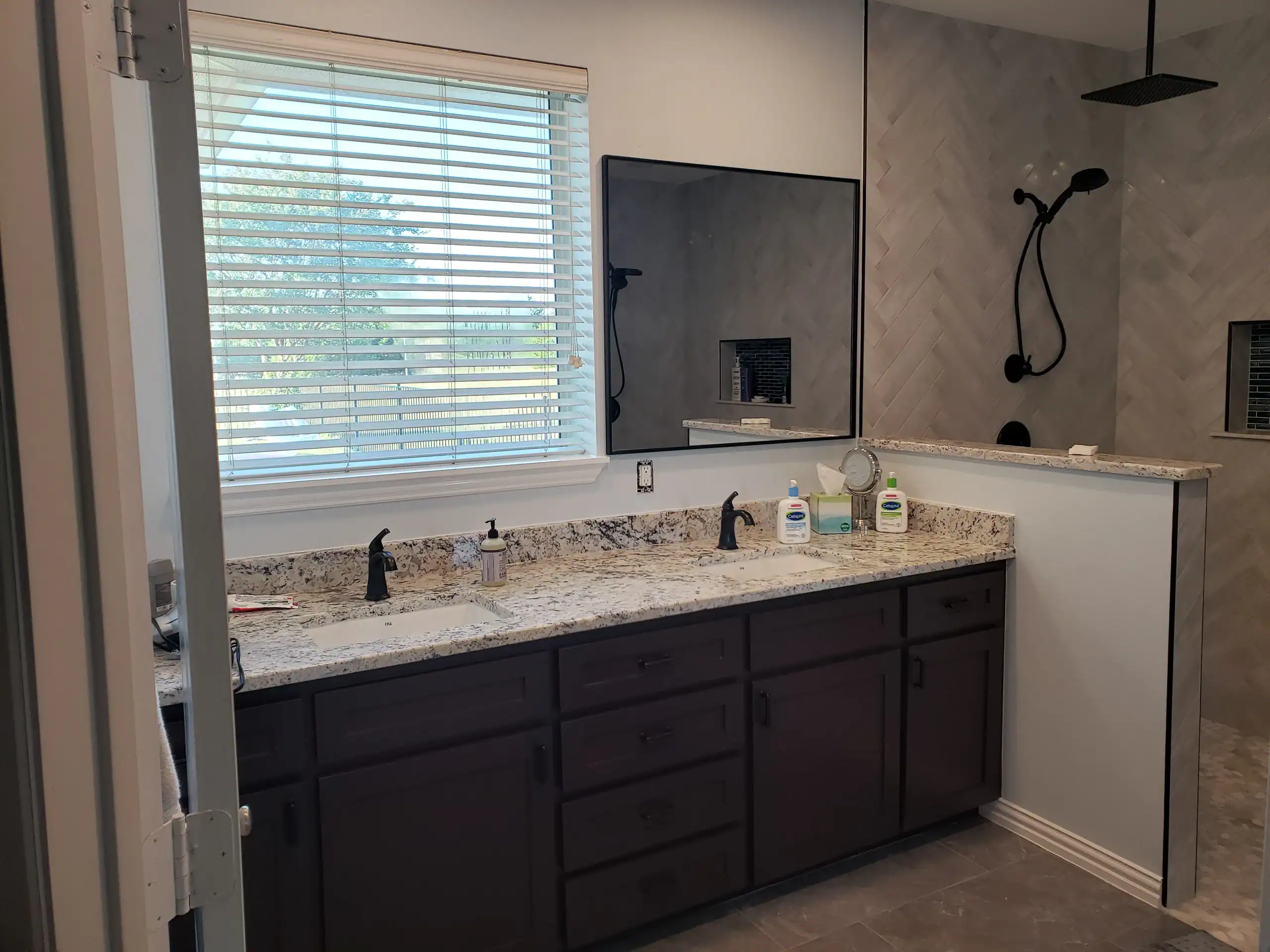
Modern bathroom with a double-sink granite vanity, dark cabinets, soap dispensers, wall mirror, and a walk-in shower with black fixtures and herringbone tile. A large window with blinds lets in natural light.

Summary:

The permit question trips up a lot of homeowners before a single tile gets pulled. The answer isn’t always yes or no — it depends on what’s happening behind the walls, not just on top of them. This post breaks down exactly when a bathroom tile project requires a permit in Texas, what the rules look like in Fort Worth and Tarrant County specifically, and how to protect yourself when you’re ready to hire someone to do the work.
Table of contents

Most homeowners asking this question aren’t trying to cut corners. They just want a straight answer before they call a contractor — or before they sign anything. The problem is that most of what’s online is either too vague to be useful or written for a completely different state. If you’re in Fort Worth, Arlington, Southlake, or anywhere else in Tarrant County, the rules are specific to your city, and they’re worth understanding before your project starts. Here’s what you actually need to know.

Do You Need a Permit to Retile Your Bathroom?

The short answer is: probably not — if all you’re doing is replacing tile. Cosmetic retiling, meaning you’re pulling up old tile and putting down new tile in the same location without touching plumbing, electrical, or walls, generally does not require a permit in Texas or most U.S. jurisdictions.

That said, most bathroom tile projects aren’t purely cosmetic. The moment your project involves moving a drain, relocating a showerhead, adding a niche that opens a wall, or upgrading to heated flooring, you’ve crossed into permit territory. The tile itself isn’t what triggers the permit — it’s what has to happen underneath or behind it.

What Actually Triggers a Permit for Bathroom Tile Work in Texas?

Here’s where homeowners get caught off guard. They start with the intention of just retiling a shower, then discover the old pan is failing, or the waterproofing was never done right, or the drain needs to move to accommodate a new layout. Suddenly the scope has changed — and so has the permit requirement.

In Texas, a permit is typically required when your bathroom project involves any of the following: moving or rerouting plumbing supply lines or drains, adding or relocating electrical outlets or GFCI receptacles, installing heated flooring systems tied to your electrical panel, making structural changes like removing or moving walls, or replacing a bathtub in a way that affects the surrounding structure.

Fort Worth specifically requires a building permit for interior remodels that affect 16 or more square feet, involve structural changes, or touch electrical, mechanical, or plumbing systems. We follow the 2021 International Residential Code, and the city adopted the 2023 National Electrical Code in March 2024 — which tightened GFCI protection requirements in bathrooms. If your retile project includes any electrical updates, those requirements are active and enforced.

The practical takeaway is this: if you’re truly just swapping tile for tile — same footprint, no plumbing changes, no electrical work, no wall demolition — you likely don’t need a permit. But if there’s any doubt about what’s behind those walls, or if your project has grown beyond a simple surface swap, that’s exactly the kind of question we should answer before work begins, not after.

One more thing worth knowing: even when a permit isn’t required, the quality of the work underneath the tile still matters. Proper waterproofing membranes, cement board backer in wet areas, and materials rated for Texas humidity aren’t optional niceties — they’re what separates a tile job that lasts 20 years from one that fails in five.

What Happens If You Skip a Permit That Was Actually Required?

This is the part most contractors don’t explain clearly enough. If a permit was required for your bathroom project and it wasn’t pulled, the legal and financial exposure falls on you — the homeowner — not the contractor who did the work.

Nearly 63% of renovation disputes in Texas involved missing permits. That’s not a small number. And 52% of failed bathroom inspections in the state involved work done without the proper permits in place. These aren’t edge cases — they’re common outcomes when the permit question gets brushed aside.

The consequences show up in a few specific ways. The most immediate is a home inspection. Fort Worth’s real estate market is active and competitive, and buyers’ agents and inspectors here are experienced at checking permit records. Unpermitted work discovered during a sale can delay the closing, trigger demands for price reductions, or cause buyers to walk away entirely. Retroactive permitting — trying to legalize unpermitted work after the fact — often requires opening walls, bringing systems up to current code, and paying for re-inspection. It’s almost always more expensive than doing it right the first time.

There’s also the insurance angle. Homeowners’ insurance costs have risen significantly in recent years, and insurers are paying closer attention to code compliance. If you file a claim related to a bathroom that had unpermitted work, your coverage could be reduced or denied.

The most common scenario we hear from homeowners is this: a contractor suggested skipping the permit to “save time and money,” and the homeowner agreed without realizing they were absorbing all the risk. If a contractor ever discourages you from pulling a required permit, that’s not a favor — it’s a red flag.

Building Permit Requirements for Bathroom Remodels in Fort Worth and Tarrant County

Here’s something that surprises a lot of homeowners: Tarrant County itself does not issue building permits. The county doesn’t enforce building codes in unincorporated areas. For most residents, though, their property falls within a city’s limits — Fort Worth, Arlington, Southlake, Keller, Azle, Mansfield — and that city’s building department is the one that governs their project.

This matters because each city has its own permitting department, its own fee schedule, and its own process. What applies in Fort Worth doesn’t automatically apply in Euless or Grapevine. Knowing which city’s rules govern your address is step one — and it’s something we should already know without you having to figure it out.

Fort Worth Bathroom Permit Costs and How the Process Works

For homeowners in Fort Worth specifically, residential remodel permits start at $112 and increase depending on the trades involved — plumbing, electrical, mechanical. Fort Worth’s permitting portal allows online applications, and straightforward residential projects are typically processed within days to a couple of weeks, not months. It’s worth noting that Fort Worth development fees increased 12.5% on October 1, 2024, so if you’ve been putting off a bathroom project, that cost has already moved.

The permit process itself involves submitting your project scope to the city’s building department, paying the applicable fee, and scheduling inspections at key stages of the work. For a bathroom remodel that includes plumbing changes, you’d typically have a rough-in inspection before the walls close and a final inspection once the work is complete. The inspections exist to confirm the work was done correctly — not to make your life harder.

One question homeowners often have is whether they can pull the permit themselves or whether the contractor has to do it. In Texas, either party can apply, but when a licensed contractor pulls the permit, they’re taking on professional responsibility for the work meeting code. That accountability matters. It also means the work is on record — which protects you if questions come up later.

We handle all permit applications and inspections as part of every project we take on. We’ve built working relationships with local building officials across Tarrant County, which helps the process move efficiently. You shouldn’t have to navigate that on your own.

Do You Need a Permit to Add a Bathroom in Texas?

Adding a bathroom is a completely different conversation from retiling one. If you’re considering adding a new bathroom to your home — converting a closet, finishing a basement, or building an addition — permits are not optional. Full stop.

A new bathroom involves new plumbing rough-in connected to your existing supply and drain system, new electrical circuits and GFCI-protected outlets, and in many cases structural changes to accommodate the layout. In Texas, this means you’ll need at minimum a building permit, a plumbing permit, and an electrical permit. Depending on your city and the scope of the work, a mechanical permit may also be required.

The inspection process for a bathroom addition is more involved than for a remodel. You’ll have rough-in inspections for plumbing and electrical before walls close, framing inspections if structural work is involved, and a final inspection once everything is complete. Skipping any of these stages creates the same risks described earlier — failed home inspections at resale, insurance complications, and the possibility of having to tear out finished work to allow for re-inspection.

For Tarrant County homeowners specifically, the permitting requirements for a bathroom addition will depend on which city your property is in. Fort Worth, Arlington, Southlake, and other cities in the area each have their own processes and fee structures. If you’re in an unincorporated part of the county, the situation is different again — and worth clarifying before you start planning.

The bottom line on adding a bathroom: budget for permits from the beginning, work with a licensed contractor who will pull them, and treat the inspection process as a built-in quality check rather than a hurdle. The inspections are there to make sure the plumbing doesn’t leak and the electrical is safe. That’s actually in your interest.

Working With a Contractor Who Handles Permits the Right Way in Fort Worth

The permit question doesn’t have to be complicated. For most straightforward tile replacements, you’re in the clear. For anything that touches plumbing, electrical, or structure, a permit is required — and the right contractor will tell you that upfront, not after the fact.

What you want is someone who already knows the rules in your city, pulls every permit the project requires, and builds that process into the timeline without making it your problem to manage. That’s how it should work.

We’ve been doing this work locally in Fort Worth, Arlington, Southlake, and the surrounding Tarrant County area since 1990. Reach out for a fixed-price estimate — no hidden fees, no permit surprises, and no guesswork about whether the job was done to code.
Share:

Summary:

The permit question trips up a lot of homeowners before a single tile gets pulled. The answer isn’t always yes or no — it depends on what’s happening behind the walls, not just on top of them. This post breaks down exactly when a bathroom tile project requires a permit in Texas, what the rules look like in Fort Worth and Tarrant County specifically, and how to protect yourself when you’re ready to hire someone to do the work.
Table of contents

Most homeowners asking this question aren’t trying to cut corners. They just want a straight answer before they call a contractor — or before they sign anything. The problem is that most of what’s online is either too vague to be useful or written for a completely different state. If you’re in Fort Worth, Arlington, Southlake, or anywhere else in Tarrant County, the rules are specific to your city, and they’re worth understanding before your project starts. Here’s what you actually need to know.

Do You Need a Permit to Retile Your Bathroom?

The short answer is: probably not — if all you’re doing is replacing tile. Cosmetic retiling, meaning you’re pulling up old tile and putting down new tile in the same location without touching plumbing, electrical, or walls, generally does not require a permit in Texas or most U.S. jurisdictions.

That said, most bathroom tile projects aren’t purely cosmetic. The moment your project involves moving a drain, relocating a showerhead, adding a niche that opens a wall, or upgrading to heated flooring, you’ve crossed into permit territory. The tile itself isn’t what triggers the permit — it’s what has to happen underneath or behind it.

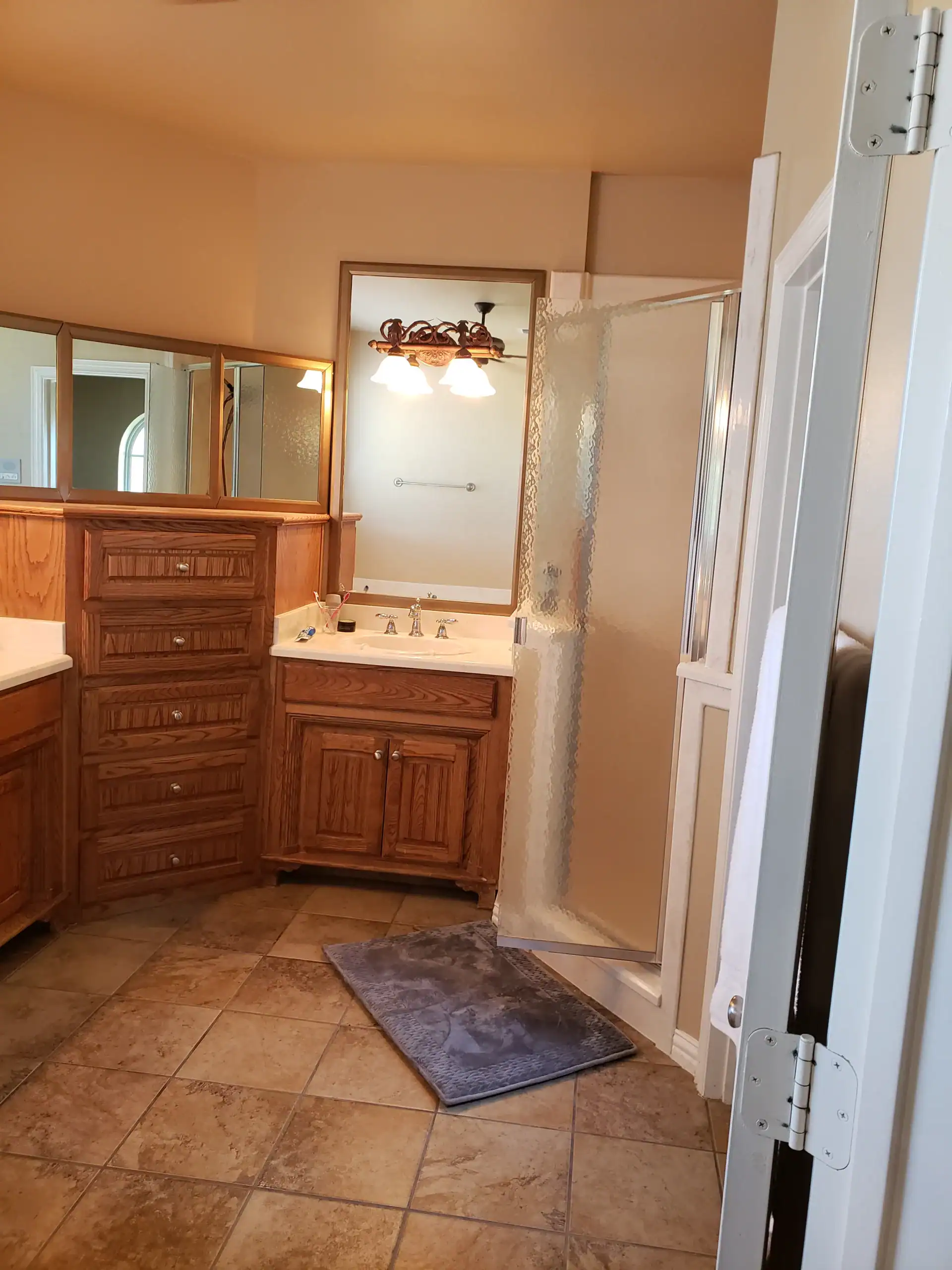
A bathroom with tan tile floor, wooden cabinets, a small shower with frosted glass, a double sink vanity, mirrors on the walls, and a purple bath mat on the floor.

What Actually Triggers a Permit for Bathroom Tile Work in Texas?

Here’s where homeowners get caught off guard. They start with the intention of just retiling a shower, then discover the old pan is failing, or the waterproofing was never done right, or the drain needs to move to accommodate a new layout. Suddenly the scope has changed — and so has the permit requirement.

In Texas, a permit is typically required when your bathroom project involves any of the following: moving or rerouting plumbing supply lines or drains, adding or relocating electrical outlets or GFCI receptacles, installing heated flooring systems tied to your electrical panel, making structural changes like removing or moving walls, or replacing a bathtub in a way that affects the surrounding structure.

Fort Worth specifically requires a building permit for interior remodels that affect 16 or more square feet, involve structural changes, or touch electrical, mechanical, or plumbing systems. We follow the 2021 International Residential Code, and the city adopted the 2023 National Electrical Code in March 2024 — which tightened GFCI protection requirements in bathrooms. If your retile project includes any electrical updates, those requirements are active and enforced.

The practical takeaway is this: if you’re truly just swapping tile for tile — same footprint, no plumbing changes, no electrical work, no wall demolition — you likely don’t need a permit. But if there’s any doubt about what’s behind those walls, or if your project has grown beyond a simple surface swap, that’s exactly the kind of question we should answer before work begins, not after.

One more thing worth knowing: even when a permit isn’t required, the quality of the work underneath the tile still matters. Proper waterproofing membranes, cement board backer in wet areas, and materials rated for Texas humidity aren’t optional niceties — they’re what separates a tile job that lasts 20 years from one that fails in five.

What Happens If You Skip a Permit That Was Actually Required?

This is the part most contractors don’t explain clearly enough. If a permit was required for your bathroom project and it wasn’t pulled, the legal and financial exposure falls on you — the homeowner — not the contractor who did the work.

Nearly 63% of renovation disputes in Texas involved missing permits. That’s not a small number. And 52% of failed bathroom inspections in the state involved work done without the proper permits in place. These aren’t edge cases — they’re common outcomes when the permit question gets brushed aside.

The consequences show up in a few specific ways. The most immediate is a home inspection. Fort Worth’s real estate market is active and competitive, and buyers’ agents and inspectors here are experienced at checking permit records. Unpermitted work discovered during a sale can delay the closing, trigger demands for price reductions, or cause buyers to walk away entirely. Retroactive permitting — trying to legalize unpermitted work after the fact — often requires opening walls, bringing systems up to current code, and paying for re-inspection. It’s almost always more expensive than doing it right the first time.

There’s also the insurance angle. Homeowners’ insurance costs have risen significantly in recent years, and insurers are paying closer attention to code compliance. If you file a claim related to a bathroom that had unpermitted work, your coverage could be reduced or denied.

The most common scenario we hear from homeowners is this: a contractor suggested skipping the permit to “save time and money,” and the homeowner agreed without realizing they were absorbing all the risk. If a contractor ever discourages you from pulling a required permit, that’s not a favor — it’s a red flag.

Want live answers?

Connect with a A Plus Home Remodel expert for fast, friendly support.

Building Permit Requirements for Bathroom Remodels in Fort Worth and Tarrant County

Here’s something that surprises a lot of homeowners: Tarrant County itself does not issue building permits. The county doesn’t enforce building codes in unincorporated areas. For most residents, though, their property falls within a city’s limits — Fort Worth, Arlington, Southlake, Keller, Azle, Mansfield — and that city’s building department is the one that governs their project.

This matters because each city has its own permitting department, its own fee schedule, and its own process. What applies in Fort Worth doesn’t automatically apply in Euless or Grapevine. Knowing which city’s rules govern your address is step one — and it’s something we should already know without you having to figure it out.

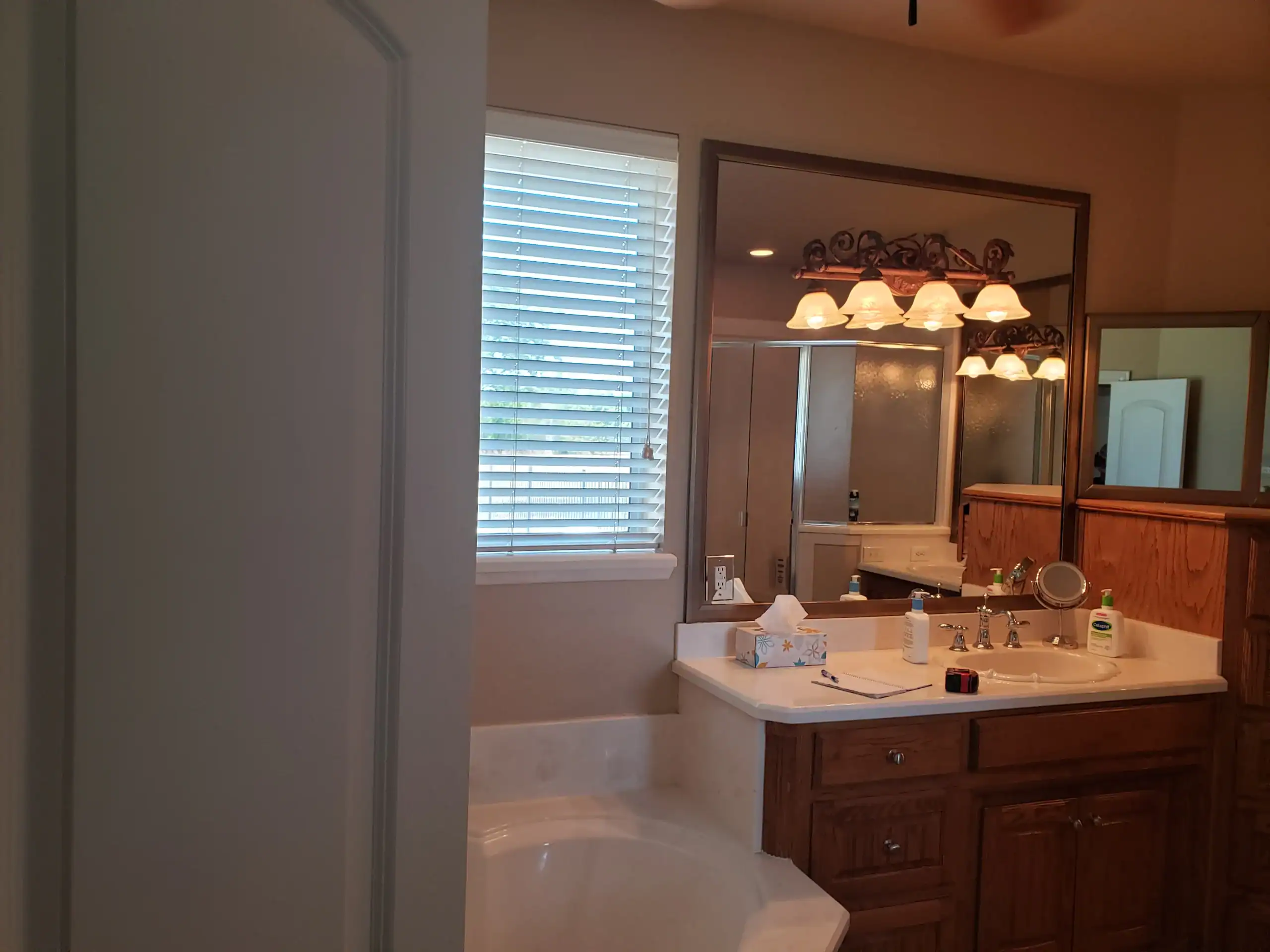
A bathroom with a large mirror, wooden cabinets, a countertop with toiletries, a bathtub, a window with blinds, and a glass shower enclosure. The lights above the mirror are turned on.

Fort Worth Bathroom Permit Costs and How the Process Works

For homeowners in Fort Worth specifically, residential remodel permits start at $112 and increase depending on the trades involved — plumbing, electrical, mechanical. Fort Worth’s permitting portal allows online applications, and straightforward residential projects are typically processed within days to a couple of weeks, not months. It’s worth noting that Fort Worth development fees increased 12.5% on October 1, 2024, so if you’ve been putting off a bathroom project, that cost has already moved.

The permit process itself involves submitting your project scope to the city’s building department, paying the applicable fee, and scheduling inspections at key stages of the work. For a bathroom remodel that includes plumbing changes, you’d typically have a rough-in inspection before the walls close and a final inspection once the work is complete. The inspections exist to confirm the work was done correctly — not to make your life harder.

One question homeowners often have is whether they can pull the permit themselves or whether the contractor has to do it. In Texas, either party can apply, but when a licensed contractor pulls the permit, they’re taking on professional responsibility for the work meeting code. That accountability matters. It also means the work is on record — which protects you if questions come up later.

We handle all permit applications and inspections as part of every project we take on. We’ve built working relationships with local building officials across Tarrant County, which helps the process move efficiently. You shouldn’t have to navigate that on your own.

Do You Need a Permit to Add a Bathroom in Texas?

Adding a bathroom is a completely different conversation from retiling one. If you’re considering adding a new bathroom to your home — converting a closet, finishing a basement, or building an addition — permits are not optional. Full stop.

A new bathroom involves new plumbing rough-in connected to your existing supply and drain system, new electrical circuits and GFCI-protected outlets, and in many cases structural changes to accommodate the layout. In Texas, this means you’ll need at minimum a building permit, a plumbing permit, and an electrical permit. Depending on your city and the scope of the work, a mechanical permit may also be required.

The inspection process for a bathroom addition is more involved than for a remodel. You’ll have rough-in inspections for plumbing and electrical before walls close, framing inspections if structural work is involved, and a final inspection once everything is complete. Skipping any of these stages creates the same risks described earlier — failed home inspections at resale, insurance complications, and the possibility of having to tear out finished work to allow for re-inspection.

For Tarrant County homeowners specifically, the permitting requirements for a bathroom addition will depend on which city your property is in. Fort Worth, Arlington, Southlake, and other cities in the area each have their own processes and fee structures. If you’re in an unincorporated part of the county, the situation is different again — and worth clarifying before you start planning.

The bottom line on adding a bathroom: budget for permits from the beginning, work with a licensed contractor who will pull them, and treat the inspection process as a built-in quality check rather than a hurdle. The inspections are there to make sure the plumbing doesn’t leak and the electrical is safe. That’s actually in your interest.

Working With a Contractor Who Handles Permits the Right Way in Fort Worth

The permit question doesn’t have to be complicated. For most straightforward tile replacements, you’re in the clear. For anything that touches plumbing, electrical, or structure, a permit is required — and the right contractor will tell you that upfront, not after the fact.

What you want is someone who already knows the rules in your city, pulls every permit the project requires, and builds that process into the timeline without making it your problem to manage. That’s how it should work.

We’ve been doing this work locally in Fort Worth, Arlington, Southlake, and the surrounding Tarrant County area since 1990. Reach out for a fixed-price estimate — no hidden fees, no permit surprises, and no guesswork about whether the job was done to code.

Article details:

Share: