
Summary:
You’re planning a remodel — maybe a kitchen overhaul, a bathroom update, or finally finishing that back patio. And somewhere in the middle of all the planning, the question comes up: do you actually need a permit for this? It’s a fair question, and the answer isn’t always obvious. Texas doesn’t have a single statewide rulebook for residential renovations. What requires a permit in Fort Worth might be handled differently in Southlake or Haltom City. Here’s what you need to know before the first wall comes down.
What Home Improvements Require a Permit in Texas?
The short answer is: anything that touches your home’s structure, electrical system, plumbing, or HVAC almost always requires a permit. That includes adding or moving walls, upgrading your electrical panel, rerouting plumbing, installing a new HVAC system, or building an addition. If the work changes how your home is built or how its core systems function, a permit is typically required.
Cosmetic work is usually exempt. Painting, replacing flooring, swapping out countertops, or installing new cabinets in the same location generally don’t require permits in most Texas cities. The line isn’t cosmetic versus major — it’s whether a licensed inspector needs to verify that the work is safe before it’s closed up behind drywall.
Do You Need Permits to Remodel a Kitchen in Texas?
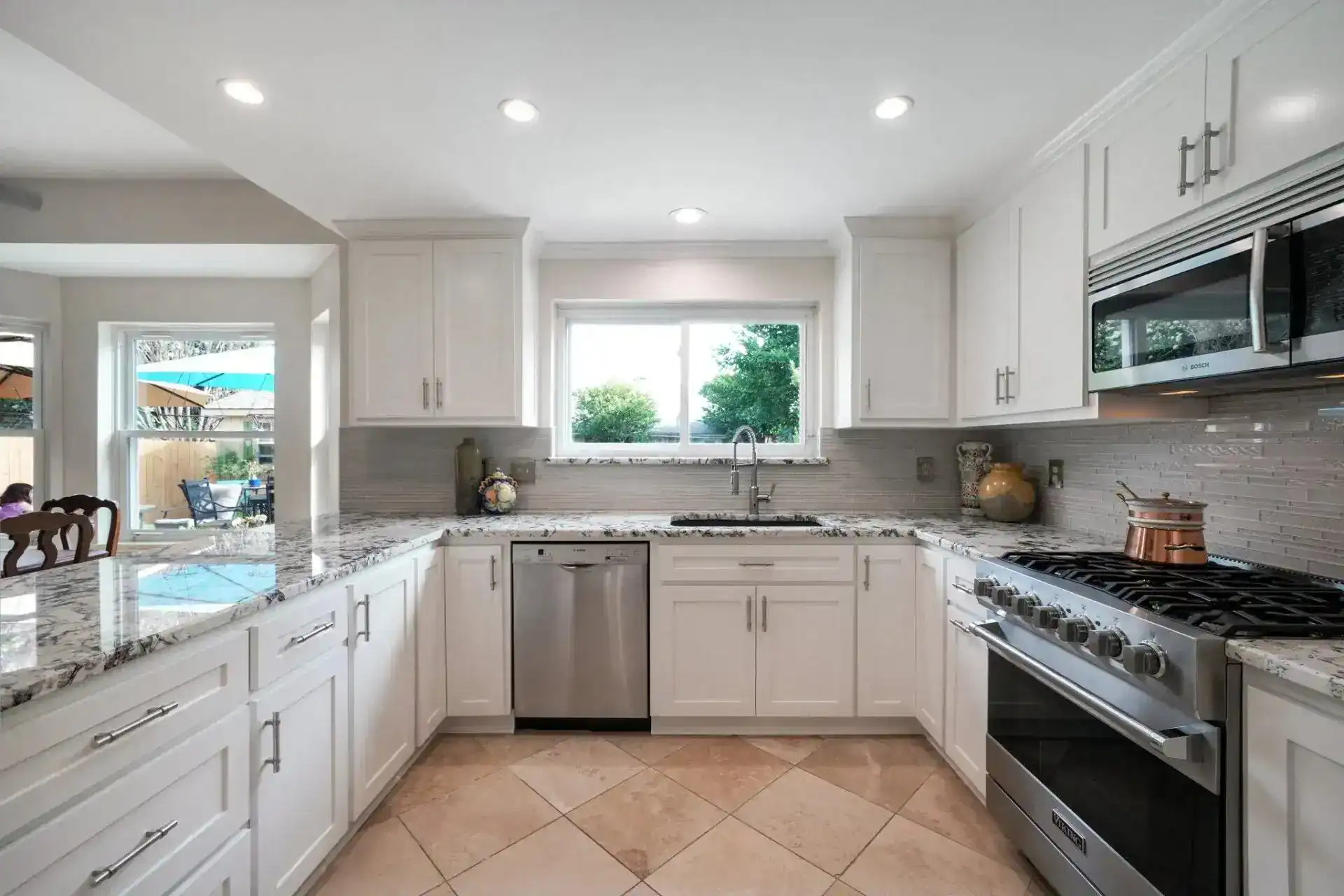
Kitchen remodels are one of the most common projects where homeowners get tripped up on permits — because the answer depends entirely on what you’re actually changing. If you’re replacing cabinet doors, installing new countertops, or putting in new flooring, you’re generally in the clear. Those are finish-level updates that don’t affect any systems, and most Texas cities don’t require a permit for that kind of work.
But the moment you start moving things — relocating the sink, adding an outlet, upgrading to a larger range hood that requires new ductwork, or knocking out a wall to open up the kitchen — you’re in permit territory. Electrical and plumbing modifications almost always require permits, regardless of how minor they seem. Adding a single outlet in the wrong location without a permit can create problems that are expensive to unwind later.
In Fort Worth specifically, permit requirements kick in as soon as you’re altering any electrical circuit, modifying plumbing supply or drain lines, or making structural changes. The city’s Development Services Department administers these permits, and they take unpermitted work seriously — general violations can run $500 per day, and anything touching fire safety or public health can reach $2,000 per day.
The practical takeaway: if your kitchen remodel involves anything beyond surface-level finishes, assume a permit is involved and plan accordingly. A contractor who tells you otherwise — without a clear, specific reason — is worth questioning.
Do I Need a Permit for a Bathroom Remodel in Texas?
Bathroom remodels follow the same logic as kitchens, but the stakes are arguably higher because bathrooms involve both plumbing and electrical in a wet environment — exactly the combination that building codes are most focused on protecting.
Replacing a toilet, vanity, or faucet in the same location with a like-for-like fixture typically doesn’t require a permit in Fort Worth or most Tarrant County cities. That kind of in-kind replacement doesn’t alter the system — it just swaps out the hardware. But if you’re moving the toilet, relocating the shower, adding a soaking tub where there wasn’t one, or reconfiguring the layout in any meaningful way, you’ll need permits for the plumbing work involved.
On the electrical side, adding or moving outlets, installing new lighting circuits, or upgrading ventilation fans that require new wiring all require permits. GFCI protection requirements in wet areas are something inspectors specifically look for, and unpermitted electrical work in a bathroom is a real safety issue — not just a paperwork one.
Here’s something worth knowing about Tarrant County specifically: the area isn’t governed by a single building department. Fort Worth, Southlake, Haltom City, Azle, Mansfield, and Arlington each have their own permit offices and their own fee schedules. The rules are similar in most cases, but the process for applying and the timelines can vary. If you’re not sure which jurisdiction your property falls under, that’s the first question to answer before any work begins.
What Happens If You Remodel Without a Permit in Texas?
The consequences of skipping permits aren’t hypothetical. In Fort Worth, unpermitted work can result in fines of $500 per day for general violations — and up to $2,000 per day if the work involves fire safety or public health concerns. Beyond the fines, the city can issue a stop work order mid-project, or require you to open up completed work for inspection after the fact.
The longer-term risks are just as real. Homeowner’s insurance typically won’t cover damage that stems from unpermitted work. And when you go to sell, unpermitted renovations are increasingly flagged by buyers’ inspectors and appraisers — creating disclosure obligations and giving buyers leverage to negotiate your price down or walk away entirely.
Can a Homeowner Pull Their Own Electrical Permit in Texas?
This is one of the most searched questions on the topic, and the answer has an important nuance that most people miss. Texas law does include a homestead exemption that allows homeowners to pull permits for electrical and plumbing work on their primary residence — but only if they are personally doing all of the work themselves. The exemption exists for true owner-builder situations where the homeowner is the one picking up the tools.
What the exemption does not allow is for a homeowner to pull an electrical permit on behalf of an unlicensed electrician who is actually doing the work. In jurisdictions governed by the Texas Department of Licensing and Regulation — which covers most of Tarrant County — electrical permits must be pulled by a TDLR-licensed electrical contractor. A homeowner who pulls the permit while an unlicensed contractor performs the work is not protected by the exemption, and the work may not pass inspection.
This matters because one of the most common red flags in the contractor world is a contractor who asks the homeowner to pull the permit. Legitimate, licensed contractors pull their own permits. When a contractor shifts that responsibility to you, it often signals that they’re unlicensed, have code violations on record, or are trying to distance themselves from accountability if something goes wrong. It’s worth asking directly before any contract is signed: who pulls the permits on this project?
How the Permit Process Works in Tarrant County, TX
Navigating permits in Tarrant County is more involved than most homeowners expect — not because the rules are unreasonable, but because the county contains dozens of incorporated cities, each running its own building department. If your home is in Fort Worth, you’re working with the Fort Worth Development Services Department. If you’re in Southlake, Haltom City, Azle, or Arlington, you’re dealing with a different office, different forms, and potentially different timelines.
Most Tarrant County municipalities follow the 2021 International Residential Code with local amendments. That means the underlying framework is consistent, but each city has layered its own requirements on top. Permit fees, plan review timelines, and inspection scheduling all vary. For a straightforward bathroom remodel in Fort Worth, the process is generally manageable — but for a full kitchen renovation with electrical and plumbing modifications, you may be coordinating multiple permit types across different review queues.
The inspection piece is where a lot of homeowners feel the most uncertainty. Inspectors aren’t looking for reasons to fail your project — they’re verifying specific safety items: proper grounding and bonding, correct wire gauges, GFCI protection in wet areas, and structural adequacy. When the work is done right and the permit is in order, inspections are typically straightforward. The problems arise when work is done without permits, or when walls are closed before the required inspections are completed.
This is why working with a contractor who handles the permitting process as part of their standard service makes a real difference. It’s not just about convenience — it’s about having someone in your corner who knows which office to call, what the local inspectors are looking for, and how to keep your project moving without unnecessary delays.
How to Remodel Your House in Texas Without the Permit Headache
The permit process in Texas — and in Tarrant County specifically — isn’t designed to slow you down. It exists to make sure the work in your home is safe, insured, and worth what you paid for it. The homeowners who run into trouble aren’t usually the ones who asked too many questions. They’re the ones who trusted a contractor who said permits weren’t necessary, or who didn’t know what questions to ask in the first place.
If you’re planning a remodel in the Fort Worth area, the best starting point is a contractor who treats permits as a given — not an afterthought, not an upsell, and not your problem to figure out. That’s how we approach every project at A Plus Home Remodel. We’ve been working across Tarrant County since 1990, and we handle the permits, the inspections, and the coordination so you don’t have to.
If you’re ready to start planning, reach out to us. We’ll give you a straight answer about what your project requires — and handle everything that comes after.