Concrete Patio Contractors in [TOWN]: What Your Estimate Must Include

Not all patio estimates are created equal. Here's what to look for — and what missing line items could cost you down the road.

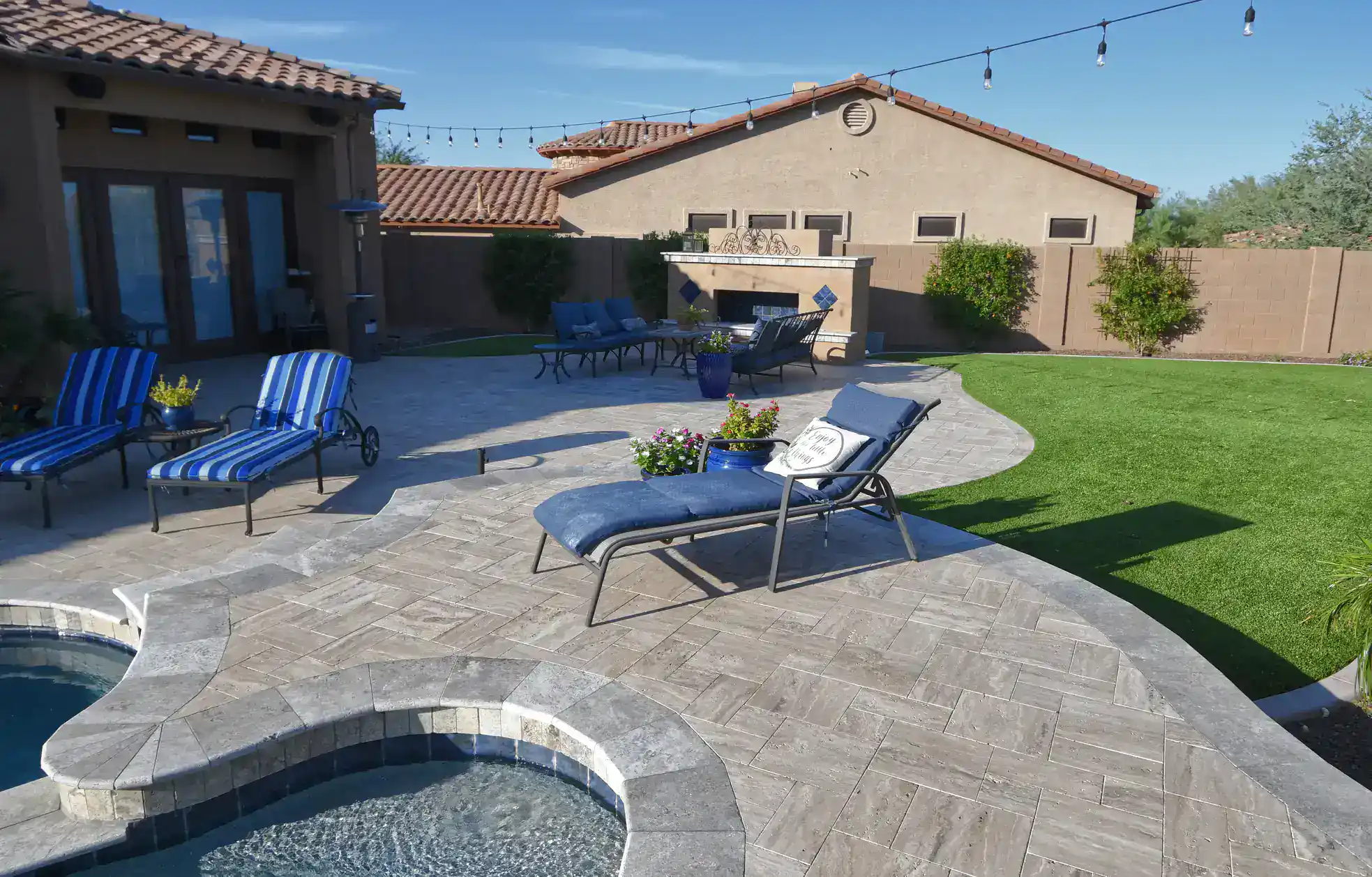
A backyard in TX with a pool, three blue-striped lounge chairs, string lights, outdoor seating by a fireplace, and a patio area with tile flooring and artificial grass—perfect inspiration from a top Home Remodeling Contractor Tarrant County.

Summary:

Getting quotes from concrete patio contractors is easy. Understanding what those quotes actually cover is a different story. This page breaks down exactly what a solid estimate should include, what red flags look like, and why the details buried in the fine print matter more than the bottom-line number. If you’re planning a concrete patio in [TOWN] or anywhere in the DFW area, this is worth reading before you sign anything. The difference between a smooth project and a costly headache usually comes down to what was — and wasn’t — in the original estimate.
Table of contents

You’ve decided to add a concrete patio. Maybe you want somewhere to cook out, somewhere the kids can play, or just a reason to actually use your backyard. You’ve reached out to a few concrete patio contractors, and the quotes are coming in. Some are close. Some are wildly different. And none of them seem to explain why.

That gap — between what’s on paper and what actually gets built — is where most homeowner frustration lives. This page is about closing it. By the end, you’ll know exactly what a legitimate estimate should include, what to ask when something’s missing, and what separates a contractor worth hiring from one worth avoiding.

What a Concrete Patio Estimate Should Actually Cover

A good estimate isn’t just a number. It’s a document that tells you, in plain language, what you’re getting, how it’s being built, and who’s responsible if something goes wrong. If an estimate doesn’t answer those three things, it’s not really an estimate — it’s a placeholder.

The total price matters, obviously. But what’s underneath that number matters more. Two quotes can look identical on the surface and represent completely different scopes of work. One contractor might be pricing a reinforced, properly drained slab with a sealed finish and permit included. Another might be pricing a bare pour with no rebar, no drainage plan, and no permit — leaving you to figure out the rest.

Concrete Installation Services: What Should Be Itemized Line by Line

When you’re reviewing an estimate for concrete installation services, the line items tell you more than the total. Here’s what should be spelled out clearly before any work begins.

Site preparation is the starting point, and it’s often where corners get cut. This means excavating the area to the right depth, grading the ground so water drains away from your home, and laying a compacted gravel or crushed stone sub-base. In [TOWN] and throughout Tarrant County, that sub-base isn’t optional — it’s what keeps your patio from shifting and cracking as the clay soil underneath expands and contracts with moisture. The black clay soil throughout this part of North Texas is notoriously expansive. It moves. A patio poured directly onto unprepared clay is a cracking problem waiting to happen.

Steel reinforcement — rebar or wire mesh — should be listed explicitly. Some contractors leave it out of the base price and treat it as an add-on. That’s backwards. On Tarrant County soil, reinforcement is a baseline necessity, not an upgrade. The estimate should state the type, spacing, and placement of reinforcement so you know it’s actually planned for, not assumed.

Concrete mix design and thickness should also be specified. A standard residential patio is four inches thick minimum; heavier-use areas call for six. The PSI rating of the mix matters too — higher PSI means stronger, more durable concrete. If the estimate just says “concrete patio” with no specs, you have no way of knowing what you’re getting.

Finishing and sealing should be included or clearly noted as optional with a separate price. A sealed surface resists staining, handles Texas weather better, and lasts significantly longer than an unsealed one. If it’s not in the estimate, ask.

Finally, permits. Most cities in Tarrant County, including [TOWN], require a permit for concrete work attached to a structure. If permits aren’t listed in the estimate, find out who’s pulling them — and who’s paying for them. A contractor who skips permits isn’t saving you money. They’re shifting the legal risk onto you.

Red Flags in a Concrete Patio Estimate That Most Homeowners Miss

Some red flags are obvious. A contractor who asks for the full payment upfront, insists on cash only, or can’t produce proof of insurance — those are easy calls. But there are subtler warning signs that are just as important and a lot easier to miss when you’re comparing quotes side by side.

A vague scope of work is one of the biggest. If the estimate says “install concrete patio” and nothing else, you’re signing a blank check. There’s no definition of what’s included, no specs to hold anyone accountable to, and no clear basis for resolving a dispute if the finished product doesn’t match your expectations. A legitimate estimate reads like a plan, not a receipt.

Watch for missing drainage language. Drainage isn’t glamorous, but it’s critical — especially in North Texas where heavy spring rains can dump several inches of water in a matter of hours. Your patio should be pitched a minimum of one-eighth inch per foot away from your home’s foundation. If that’s not addressed in the estimate, water will find its own path, and it may find it under your slab or toward your foundation.

Subcontractor use is worth asking about directly. Some contractors win the job and hand it off to a sub you’ve never met, whose qualifications you haven’t vetted, and who has no direct relationship with you. If something goes wrong, accountability gets murky fast. Ask whether the crew doing the work is employed directly by the company you’re hiring.

Change orders are another area to pin down before the project starts. A fixed-price estimate means the number on paper is the number you pay — unless you change the scope. An estimate that includes language like “subject to adjustment based on conditions” gives the contractor room to add costs after work has begun, when you’re committed and have less leverage. Get clarity on this upfront.

One thing worth knowing specific to Texas: the state doesn’t require a general contractor license the way many other states do. That means you can’t simply look up a license number to verify legitimacy. Instead, look for BBB accreditation, city-level registration, verifiable insurance, and a track record of permitted work in your area. Those are the signals that actually matter here.

Decorative Concrete Installation: When You Want More Than a Plain Gray Slab

Plain concrete is durable and cost-effective, but it’s not your only option. Decorative concrete installation has become increasingly popular across Tarrant County — and for good reason. It gives you the look of natural stone, brick, or tile at a fraction of the cost, with the long-term durability concrete is known for.

More than half of all patios installed nationally in recent years have included some form of decorative finish. Homeowners in [TOWN] and surrounding communities like Colleyville, North Richland Hills, and Mansfield are choosing stamped and stained concrete specifically because it adds visual interest without adding the maintenance demands of natural stone or wood.

What Is Stamped Concrete and Is It Worth the Cost?

Stamped concrete is poured the same way as standard concrete, but before it fully sets, texture molds are pressed into the surface to create patterns — cobblestone, slate, flagstone, wood plank, and more. Color is either mixed into the concrete itself or applied as a surface release during the stamping process, then sealed to lock everything in.

The result looks significantly more finished than a plain gray slab, and it holds up well in Texas conditions when installed correctly. The key phrase there is “installed correctly.” Stamped concrete requires proper timing during the pour — the window for stamping is narrow, and an inexperienced crew can end up with a surface that’s either too soft or too stiff to stamp cleanly. The finish also needs to be sealed on a regular schedule to maintain its appearance and protect against weathering.

From a cost standpoint, decorative concrete installation typically runs between eight and thirty dollars per square foot depending on the pattern complexity, color choices, and the size of the project. That’s more than plain concrete, but the ROI is strong. A well-done stamped concrete patio in the DFW area can return 80 to 90 percent of its cost in home value. For a space that also gets used regularly — backyard cookouts, fall evenings outside, kids playing — the functional value is harder to put a number on.

When you’re getting estimates for decorative concrete, the contractor’s credentials matter more than they do for a plain pour. Ask whether they hold any certifications specific to decorative flatwork. Proper certification ensures the right products are applied in the right sequence, and in some cases it qualifies the project for extended material warranties from the manufacturer. That’s not a minor detail — it’s the difference between a finish that holds up for decades and one that starts showing wear within a few years.

How to Compare Decorative Concrete Estimates Without Getting Confused

Decorative concrete estimates can be harder to compare than plain concrete quotes because there are more variables — pattern choice, color options, sealer type, number of coats, and whether the crew is certified to apply the specific products they’re using. A lower quote might reflect a simpler pattern, a thinner pour, no sealer, or a crew that’s less experienced with decorative work. A higher quote might be entirely justified — or it might not be. The estimate itself should tell you which.

Look for the same fundamentals you’d expect in any concrete estimate: site prep, reinforcement, thickness, drainage slope, and permit inclusion. Then look for the decorative-specific details: the pattern name or description, the color system being used (integral color vs. surface release vs. acid stain), the sealer product and application schedule, and any warranty on the decorative finish specifically.

Ask to see photos of completed decorative concrete projects in [TOWN] and the surrounding area. Not stock photos — actual local work. Tarrant County’s climate puts real demands on outdoor surfaces. Summer heat, spring storms, and the occasional winter freeze all affect how a decorative finish holds up over time. A contractor who’s been doing this work in Fort Worth, Arlington, and [TOWN] for years understands those conditions in a way a newer or out-of-area crew simply doesn’t.

One thing that often gets overlooked in decorative concrete estimates is the long-term sealing schedule. A quality stamped or stained patio should be resealed every two to three years depending on sun exposure and foot traffic. Some contractors include the first resealing in the original estimate or warranty period. Others don’t mention it at all. It’s worth asking, because an unsealed decorative surface in the North Texas sun will fade and wear faster than you’d expect.

Choosing the Right Concrete Patio Contractors in [TOWN]

The right contractor isn’t always the one with the lowest quote or the fastest turnaround. It’s the one whose estimate actually tells you what you’re getting — with enough specificity that you’d know if something was missing or done wrong.

In [TOWN] and throughout Tarrant County, where clay soil and weather variability create real challenges for outdoor concrete work, the details in that estimate matter more than they might elsewhere. Proper base prep, steel reinforcement, drainage planning, and permitted work aren’t extras — they’re what separates a patio that lasts thirty years from one that starts cracking in three.

We’ve been doing this work in Tarrant County since 1990. If you’re ready to get a quote that actually answers your questions, reach out and see what a fixed-price, fully itemized estimate looks like when it’s done right.
Share:

Summary:

Getting quotes from concrete patio contractors is easy. Understanding what those quotes actually cover is a different story. This page breaks down exactly what a solid estimate should include, what red flags look like, and why the details buried in the fine print matter more than the bottom-line number. If you’re planning a concrete patio in [TOWN] or anywhere in the DFW area, this is worth reading before you sign anything. The difference between a smooth project and a costly headache usually comes down to what was — and wasn’t — in the original estimate.
Table of contents

You’ve decided to add a concrete patio. Maybe you want somewhere to cook out, somewhere the kids can play, or just a reason to actually use your backyard. You’ve reached out to a few concrete patio contractors, and the quotes are coming in. Some are close. Some are wildly different. And none of them seem to explain why.

That gap — between what’s on paper and what actually gets built — is where most homeowner frustration lives. This page is about closing it. By the end, you’ll know exactly what a legitimate estimate should include, what to ask when something’s missing, and what separates a contractor worth hiring from one worth avoiding.

What a Concrete Patio Estimate Should Actually Cover

A good estimate isn’t just a number. It’s a document that tells you, in plain language, what you’re getting, how it’s being built, and who’s responsible if something goes wrong. If an estimate doesn’t answer those three things, it’s not really an estimate — it’s a placeholder.

The total price matters, obviously. But what’s underneath that number matters more. Two quotes can look identical on the surface and represent completely different scopes of work. One contractor might be pricing a reinforced, properly drained slab with a sealed finish and permit included. Another might be pricing a bare pour with no rebar, no drainage plan, and no permit — leaving you to figure out the rest.

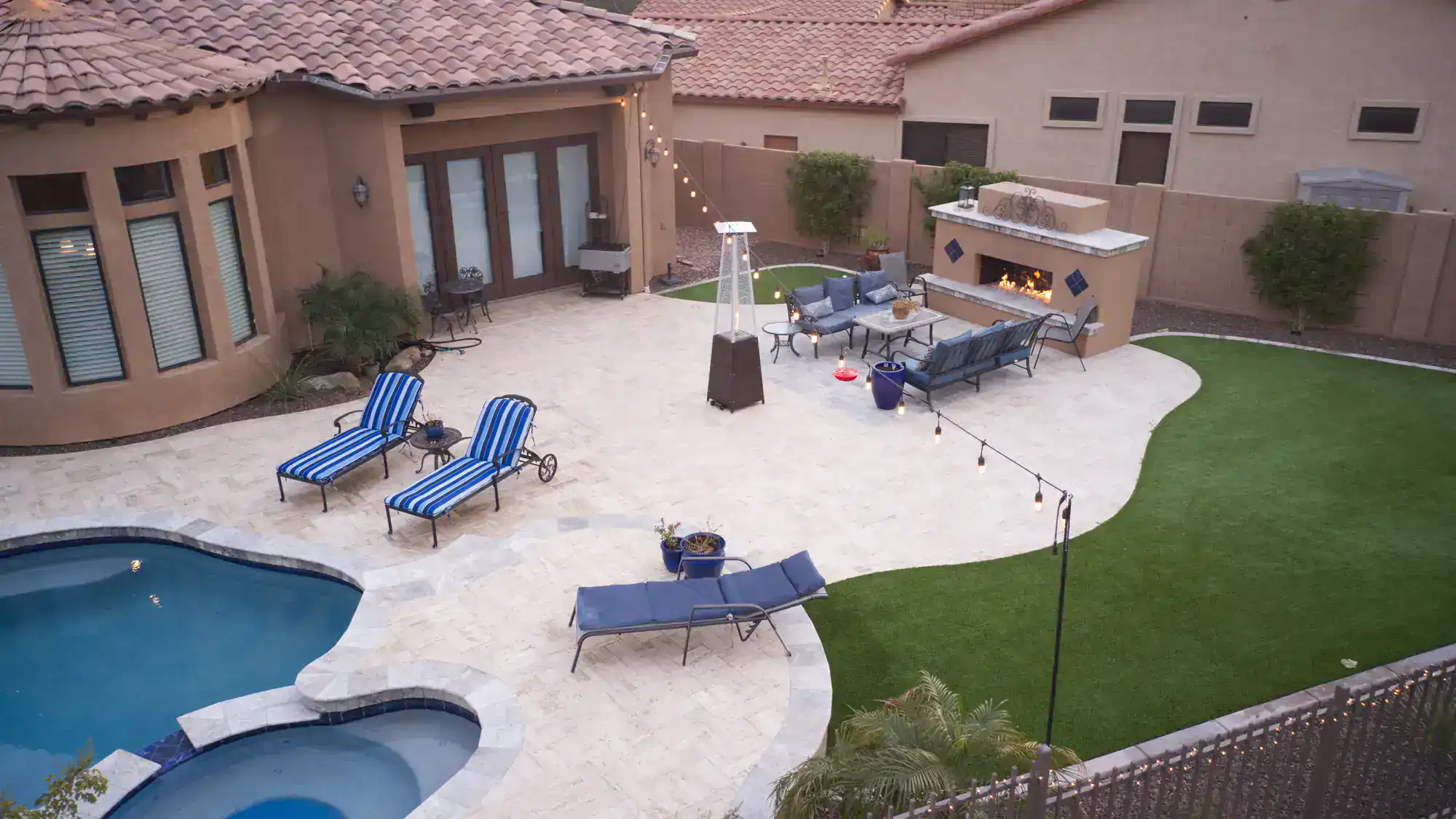
Transform your backyard into a luxurious oasis with a swimming pool, lounge chairs, fire pit patio, outdoor kitchen, and artificial grass—expertly crafted by a trusted Home Remodeling Contractor in Tarrant County, TX.

Concrete Installation Services: What Should Be Itemized Line by Line

When you’re reviewing an estimate for concrete installation services, the line items tell you more than the total. Here’s what should be spelled out clearly before any work begins.

Site preparation is the starting point, and it’s often where corners get cut. This means excavating the area to the right depth, grading the ground so water drains away from your home, and laying a compacted gravel or crushed stone sub-base. In [TOWN] and throughout Tarrant County, that sub-base isn’t optional — it’s what keeps your patio from shifting and cracking as the clay soil underneath expands and contracts with moisture. The black clay soil throughout this part of North Texas is notoriously expansive. It moves. A patio poured directly onto unprepared clay is a cracking problem waiting to happen.

Steel reinforcement — rebar or wire mesh — should be listed explicitly. Some contractors leave it out of the base price and treat it as an add-on. That’s backwards. On Tarrant County soil, reinforcement is a baseline necessity, not an upgrade. The estimate should state the type, spacing, and placement of reinforcement so you know it’s actually planned for, not assumed.

Concrete mix design and thickness should also be specified. A standard residential patio is four inches thick minimum; heavier-use areas call for six. The PSI rating of the mix matters too — higher PSI means stronger, more durable concrete. If the estimate just says “concrete patio” with no specs, you have no way of knowing what you’re getting.

Finishing and sealing should be included or clearly noted as optional with a separate price. A sealed surface resists staining, handles Texas weather better, and lasts significantly longer than an unsealed one. If it’s not in the estimate, ask.

Finally, permits. Most cities in Tarrant County, including [TOWN], require a permit for concrete work attached to a structure. If permits aren’t listed in the estimate, find out who’s pulling them — and who’s paying for them. A contractor who skips permits isn’t saving you money. They’re shifting the legal risk onto you.

Red Flags in a Concrete Patio Estimate That Most Homeowners Miss

Some red flags are obvious. A contractor who asks for the full payment upfront, insists on cash only, or can’t produce proof of insurance — those are easy calls. But there are subtler warning signs that are just as important and a lot easier to miss when you’re comparing quotes side by side.

A vague scope of work is one of the biggest. If the estimate says “install concrete patio” and nothing else, you’re signing a blank check. There’s no definition of what’s included, no specs to hold anyone accountable to, and no clear basis for resolving a dispute if the finished product doesn’t match your expectations. A legitimate estimate reads like a plan, not a receipt.

Watch for missing drainage language. Drainage isn’t glamorous, but it’s critical — especially in North Texas where heavy spring rains can dump several inches of water in a matter of hours. Your patio should be pitched a minimum of one-eighth inch per foot away from your home’s foundation. If that’s not addressed in the estimate, water will find its own path, and it may find it under your slab or toward your foundation.

Subcontractor use is worth asking about directly. Some contractors win the job and hand it off to a sub you’ve never met, whose qualifications you haven’t vetted, and who has no direct relationship with you. If something goes wrong, accountability gets murky fast. Ask whether the crew doing the work is employed directly by the company you’re hiring.

Change orders are another area to pin down before the project starts. A fixed-price estimate means the number on paper is the number you pay — unless you change the scope. An estimate that includes language like “subject to adjustment based on conditions” gives the contractor room to add costs after work has begun, when you’re committed and have less leverage. Get clarity on this upfront.

One thing worth knowing specific to Texas: the state doesn’t require a general contractor license the way many other states do. That means you can’t simply look up a license number to verify legitimacy. Instead, look for BBB accreditation, city-level registration, verifiable insurance, and a track record of permitted work in your area. Those are the signals that actually matter here.

Want live answers?

Connect with a A Plus Home Remodel expert for fast, friendly support.

Decorative Concrete Installation: When You Want More Than a Plain Gray Slab

Plain concrete is durable and cost-effective, but it’s not your only option. Decorative concrete installation has become increasingly popular across Tarrant County — and for good reason. It gives you the look of natural stone, brick, or tile at a fraction of the cost, with the long-term durability concrete is known for.

More than half of all patios installed nationally in recent years have included some form of decorative finish. Homeowners in [TOWN] and surrounding communities like Colleyville, North Richland Hills, and Mansfield are choosing stamped and stained concrete specifically because it adds visual interest without adding the maintenance demands of natural stone or wood.

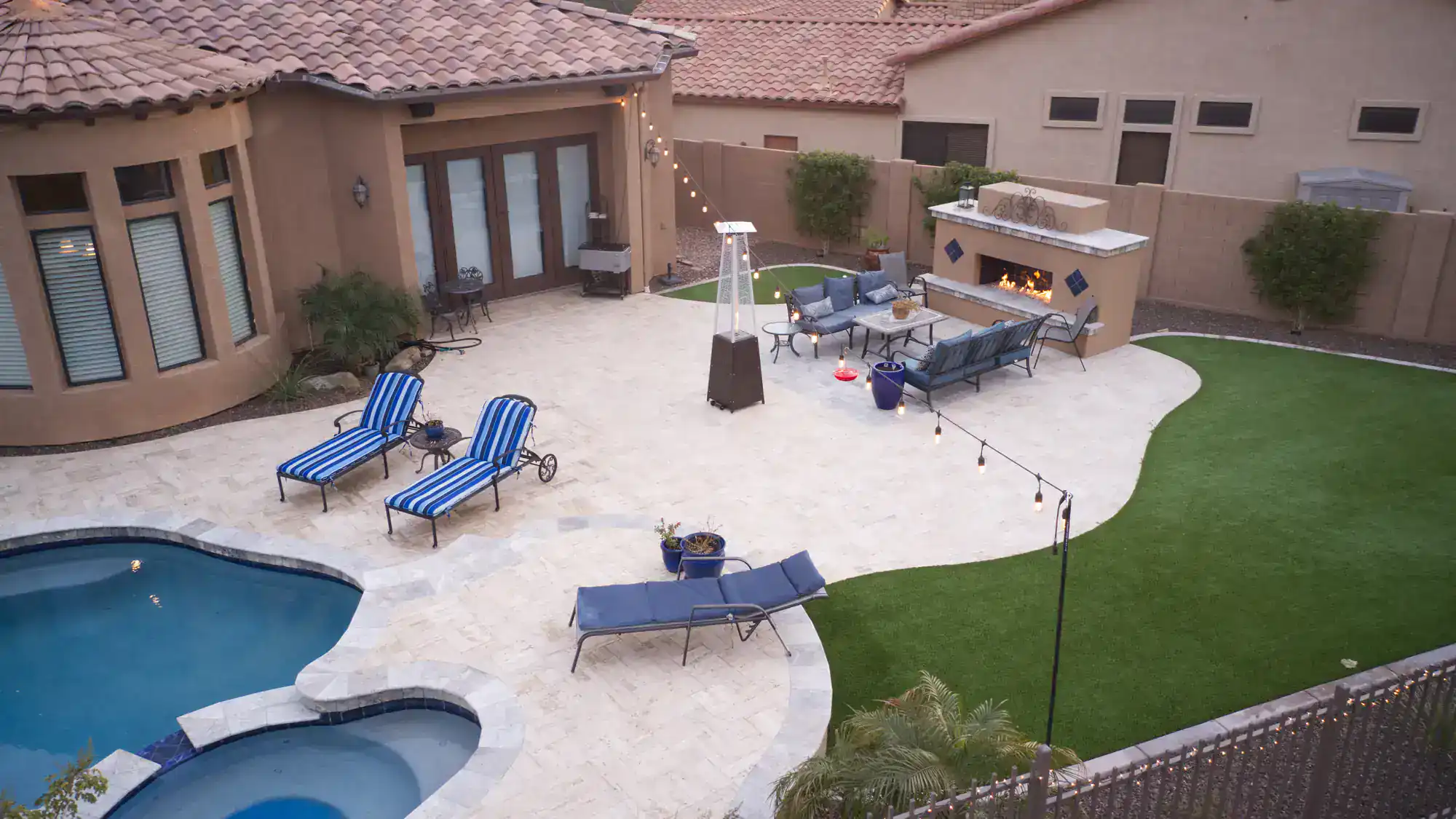
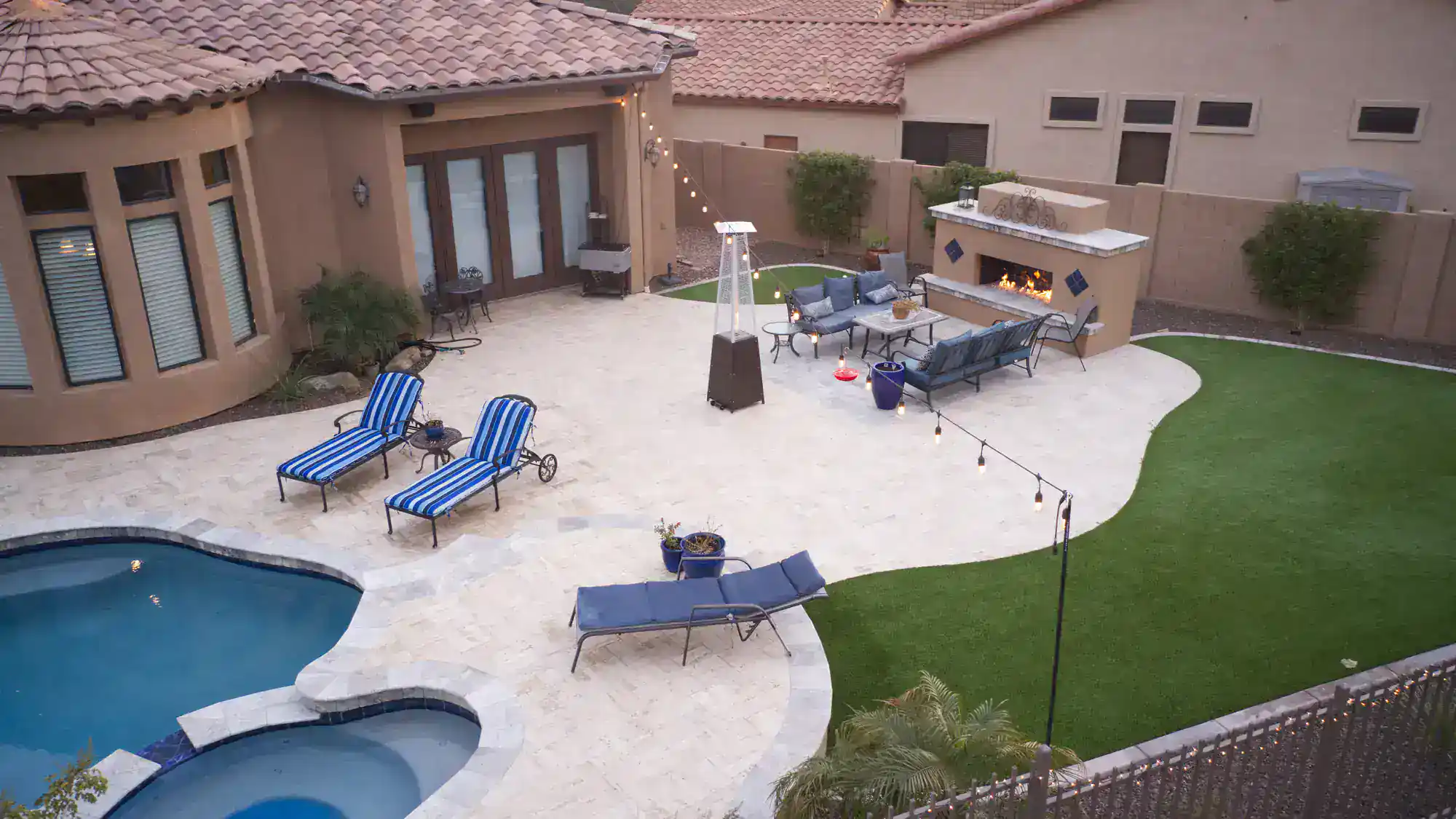
Backyard patio and pool remodel in Tarrant County, Texas with updated outdoor living space

What Is Stamped Concrete and Is It Worth the Cost?

Stamped concrete is poured the same way as standard concrete, but before it fully sets, texture molds are pressed into the surface to create patterns — cobblestone, slate, flagstone, wood plank, and more. Color is either mixed into the concrete itself or applied as a surface release during the stamping process, then sealed to lock everything in.

The result looks significantly more finished than a plain gray slab, and it holds up well in Texas conditions when installed correctly. The key phrase there is “installed correctly.” Stamped concrete requires proper timing during the pour — the window for stamping is narrow, and an inexperienced crew can end up with a surface that’s either too soft or too stiff to stamp cleanly. The finish also needs to be sealed on a regular schedule to maintain its appearance and protect against weathering.

From a cost standpoint, decorative concrete installation typically runs between eight and thirty dollars per square foot depending on the pattern complexity, color choices, and the size of the project. That’s more than plain concrete, but the ROI is strong. A well-done stamped concrete patio in the DFW area can return 80 to 90 percent of its cost in home value. For a space that also gets used regularly — backyard cookouts, fall evenings outside, kids playing — the functional value is harder to put a number on.

When you’re getting estimates for decorative concrete, the contractor’s credentials matter more than they do for a plain pour. Ask whether they hold any certifications specific to decorative flatwork. Proper certification ensures the right products are applied in the right sequence, and in some cases it qualifies the project for extended material warranties from the manufacturer. That’s not a minor detail — it’s the difference between a finish that holds up for decades and one that starts showing wear within a few years.

How to Compare Decorative Concrete Estimates Without Getting Confused

Decorative concrete estimates can be harder to compare than plain concrete quotes because there are more variables — pattern choice, color options, sealer type, number of coats, and whether the crew is certified to apply the specific products they’re using. A lower quote might reflect a simpler pattern, a thinner pour, no sealer, or a crew that’s less experienced with decorative work. A higher quote might be entirely justified — or it might not be. The estimate itself should tell you which.

Look for the same fundamentals you’d expect in any concrete estimate: site prep, reinforcement, thickness, drainage slope, and permit inclusion. Then look for the decorative-specific details: the pattern name or description, the color system being used (integral color vs. surface release vs. acid stain), the sealer product and application schedule, and any warranty on the decorative finish specifically.

Ask to see photos of completed decorative concrete projects in [TOWN] and the surrounding area. Not stock photos — actual local work. Tarrant County’s climate puts real demands on outdoor surfaces. Summer heat, spring storms, and the occasional winter freeze all affect how a decorative finish holds up over time. A contractor who’s been doing this work in Fort Worth, Arlington, and [TOWN] for years understands those conditions in a way a newer or out-of-area crew simply doesn’t.

One thing that often gets overlooked in decorative concrete estimates is the long-term sealing schedule. A quality stamped or stained patio should be resealed every two to three years depending on sun exposure and foot traffic. Some contractors include the first resealing in the original estimate or warranty period. Others don’t mention it at all. It’s worth asking, because an unsealed decorative surface in the North Texas sun will fade and wear faster than you’d expect.

Choosing the Right Concrete Patio Contractors in [TOWN]

The right contractor isn’t always the one with the lowest quote or the fastest turnaround. It’s the one whose estimate actually tells you what you’re getting — with enough specificity that you’d know if something was missing or done wrong.

In [TOWN] and throughout Tarrant County, where clay soil and weather variability create real challenges for outdoor concrete work, the details in that estimate matter more than they might elsewhere. Proper base prep, steel reinforcement, drainage planning, and permitted work aren’t extras — they’re what separates a patio that lasts thirty years from one that starts cracking in three.

We’ve been doing this work in Tarrant County since 1990. If you’re ready to get a quote that actually answers your questions, reach out and see what a fixed-price, fully itemized estimate looks like when it’s done right.

Article details:

Share: