
Common Concrete Patio Contractors Mistakes

Not all concrete patio contractors deliver what they promise. Here's what [TOWN] homeowners should watch for before the first yard gets poured.

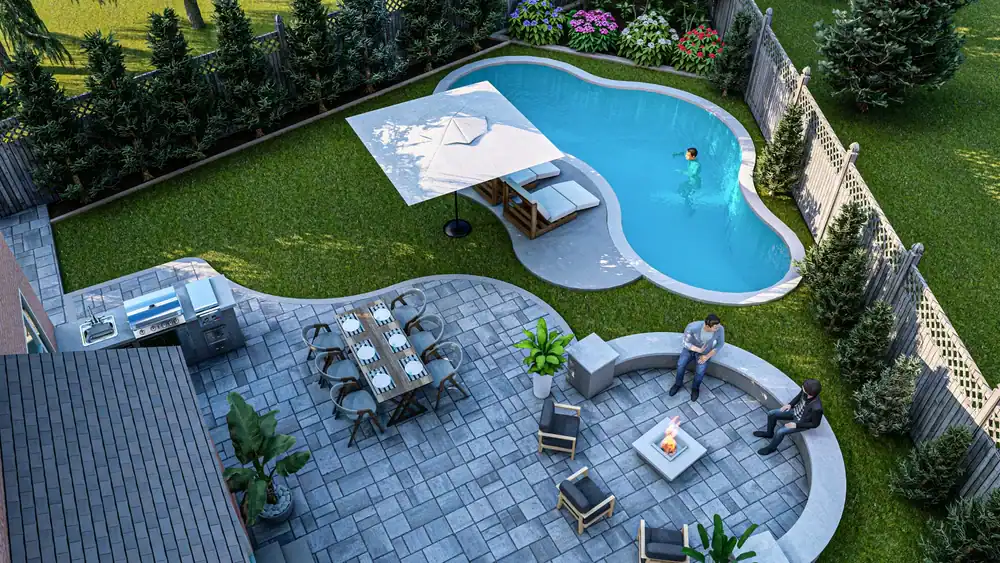
A backyard with a pool, lounge chairs under a large umbrella, a dining table set, a BBQ grill, a fire pit area with seating, and lush landscaping. Two people sit by the fire while someone swims in the pool.

Summary:

Hiring the wrong concrete patio contractor can cost you far more than a bad-looking backyard. From skipped permits to surprise invoices, the mistakes happen fast — and the damage can last years. This guide walks you through what actually goes wrong, why it happens, and what to look for when vetting contractors in the [TOWN] area. Read it before you get your first quote.
Table of contents

Most homeowners don’t realize something went wrong until months after the pour. The patio looked fine at first — then came the cracks, the pooling water, the contractor who stopped returning calls. By that point, the money’s gone and the fix costs just as much as the original job.

If you’re researching concrete patio contractors in [TOWN], you’re already doing the right thing. The problems we see most often aren’t random — they’re predictable, and they’re avoidable. Here’s what to watch for, what questions to ask, and why the details that seem minor upfront tend to matter most in the end.

Outdoor Living Space Design Mistakes That Happen Before Anyone Picks Up a Shovel

The most expensive mistakes in any patio project don’t happen during the pour — they happen during the planning phase, or the lack of one. Homeowners get excited about the finished product, skip the design conversation, and end up with a patio that doesn’t drain properly, doesn’t fit the yard, or looks nothing like what they imagined.

In [TOWN] and across North Texas, this is especially costly. The clay-heavy soil expands and contracts with every rain cycle and dry spell. A patio that wasn’t designed with that movement in mind — with proper slope, drainage planning, and control joint placement — will show it within a year or two. That’s not bad luck. That’s a design problem that started on day one.

What Does Poor Outdoor Living Space Planning Actually Look Like?

It usually starts with a vague scope. A homeowner says they want “a patio out back,” the contractor gives a number, and everyone moves forward without ever nailing down the specifics — dimensions, drainage slope, finish type, whether a cover or pergola might be added later, HOA restrictions, or how the space connects to the rest of the yard.

That vagueness becomes a problem fast. If the patio isn’t sloped correctly away from the house — typically between one-eighth and one-quarter inch per foot — rainwater pools against the foundation. In [TOWN] where spring storms can drop several inches of rain in a few hours, that’s not a minor inconvenience. It’s a foundation risk.

Then there’s scale. A patio that looks proportional on a sketch can feel cramped once it’s poured and furnished. Or the opposite — a contractor oversells square footage, and the homeowner ends up with a slab that dominates the yard and leaves no room for landscaping, play space, or the fire pit they wanted to add later.

The fix isn’t complicated, but it requires a real conversation before any work begins. We use digital design technology so our clients can see the finished space — actual dimensions, finish options, how it sits in the yard — before we pour a single yard of concrete. That step alone eliminates most of the regret we hear about from homeowners who worked with other contractors. You should be able to approve the design, not just describe it and hope for the best.

One more thing worth mentioning: HOA approval. A significant number of communities across [TOWN] — particularly in newer subdivisions — have design standards that govern patio materials, colors, and even size. If your contractor doesn’t ask about your HOA before starting, that’s a problem. Skipping that step can mean tearing out finished work.

Why Texas Clay Soil Changes Everything for Concrete Patio Installation

If you’ve lived in [TOWN] for more than a few years, you’ve seen what the soil does to driveways, sidewalks, and foundations. The clay that runs through North Texas is some of the most expansive soil in the country. It swells when it’s wet and shrinks when it dries out — and that constant movement is brutal on concrete that wasn’t installed with it in mind.

A standard concrete mix poured over uncompacted or improperly prepared subbase will crack. Not might crack — will crack. The question is just how soon and how badly. We’ve been working in this area since the early 1990s, and the projects that fail fastest are almost always the ones where the subbase was rushed or skipped entirely. It’s invisible work — the homeowner can’t see it happening — which is exactly why some contractors cut corners on it.

What proper subbase preparation actually involves: the soil gets compacted, a gravel base gets laid and compacted again, and the grade gets checked for drainage before a single form goes up. In areas with particularly active clay, fiber reinforcement in the concrete mix adds another layer of protection against cracking. Control joints — those deliberate cuts you see in finished concrete — get placed strategically so that if any movement does occur, it happens along those lines rather than randomly across the surface.

This isn’t extra work. It’s the baseline for any concrete patio that’s expected to last 20 to 30 years in North Texas conditions. When a contractor quotes you a price that seems significantly lower than everyone else, it’s worth asking specifically what their subbase process looks like. If they can’t give you a clear answer, that’s your answer.

The concrete mix itself matters too. Residential patios should use concrete rated at 3,000 to 4,000 PSI. Lower-grade mixes save the contractor money on materials and create patios that wear down faster under Texas heat and foot traffic. Ask what PSI they’re specifying. A contractor who’s done this work seriously will know immediately what you’re asking and why.

Decorative Concrete Installation Errors That Cost Homeowners Twice

Stamped and decorative concrete has become one of the most popular patio options in the [TOWN] area — and for good reason. It typically costs 40 to 60 percent less than natural stone while delivering a very similar look, and when it’s installed correctly, it lasts just as long. The problem is that decorative concrete installation has more variables than standard flatwork, and more places for a contractor to cut corners.

The mistakes in this category tend to be invisible at first. The patio looks great on day one. Then the color fades, the sealer peels, or the pattern starts to look inconsistent as the surface weathers unevenly. By the time the homeowner notices, the contractor has moved on to the next job.

Why Stamped Concrete Fades — And When It Shouldn't

The most common complaint we hear about decorative concrete from homeowners who had work done elsewhere is fading. They were sold on a rich, saturated color and within two or three Texas summers, it looked washed out. They were told that’s just what happens with stamped concrete. It isn’t.

Fading is almost always a sealer problem. Decorative concrete needs to be sealed with a product rated for UV exposure — specifically the kind of prolonged, intense UV that [TOWN] sees from May through September. Generic or builder-grade sealers break down faster under that kind of sun, and once the sealer fails, the color underneath is unprotected. A quality sealer applied correctly will hold up for years. It also needs to be reapplied periodically, which is something a good contractor will tell you upfront rather than leaving you to figure out after the fact.

The stamping process itself also has a narrow window in hot weather. Concrete begins to set faster when temperatures climb above 90 degrees, which is a regular occurrence in [TOWN] from June through August. If a crew is rushing to stamp a large patio in midday summer heat, the pattern quality suffers — impressions get shallow or inconsistent because the concrete has already started to stiffen. Experienced crews schedule decorative pours for early morning during summer months and use retarding admixtures when necessary to extend the working window.

Color hardener — the powdered pigment broadcast onto the surface before stamping — is another area where shortcuts show up later. Applied too thin or unevenly, it creates blotchy color that no amount of sealing will fix. This is pure execution quality, and it’s something you can’t evaluate from a quote. It comes down to whether the crew has done enough decorative work to have the technique dialed in. Ask to see photos of completed stamped concrete projects, ideally ones that are two or three years old. That’s when the quality of the installation becomes apparent.

Questions to Ask a Concrete Contractor Before You Sign Anything

Most homeowners go into contractor conversations focused on price. That’s understandable — budget matters. But the questions that actually protect you are the ones most people don’t think to ask until something has already gone wrong.

Start with insurance. Ask for a certificate of general liability insurance and workers’ compensation coverage — not a verbal confirmation, an actual document. If a crew member gets hurt on your property and the contractor doesn’t carry workers’ comp, that liability can fall on you as the homeowner. This isn’t a hypothetical risk. It happens, and it’s entirely preventable by asking one question before work starts.

Ask whether the work will be done by our own crew or subcontracted out. This matters more than most homeowners realize. A contractor can have a great reputation and still send an unfamiliar subcontracted crew to do the actual work. You vetted the company, but strangers show up. Our crew is in-house — the same licensed professionals who handle the estimate handle the installation. That’s not standard in this industry, and it’s worth asking about explicitly.

Ask about permits. In [TOWN], most covered patio structures require a building permit, and the rules vary by municipality. A contractor who suggests skipping permits to save time is creating a problem you’ll deal with later, potentially when you’re trying to sell the house. We pull permits on every project. It adds a step, but it also creates a paper trail of accountability that protects you.

Ask for a written contract with a fixed price and a detailed scope of work. Change orders — additions to the original quote that show up mid-project — are one of the most common sources of homeowner frustration in the remodeling industry. Site preparation alone, depending on soil conditions, can add $500 to $2,000 to a project if it’s not accounted for upfront. A contractor who has done this work in North Texas knows what to expect from the soil and should be able to price the full job before breaking ground, not discover “complications” after you’ve already committed.

Finally, ask about the warranty. A verbal promise that they’ll “make it right” if something goes wrong is worth very little. A written warranty covering both materials and workmanship gives you something to stand on if a problem surfaces six months after the job is done.

How to Hire a Concrete Patio Contractor in [TOWN] Without Regret

The homeowners who end up frustrated aren’t the ones who asked too many questions. They’re the ones who didn’t ask enough, moved too fast on a low quote, or assumed that a contractor who seemed friendly would also be thorough. Those things don’t always go together.

The good news is that none of this is complicated once you know what to look for. Verify insurance. Confirm the crew is in-house. Ask about the subbase process and the concrete mix. Get the price in writing before anyone starts digging. And if a contractor pushes back on permits or can’t show you examples of work that’s held up over time in this climate, trust that reaction.

If you’re planning a concrete patio in [TOWN] and want to talk through what your project actually needs, we’ve been doing this work in this area for over thirty years. Reach out and we’ll start with the details that matter.

Share:

Summary:

Hiring the wrong concrete patio contractor can cost you far more than a bad-looking backyard. From skipped permits to surprise invoices, the mistakes happen fast — and the damage can last years. This guide walks you through what actually goes wrong, why it happens, and what to look for when vetting contractors in the [TOWN] area. Read it before you get your first quote.
Table of contents

Most homeowners don’t realize something went wrong until months after the pour. The patio looked fine at first — then came the cracks, the pooling water, the contractor who stopped returning calls. By that point, the money’s gone and the fix costs just as much as the original job.

If you’re researching concrete patio contractors in [TOWN], you’re already doing the right thing. The problems we see most often aren’t random — they’re predictable, and they’re avoidable. Here’s what to watch for, what questions to ask, and why the details that seem minor upfront tend to matter most in the end.

Outdoor Living Space Design Mistakes That Happen Before Anyone Picks Up a Shovel

The most expensive mistakes in any patio project don’t happen during the pour — they happen during the planning phase, or the lack of one. Homeowners get excited about the finished product, skip the design conversation, and end up with a patio that doesn’t drain properly, doesn’t fit the yard, or looks nothing like what they imagined.

In [TOWN] and across North Texas, this is especially costly. The clay-heavy soil expands and contracts with every rain cycle and dry spell. A patio that wasn’t designed with that movement in mind — with proper slope, drainage planning, and control joint placement — will show it within a year or two. That’s not bad luck. That’s a design problem that started on day one.

A stone patio with six wooden Adirondack chairs arranged in a circle, surrounded by low stone walls, with lawn, shrubs, and a large blue and white house in the background.

What Does Poor Outdoor Living Space Planning Actually Look Like?

It usually starts with a vague scope. A homeowner says they want “a patio out back,” the contractor gives a number, and everyone moves forward without ever nailing down the specifics — dimensions, drainage slope, finish type, whether a cover or pergola might be added later, HOA restrictions, or how the space connects to the rest of the yard.

That vagueness becomes a problem fast. If the patio isn’t sloped correctly away from the house — typically between one-eighth and one-quarter inch per foot — rainwater pools against the foundation. In [TOWN] where spring storms can drop several inches of rain in a few hours, that’s not a minor inconvenience. It’s a foundation risk.

Then there’s scale. A patio that looks proportional on a sketch can feel cramped once it’s poured and furnished. Or the opposite — a contractor oversells square footage, and the homeowner ends up with a slab that dominates the yard and leaves no room for landscaping, play space, or the fire pit they wanted to add later.

The fix isn’t complicated, but it requires a real conversation before any work begins. We use digital design technology so our clients can see the finished space — actual dimensions, finish options, how it sits in the yard — before we pour a single yard of concrete. That step alone eliminates most of the regret we hear about from homeowners who worked with other contractors. You should be able to approve the design, not just describe it and hope for the best.

One more thing worth mentioning: HOA approval. A significant number of communities across [TOWN] — particularly in newer subdivisions — have design standards that govern patio materials, colors, and even size. If your contractor doesn’t ask about your HOA before starting, that’s a problem. Skipping that step can mean tearing out finished work.

Why Texas Clay Soil Changes Everything for Concrete Patio Installation

If you’ve lived in [TOWN] for more than a few years, you’ve seen what the soil does to driveways, sidewalks, and foundations. The clay that runs through North Texas is some of the most expansive soil in the country. It swells when it’s wet and shrinks when it dries out — and that constant movement is brutal on concrete that wasn’t installed with it in mind.

A standard concrete mix poured over uncompacted or improperly prepared subbase will crack. Not might crack — will crack. The question is just how soon and how badly. We’ve been working in this area since the early 1990s, and the projects that fail fastest are almost always the ones where the subbase was rushed or skipped entirely. It’s invisible work — the homeowner can’t see it happening — which is exactly why some contractors cut corners on it.

What proper subbase preparation actually involves: the soil gets compacted, a gravel base gets laid and compacted again, and the grade gets checked for drainage before a single form goes up. In areas with particularly active clay, fiber reinforcement in the concrete mix adds another layer of protection against cracking. Control joints — those deliberate cuts you see in finished concrete — get placed strategically so that if any movement does occur, it happens along those lines rather than randomly across the surface.

This isn’t extra work. It’s the baseline for any concrete patio that’s expected to last 20 to 30 years in North Texas conditions. When a contractor quotes you a price that seems significantly lower than everyone else, it’s worth asking specifically what their subbase process looks like. If they can’t give you a clear answer, that’s your answer.

The concrete mix itself matters too. Residential patios should use concrete rated at 3,000 to 4,000 PSI. Lower-grade mixes save the contractor money on materials and create patios that wear down faster under Texas heat and foot traffic. Ask what PSI they’re specifying. A contractor who’s done this work seriously will know immediately what you’re asking and why.

Want live answers?

Connect with a A Plus Home Remodel expert for fast, friendly support.

Decorative Concrete Installation Errors That Cost Homeowners Twice

Stamped and decorative concrete has become one of the most popular patio options in the [TOWN] area — and for good reason. It typically costs 40 to 60 percent less than natural stone while delivering a very similar look, and when it’s installed correctly, it lasts just as long. The problem is that decorative concrete installation has more variables than standard flatwork, and more places for a contractor to cut corners.

The mistakes in this category tend to be invisible at first. The patio looks great on day one. Then the color fades, the sealer peels, or the pattern starts to look inconsistent as the surface weathers unevenly. By the time the homeowner notices, the contractor has moved on to the next job.

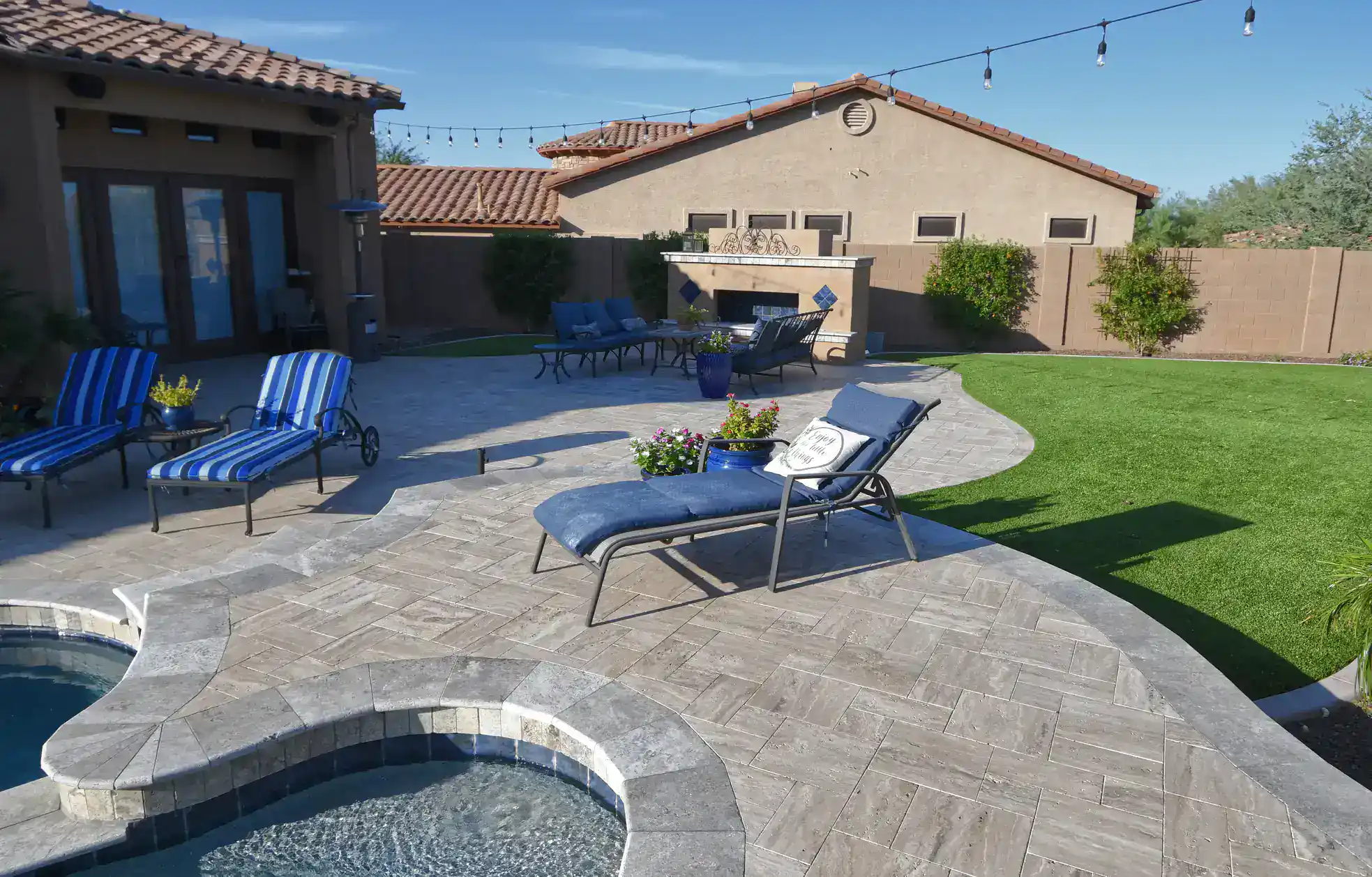
Backyard patio and pool design in Tarrant County, Texas with outdoor seating and landscaping

Why Stamped Concrete Fades — And When It Shouldn't

The most common complaint we hear about decorative concrete from homeowners who had work done elsewhere is fading. They were sold on a rich, saturated color and within two or three Texas summers, it looked washed out. They were told that’s just what happens with stamped concrete. It isn’t.

Fading is almost always a sealer problem. Decorative concrete needs to be sealed with a product rated for UV exposure — specifically the kind of prolonged, intense UV that [TOWN] sees from May through September. Generic or builder-grade sealers break down faster under that kind of sun, and once the sealer fails, the color underneath is unprotected. A quality sealer applied correctly will hold up for years. It also needs to be reapplied periodically, which is something a good contractor will tell you upfront rather than leaving you to figure out after the fact.

The stamping process itself also has a narrow window in hot weather. Concrete begins to set faster when temperatures climb above 90 degrees, which is a regular occurrence in [TOWN] from June through August. If a crew is rushing to stamp a large patio in midday summer heat, the pattern quality suffers — impressions get shallow or inconsistent because the concrete has already started to stiffen. Experienced crews schedule decorative pours for early morning during summer months and use retarding admixtures when necessary to extend the working window.

Color hardener — the powdered pigment broadcast onto the surface before stamping — is another area where shortcuts show up later. Applied too thin or unevenly, it creates blotchy color that no amount of sealing will fix. This is pure execution quality, and it’s something you can’t evaluate from a quote. It comes down to whether the crew has done enough decorative work to have the technique dialed in. Ask to see photos of completed stamped concrete projects, ideally ones that are two or three years old. That’s when the quality of the installation becomes apparent.

Questions to Ask a Concrete Contractor Before You Sign Anything

Most homeowners go into contractor conversations focused on price. That’s understandable — budget matters. But the questions that actually protect you are the ones most people don’t think to ask until something has already gone wrong.

Start with insurance. Ask for a certificate of general liability insurance and workers’ compensation coverage — not a verbal confirmation, an actual document. If a crew member gets hurt on your property and the contractor doesn’t carry workers’ comp, that liability can fall on you as the homeowner. This isn’t a hypothetical risk. It happens, and it’s entirely preventable by asking one question before work starts.

Ask whether the work will be done by our own crew or subcontracted out. This matters more than most homeowners realize. A contractor can have a great reputation and still send an unfamiliar subcontracted crew to do the actual work. You vetted the company, but strangers show up. Our crew is in-house — the same licensed professionals who handle the estimate handle the installation. That’s not standard in this industry, and it’s worth asking about explicitly.

Ask about permits. In [TOWN], most covered patio structures require a building permit, and the rules vary by municipality. A contractor who suggests skipping permits to save time is creating a problem you’ll deal with later, potentially when you’re trying to sell the house. We pull permits on every project. It adds a step, but it also creates a paper trail of accountability that protects you.

Ask for a written contract with a fixed price and a detailed scope of work. Change orders — additions to the original quote that show up mid-project — are one of the most common sources of homeowner frustration in the remodeling industry. Site preparation alone, depending on soil conditions, can add $500 to $2,000 to a project if it’s not accounted for upfront. A contractor who has done this work in North Texas knows what to expect from the soil and should be able to price the full job before breaking ground, not discover “complications” after you’ve already committed.

Finally, ask about the warranty. A verbal promise that they’ll “make it right” if something goes wrong is worth very little. A written warranty covering both materials and workmanship gives you something to stand on if a problem surfaces six months after the job is done.

How to Hire a Concrete Patio Contractor in [TOWN] Without Regret

The homeowners who end up frustrated aren’t the ones who asked too many questions. They’re the ones who didn’t ask enough, moved too fast on a low quote, or assumed that a contractor who seemed friendly would also be thorough. Those things don’t always go together.

The good news is that none of this is complicated once you know what to look for. Verify insurance. Confirm the crew is in-house. Ask about the subbase process and the concrete mix. Get the price in writing before anyone starts digging. And if a contractor pushes back on permits or can’t show you examples of work that’s held up over time in this climate, trust that reaction.

If you’re planning a concrete patio in [TOWN] and want to talk through what your project actually needs, we’ve been doing this work in this area for over thirty years. Reach out and we’ll start with the details that matter.

Article details:

Share: