Summary:
Most people searching for bathroom remodel costs aren’t ready to hire anyone yet. They just want a real number — something honest, not a vague range that stretches from $5,000 to $50,000 with no explanation of what moves the needle.
That’s exactly what this page is for. We’ll walk you through what bathroom remodels actually cost in Tarrant County, what factors push the price up or down, what the permit process looks like here in Fort Worth and surrounding cities, and what the renovation process looks like from start to finish. By the end, you’ll have enough to plan a realistic budget — and ask the right questions when you’re ready to talk to a contractor.
Average Bathroom Remodel Cost in Tarrant County
Nationally, the average bathroom remodel cost runs around $12,136, with most projects landing somewhere between $6,600 and $17,600. In Tarrant County, the range is similar on the low end, but full-service renovations — where a licensed crew handles everything from demo to final inspection — typically start around $15,000 for a basic update and climb to $35,000 or more for a high-end transformation.
That gap between national averages and local full-service pricing isn’t a markup. It reflects what’s actually included: permits, licensed tradespeople for plumbing and electrical, premium materials chosen for Texas humidity and temperature swings, daily cleanup, and a written warranty when the job is done. A $7,000 quote that excludes all of that isn’t cheaper — it’s just incomplete.
Small Bathroom Remodel Cost: What a 5×7 or 5×10 Bath Actually Runs
Small bathroom remodel cost is one of the most searched questions in this space, and for good reason — most Tarrant County homes, especially those built in the 1970s through the 1990s, have at least one bathroom that’s well under 60 square feet. These are the hall baths, the guest baths, the single bathrooms in older ranch-style homes across Haltom City, Watauga, and Benbrook.
For a 5×7 bathroom, a realistic remodel budget runs $6,000 to $12,000 depending on scope. That range covers new flooring, updated fixtures, a vanity swap, and fresh tile — but it shifts upward quickly if you’re moving plumbing, converting a tub to a walk-in shower, or upgrading to stone countertops. A 5×10 bathroom typically runs $8,000 to $15,000 for a full renovation.
The cost to renovate a small bathroom is also heavily influenced by what’s behind the walls. Older homes in Tarrant County often have galvanized pipes, outdated wiring, or water damage that isn’t visible until demo begins. That’s not a contractor trying to add to your bill — it’s the reality of working in homes that are 30 to 50 years old. A good contractor will walk you through what they find and give you options before any additional work is authorized.
One thing worth knowing: labor accounts for 40 to 65 percent of the total cost on most bathroom projects. So when you see a quote that seems unusually low, the first question to ask is what trades are actually included — and whether those tradespeople are licensed.
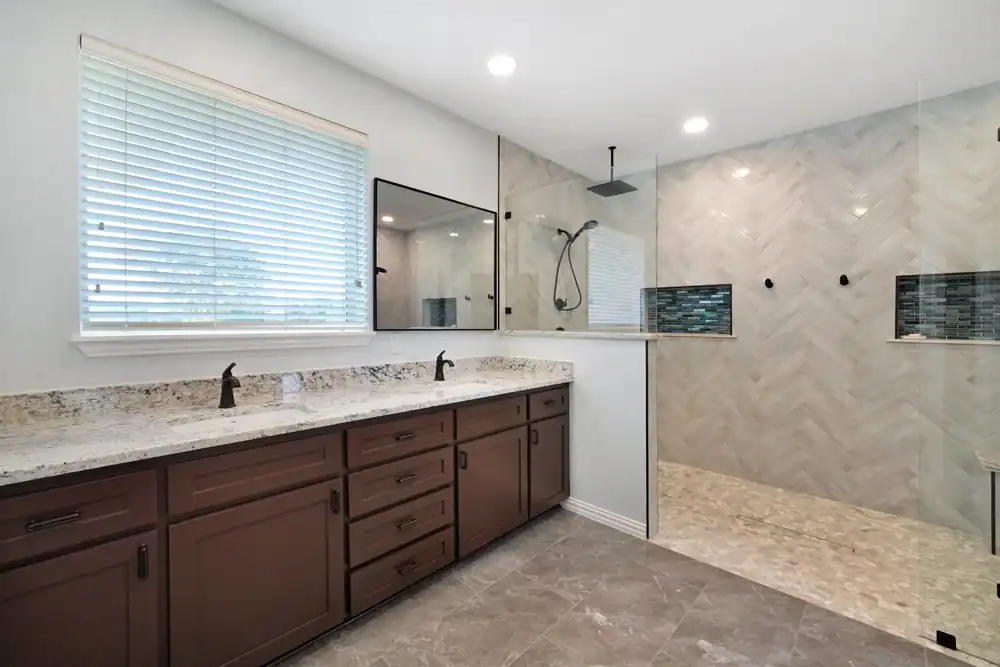
Master bathroom renovation cost sits in a different category entirely. These spaces are larger, the expectations are higher, and the scope of work almost always includes multiple trades. In Tarrant County, a full master bathroom renovation typically runs $14,000 to $35,000, with luxury finishes, heated flooring, freestanding tubs, or custom tile work pushing projects beyond that.
A standard full bathroom remodel cost — meaning a complete gut and rebuild of a full bath with tub, toilet, vanity, and shower — generally lands between $10,000 and $25,000 depending on finishes and whether any plumbing or electrical is being relocated. For a 10×10 bathroom that’s being fully gutted and rebuilt, expect to start around $30,000 and potentially reach $50,000 to $60,000 or more if you’re going high-end.
The 5×7 bathroom remodel cost with labor included is one of the most common projects we see in Tarrant County — especially walk-in shower conversions, which are consistently the most requested bathroom project in this area. Converting a tub to a walk-in shower in a 5×7 space typically adds $4,200 to $11,000 to the project cost depending on the shower system, tile selection, and whether the drain needs to be relocated.
One data point worth keeping in mind: the 2025 Cost vs. Value Report shows midrange bathroom remodels returning around 80 percent of their cost at resale. In a competitive DFW housing market, an updated bathroom isn’t just a comfort upgrade — it’s a legitimate investment. Buyers notice, and so do appraisers.
Bathroom Renovation Permits in Fort Worth and Tarrant County
Permits are one of the most misunderstood parts of a bathroom remodel — and one of the most important. Unpermitted work doesn’t just create risk during construction. It creates legal liability that follows the home, not the contractor, and can complicate or kill a sale years down the road.
In Fort Worth and across Tarrant County, residential remodel permits start at $112 and scale up based on which trades are involved. The permitting process is handled through each city’s building department — Fort Worth, Arlington, Haltom City, Watauga, and other municipalities each have their own requirements, which is one reason local experience genuinely matters here.
Bathroom Remodel Permit Cost and What Triggers a Permit in Tarrant County
The bathroom remodel permit cost in Fort Worth starts at $112 for a basic residential remodel permit and increases based on the trades involved — plumbing, electrical, and mechanical permits are each separate. Most full bathroom remodels that involve moving a fixture, adding an outlet, or installing a new shower will require at least two or three permits.
What specifically triggers a permit requirement? Moving or adding any plumbing — including relocating a toilet, installing a new shower, or running new supply lines — requires a plumbing permit issued under the Texas State Board of Plumbing Examiners. Any new electrical work, including GFCI outlets, light fixtures, or heated flooring systems, requires an electrical permit through the Texas Department of Licensing and Regulation. Interior remodels that affect 16 or more square feet also require a building permit in Fort Worth.
What doesn’t require a permit is a shorter list: purely cosmetic updates like painting, replacing a mirror, or swapping out a faucet in the same location without touching the plumbing. Most meaningful bathroom renovations will require at least one permit — and often two or three.
The consequences of skipping permits aren’t theoretical. Fort Worth issues stop work orders with fines of $500 per day for general violations, and up to $2,000 per day for fire or safety-related violations. More practically, unpermitted work discovered during a home inspection can derail a sale, require expensive remediation, or force the homeowner to open walls and redo work that was never inspected. We pull permits for every project we do — not because it’s required, but because it protects you.
The same permit logic that applies to bathrooms applies to kitchen remodels. A kitchen remodel permit is required any time you’re moving plumbing, adding or relocating electrical circuits, changing ventilation, or making structural modifications. In Fort Worth and surrounding Tarrant County municipalities, this covers the vast majority of kitchen renovations beyond purely cosmetic updates like painting cabinets or replacing hardware.
One thing that surprises many homeowners: the permit isn’t just a piece of paper. It triggers an inspection sequence — rough plumbing, rough electrical, framing, insulation, drywall cover, and a final building inspection. Each stage has to pass before the next begins. That process exists to protect you, and a licensed contractor who knows the local inspection sequence can navigate it efficiently without delays.
We’ve built working relationships with inspectors across Tarrant County over more than 30 years of completing projects here. That familiarity matters — not to cut corners, but to keep your project moving. When a permit application goes in, we know what the inspector is going to look for, and we make sure the work is ready. That’s how projects stay on schedule.
For homeowners in unincorporated parts of Tarrant County, permits are handled through Tarrant County Transportation Services rather than a city building department. If you’re not sure which jurisdiction your property falls under, that’s a question worth asking before any work begins — and one we can answer for you.
Steps to Remodel a Bathroom: The Process from Start to Finish
A typical bathroom remodel follows a predictable sequence, and understanding each stage helps you know what to expect and why the timeline matters. Here’s how we approach every project in Tarrant County.
Initial design and material selection comes first. You’ll choose fixtures, tile, countertops, and finishes. This is also when we identify any structural or plumbing considerations that might affect the scope. Once you’ve approved the design and signed a contract, we pull permits — which takes about a week in most Tarrant County jurisdictions.
Demolition is next. We remove the old fixtures, flooring, and wall coverings. This is where surprises sometimes surface — water damage, outdated wiring, or plumbing that needs attention. We document everything and walk you through options before proceeding.
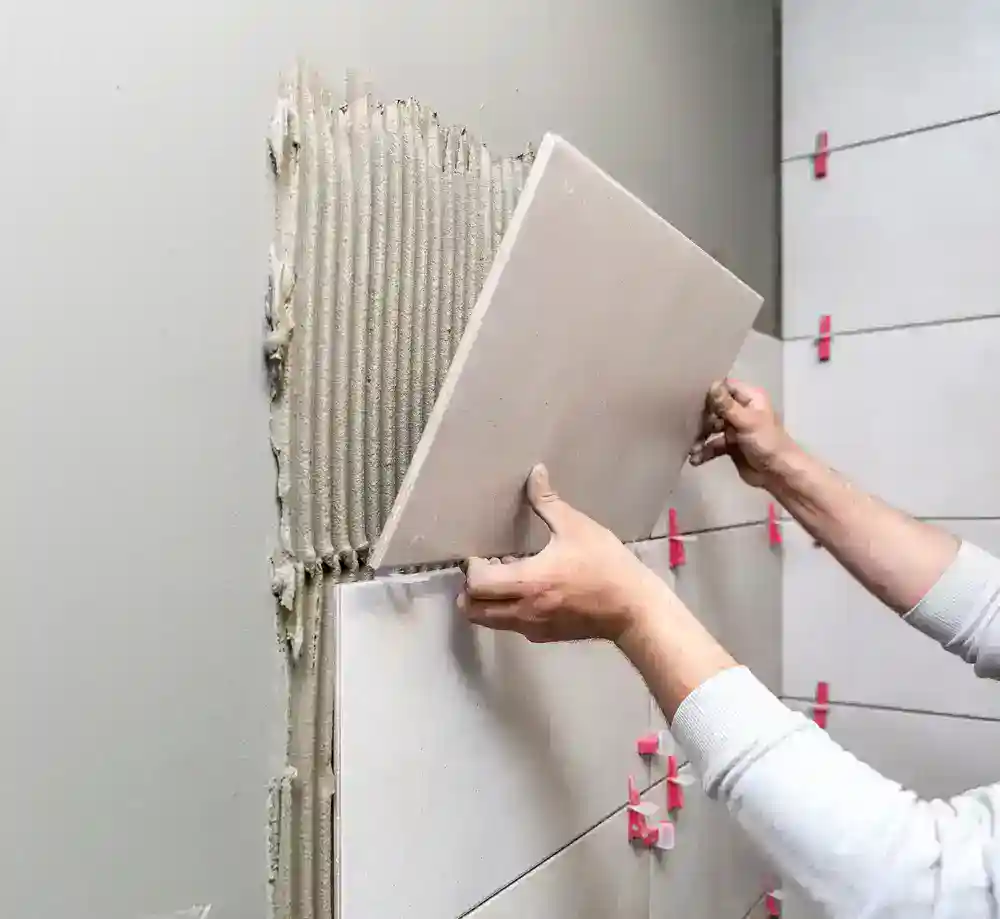
Rough plumbing and electrical comes after demo. New supply lines, drains, and electrical circuits are installed to code. This stage is inspected by the city before we move forward. Waterproofing and backer board follow, especially critical in shower areas. Tile installation happens next, then fixture installation — toilet, vanity, shower system, and lighting.
Countertop and vanity installation, painting, trim work, and final hardware installation round out the visible work. A final building inspection clears the project, and we do a complete walkthrough with you before we’re done.