
Fall Backyard Renovations in Tarrant County: September Checklist

September is the best month to renovate your backyard in Tarrant County. Here's what to plan, what to ask, and what most homeowners get wrong.

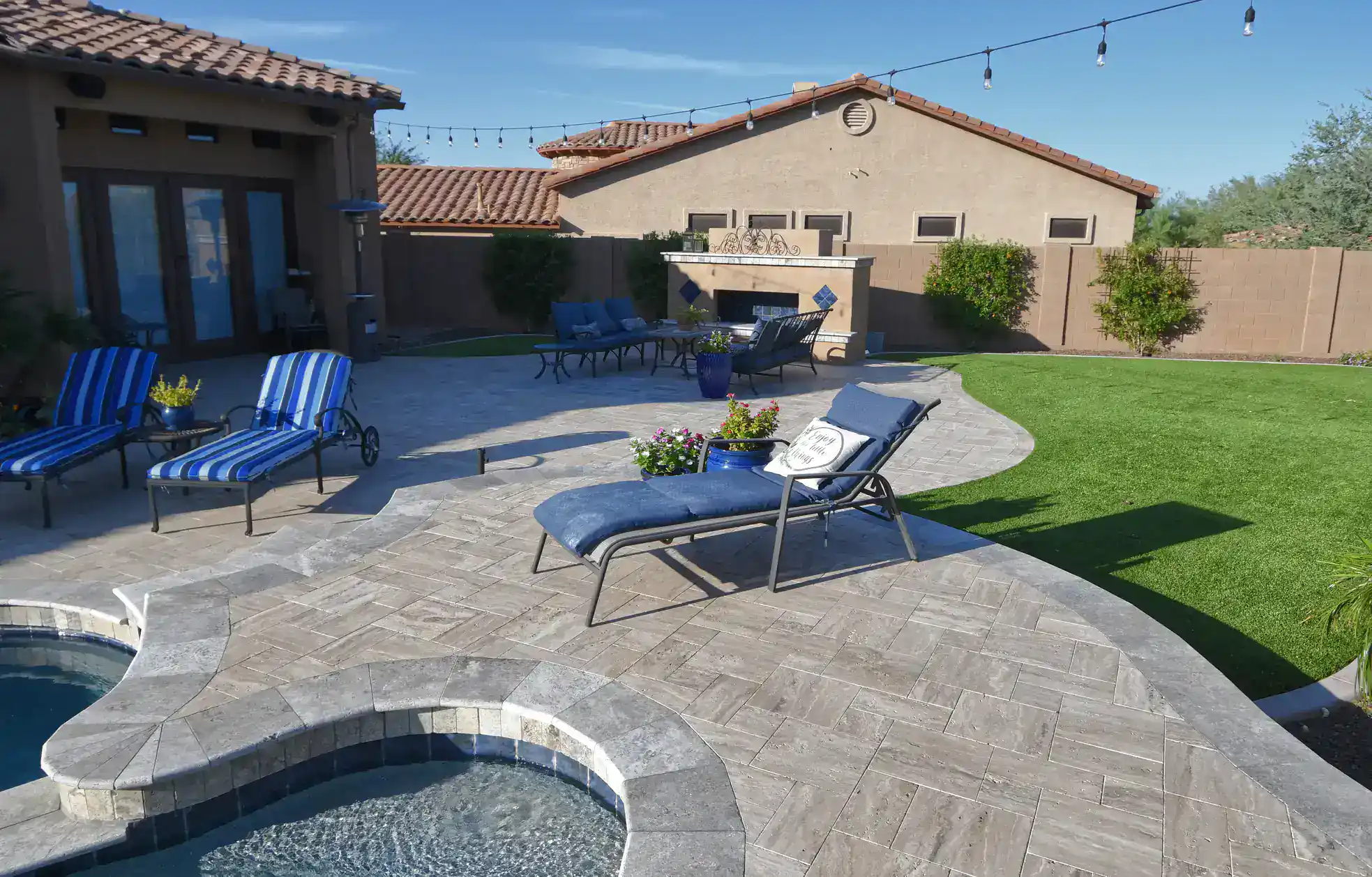
Backyard patio and pool design in Tarrant County, Texas with outdoor seating and landscaping

Summary:

Fall is the most overlooked window for backyard renovations in North Texas — and it’s actually the best one. Once DFW’s brutal summer heat breaks, September opens a realistic path to a finished outdoor space before the holidays arrive. This checklist walks you through everything Tarrant County homeowners need to know: when to start, what permits you’ll need, how to vet contractors, and which materials actually hold up to Texas conditions. Read it before you make a single call.
Table of contents

If you’ve been putting off your backyard renovation all summer — waiting for the heat to break, for the right contractor, for the right time — September is it. Temperatures in the DFW area finally drop into a range where outdoor work is actually comfortable, and more importantly, where you can realistically finish a project before Thanksgiving rolls around. But “starting in September” means planning in August. Permits take time. Scheduling fills up. Materials need to be ordered. This checklist is built for Tarrant County homeowners who want to get it right — not rush it, not overpay for it, and not end up with a patio that cracks by spring.

Why Fall Is the Right Time for Outdoor Living Renovation in North Texas

DFW summers are not kind to outdoor projects. From June through August, temperatures routinely hit triple digits, and heat index values push even higher. Most outdoor work slows down or stops entirely — it’s miserable for crews and hard on materials. September changes that. Average highs drop into the upper 80s, and by October you’re in the 70s. That’s the window.

The other reason fall works so well is the timeline math. If you want a finished, usable outdoor space for the holiday season — a covered patio for Thanksgiving, a fire pit for December evenings, an outdoor kitchen for entertaining — you need to start the process no later than early September. Permit approvals in most Tarrant County cities take one to two weeks. Design consultations, material ordering, and contractor scheduling add more time on top of that. Waiting until October often means waiting until January.

Patio Remodeling Contractors in Tarrant County: What to Ask Before You Hire

Finding a contractor isn’t the hard part. Finding one who knows what we’re doing in this specific market — with these soils, these weather patterns, and these city-by-city permit requirements — is where it gets harder.

North Texas sits on highly expansive clay soil, sometimes called “black gumbo” by locals who’ve watched it buckle a driveway or crack a foundation. It swells when it rains and shrinks dramatically during droughts like the ones in 2022 and 2023. Any concrete slab, patio foundation, or fence post that isn’t installed with that soil behavior in mind is going to show problems within a few years. A contractor who doesn’t bring this up unprompted probably hasn’t built enough in this area to know it matters.

Beyond soil knowledge, you want to ask whether they pull permits for every applicable project — not just when you ask them to. Covered patios, pergolas, outdoor kitchens with gas or electrical connections, and permanent fire features all require permits in most Tarrant County cities. Fort Worth, Arlington, Keller, Colleyville, and North Richland Hills each have their own building departments, their own fee schedules, and their own code amendments. A contractor who works across the county should know the rules in each city, not just the one they’re most familiar with.

Ask about subcontractors, too. Some contractors win the job and then hand it off to a rotating pool of subs you’ve never met and never vetted. That’s where quality inconsistencies and scheduling delays tend to come from. You want a crew that’s been working together, that knows the contractor’s standards, and that shows up accountable to the same person managing your project.

Finally, get the price in writing — and make sure it’s a fixed price, not an estimate subject to change orders. Budget overruns are the single most common complaint homeowners have about contractors. A written, fixed-price estimate protects you from that.

HOA Approvals and Permits: The Part of Outdoor Patio Remodeling Most Homeowners Skip

If you live in a planned community in Keller, Southlake, Colleyville, Trophy Club, or Flower Mound, your HOA probably has a design review process for any outdoor structure you want to add. That process can take anywhere from two to six weeks depending on when the board meets and how complete your submission is. Most homeowners don’t find this out until they’ve already hired a contractor and set a start date — and then the whole timeline shifts.

The permit side is equally misunderstood. A common assumption is that a concrete patio doesn’t need a permit. That’s sometimes true for a simple ground-level slab, but the moment you add a cover, a pergola, an outdoor kitchen, or any gas or electrical connection, you’re almost certainly in permit territory. The rules vary by city, which is why it matters that your contractor knows them specifically — not generally.

Unpermitted work isn’t just a technicality. It creates real problems when you sell your home. Title companies flag it, buyers ask about it, and in some cases you’re required to disclose it or bring the structure into compliance before closing. The cost of doing it right the first time is almost always lower than the cost of fixing it later.

The practical takeaway: if you’re planning a fall project and you live in an HOA community anywhere in Tarrant County, your August to-do list should include pulling your HOA’s design guidelines and submitting your plans as early as possible. Don’t let that approval window eat into your build window.

What a Fall Backyard Renovation in Tarrant County Should Actually Include

A backyard renovation isn’t just a new patio slab. The best outdoor spaces in this area are designed around how North Texans actually use their yards — which means accounting for shade, drainage, wind, hail, and the fact that you’ll need the space to function in both 95-degree September heat and 35-degree December evenings.

Shade is non-negotiable. A covered patio or pergola extends the usable hours of your outdoor space dramatically, especially during the transition months when mornings and evenings are pleasant but afternoons are still warm. Drainage matters just as much. North Texas flash floods are real, and a patio that pools water after a heavy rain is a problem you’ll deal with every season. Good contractors design drainage into the project from the start — it’s not an afterthought.

Which Outdoor Materials Actually Hold Up to Texas Heat, Hail, and Humidity

Material selection is where a lot of backyard projects go wrong in this climate. What looks good in a showroom or on a website doesn’t always perform well under sustained UV exposure, temperature swings between seasons, or the occasional hail storm that comes through Tarrant County in spring.

For patio surfaces, concrete remains one of the most practical choices in North Texas — but only when it’s properly mixed, poured with the right base preparation, and sealed against moisture. Decorative options like stamped and stained concrete give you the aesthetic flexibility of pavers at a lower cost, and when done right, they hold up well. Paver patios are another strong option, particularly in areas with significant soil movement, because individual pavers can shift and be reset without cracking the way a monolithic slab can.

For fencing, cedar is the dominant material in North Texas for practical reasons. It naturally resists rot and insect damage better than most other wood species, which matters in a climate with significant humidity swings. Pressure-treated pine is cheaper upfront but typically doesn’t last as long in these conditions. Composite and vinyl options are worth considering if low maintenance is the priority, though they carry a higher initial cost.

Covered structures — pergolas, patio covers, full outdoor rooms — need to be engineered for wind and hail loads specific to this region. North Texas sits squarely in what storm chasers call “Hail Alley.” Lightweight or poorly anchored structures don’t survive a serious storm. Any contractor building a covered outdoor structure here should be designing it with that in mind, not just for aesthetics.

Outdoor kitchens and fire features add the most complexity because they involve gas lines, electrical connections, and weather-resistant surface materials that all need to work together. These projects require licensed tradespeople for the utility connections — not just a general laborer — and they require permits in virtually every Tarrant County city.

How Much Does a Backyard Renovation Cost in the DFW Area?

This is the question most homeowners have but are sometimes hesitant to ask directly. The honest answer is that it depends heavily on scope, but there are reasonable benchmarks that can help you calibrate.

A basic concrete patio in the 10×10 range typically runs between $3,000 and $6,000 in the DFW market. Step up to a paver patio and you’re generally looking at $5,000 to $12,000 depending on size and pattern complexity. A mid-range outdoor kitchen — gas grill, counter space, basic electrical — tends to land between $12,000 and $18,000. A built-in fire pit or outdoor fireplace runs anywhere from $1,500 to $8,000 depending on materials and complexity. Add a pergola or covered patio structure and you’re adding another $8,000 to $20,000 or more, depending on size and materials.

A conventional guideline that holds up reasonably well: plan to invest roughly 5 to 10 percent of your home’s value for a significant backyard renovation. For a $350,000 home in North Richland Hills or Arlington, that’s $17,500 to $35,000 — a range that covers a solid covered patio, quality concrete work, and a few feature upgrades without going into premium territory.

The return on that investment is real. A well-executed backyard renovation in Tarrant County isn’t just money spent. It’s money that comes back to you in usable space now and home value later. The caveat is that it has to be done right — with proper permits, quality materials, and workmanship that holds up over time. A patio that cracks in two years or a pergola that doesn’t pass inspection doesn’t deliver that return.

Ready to Start Your Fall Backyard Renovation in Tarrant County?

The window for a fall backyard renovation in North Texas is real — but it’s not unlimited. September is when the work gets done. August is when the planning happens. If you’re reading this and you already have a project in mind, the time to get a consultation on the calendar is now, not after the kids go back to school or after Labor Day weekend passes.

The homeowners who end up with a finished outdoor space before Thanksgiving are the ones who started the conversation early — who got their designs locked in, their permits submitted, and their contractor scheduled before the fall rush hit.

If you’re in Tarrant County and you want to talk through what’s realistic for your yard, your timeline, and your budget, we’ve been doing exactly this kind of work in this area for over thirty years. Reach out and let’s figure out what fall looks like for your backyard.
Share:

Summary:

Fall is the most overlooked window for backyard renovations in North Texas — and it’s actually the best one. Once DFW’s brutal summer heat breaks, September opens a realistic path to a finished outdoor space before the holidays arrive. This checklist walks you through everything Tarrant County homeowners need to know: when to start, what permits you’ll need, how to vet contractors, and which materials actually hold up to Texas conditions. Read it before you make a single call.
Table of contents

If you’ve been putting off your backyard renovation all summer — waiting for the heat to break, for the right contractor, for the right time — September is it. Temperatures in the DFW area finally drop into a range where outdoor work is actually comfortable, and more importantly, where you can realistically finish a project before Thanksgiving rolls around. But “starting in September” means planning in August. Permits take time. Scheduling fills up. Materials need to be ordered. This checklist is built for Tarrant County homeowners who want to get it right — not rush it, not overpay for it, and not end up with a patio that cracks by spring.

Why Fall Is the Right Time for Outdoor Living Renovation in North Texas

DFW summers are not kind to outdoor projects. From June through August, temperatures routinely hit triple digits, and heat index values push even higher. Most outdoor work slows down or stops entirely — it’s miserable for crews and hard on materials. September changes that. Average highs drop into the upper 80s, and by October you’re in the 70s. That’s the window.

The other reason fall works so well is the timeline math. If you want a finished, usable outdoor space for the holiday season — a covered patio for Thanksgiving, a fire pit for December evenings, an outdoor kitchen for entertaining — you need to start the process no later than early September. Permit approvals in most Tarrant County cities take one to two weeks. Design consultations, material ordering, and contractor scheduling add more time on top of that. Waiting until October often means waiting until January.

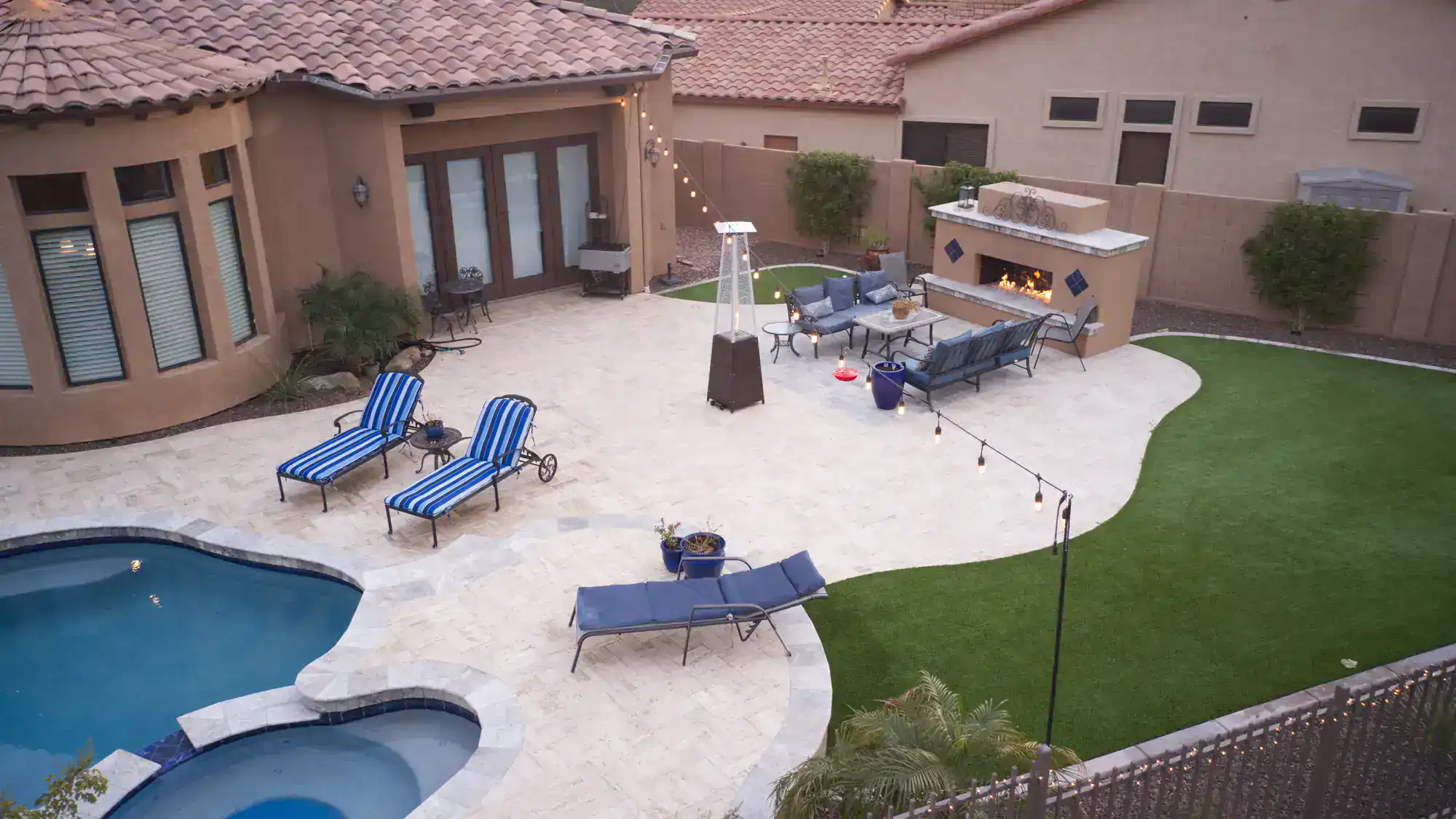
A backyard in TX with a pool, three blue-striped lounge chairs, string lights, outdoor seating by a fireplace, and a patio area with tile flooring and artificial grass—perfect inspiration from a top Home Remodeling Contractor Tarrant County.

Patio Remodeling Contractors in Tarrant County: What to Ask Before You Hire

Finding a contractor isn’t the hard part. Finding one who knows what we’re doing in this specific market — with these soils, these weather patterns, and these city-by-city permit requirements — is where it gets harder.

North Texas sits on highly expansive clay soil, sometimes called “black gumbo” by locals who’ve watched it buckle a driveway or crack a foundation. It swells when it rains and shrinks dramatically during droughts like the ones in 2022 and 2023. Any concrete slab, patio foundation, or fence post that isn’t installed with that soil behavior in mind is going to show problems within a few years. A contractor who doesn’t bring this up unprompted probably hasn’t built enough in this area to know it matters.

Beyond soil knowledge, you want to ask whether they pull permits for every applicable project — not just when you ask them to. Covered patios, pergolas, outdoor kitchens with gas or electrical connections, and permanent fire features all require permits in most Tarrant County cities. Fort Worth, Arlington, Keller, Colleyville, and North Richland Hills each have their own building departments, their own fee schedules, and their own code amendments. A contractor who works across the county should know the rules in each city, not just the one they’re most familiar with.

Ask about subcontractors, too. Some contractors win the job and then hand it off to a rotating pool of subs you’ve never met and never vetted. That’s where quality inconsistencies and scheduling delays tend to come from. You want a crew that’s been working together, that knows the contractor’s standards, and that shows up accountable to the same person managing your project.

Finally, get the price in writing — and make sure it’s a fixed price, not an estimate subject to change orders. Budget overruns are the single most common complaint homeowners have about contractors. A written, fixed-price estimate protects you from that.

HOA Approvals and Permits: The Part of Outdoor Patio Remodeling Most Homeowners Skip

If you live in a planned community in Keller, Southlake, Colleyville, Trophy Club, or Flower Mound, your HOA probably has a design review process for any outdoor structure you want to add. That process can take anywhere from two to six weeks depending on when the board meets and how complete your submission is. Most homeowners don’t find this out until they’ve already hired a contractor and set a start date — and then the whole timeline shifts.

The permit side is equally misunderstood. A common assumption is that a concrete patio doesn’t need a permit. That’s sometimes true for a simple ground-level slab, but the moment you add a cover, a pergola, an outdoor kitchen, or any gas or electrical connection, you’re almost certainly in permit territory. The rules vary by city, which is why it matters that your contractor knows them specifically — not generally.

Unpermitted work isn’t just a technicality. It creates real problems when you sell your home. Title companies flag it, buyers ask about it, and in some cases you’re required to disclose it or bring the structure into compliance before closing. The cost of doing it right the first time is almost always lower than the cost of fixing it later.

The practical takeaway: if you’re planning a fall project and you live in an HOA community anywhere in Tarrant County, your August to-do list should include pulling your HOA’s design guidelines and submitting your plans as early as possible. Don’t let that approval window eat into your build window.

Want live answers?

Connect with a A Plus Home Remodel expert for fast, friendly support.

What a Fall Backyard Renovation in Tarrant County Should Actually Include

A backyard renovation isn’t just a new patio slab. The best outdoor spaces in this area are designed around how North Texans actually use their yards — which means accounting for shade, drainage, wind, hail, and the fact that you’ll need the space to function in both 95-degree September heat and 35-degree December evenings.

Shade is non-negotiable. A covered patio or pergola extends the usable hours of your outdoor space dramatically, especially during the transition months when mornings and evenings are pleasant but afternoons are still warm. Drainage matters just as much. North Texas flash floods are real, and a patio that pools water after a heavy rain is a problem you’ll deal with every season. Good contractors design drainage into the project from the start — it’s not an afterthought.

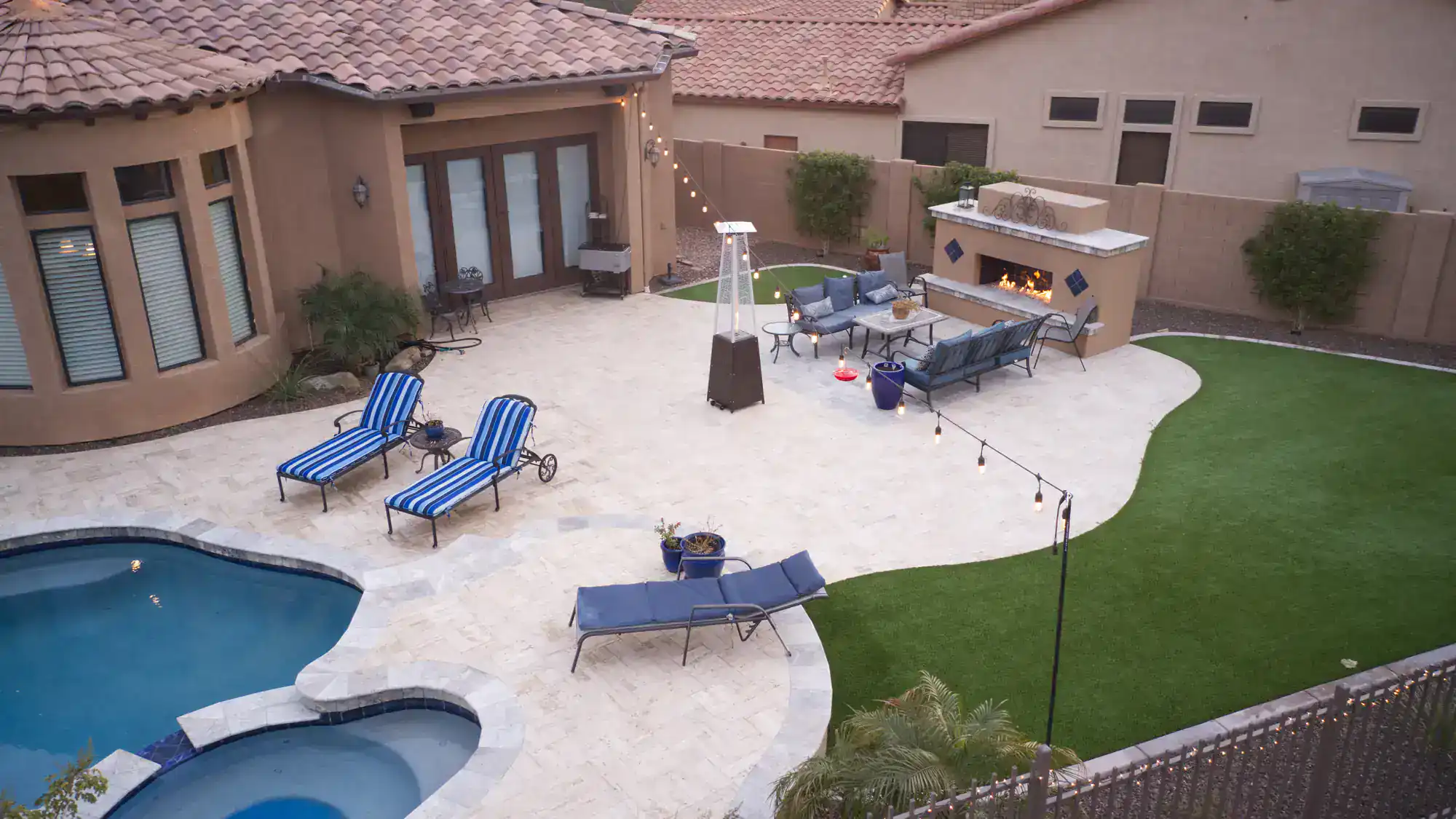
Transform your backyard into a luxurious oasis with a swimming pool, lounge chairs, fire pit patio, outdoor kitchen, and artificial grass—expertly crafted by a trusted Home Remodeling Contractor in Tarrant County, TX.

Which Outdoor Materials Actually Hold Up to Texas Heat, Hail, and Humidity

Material selection is where a lot of backyard projects go wrong in this climate. What looks good in a showroom or on a website doesn’t always perform well under sustained UV exposure, temperature swings between seasons, or the occasional hail storm that comes through Tarrant County in spring.

For patio surfaces, concrete remains one of the most practical choices in North Texas — but only when it’s properly mixed, poured with the right base preparation, and sealed against moisture. Decorative options like stamped and stained concrete give you the aesthetic flexibility of pavers at a lower cost, and when done right, they hold up well. Paver patios are another strong option, particularly in areas with significant soil movement, because individual pavers can shift and be reset without cracking the way a monolithic slab can.

For fencing, cedar is the dominant material in North Texas for practical reasons. It naturally resists rot and insect damage better than most other wood species, which matters in a climate with significant humidity swings. Pressure-treated pine is cheaper upfront but typically doesn’t last as long in these conditions. Composite and vinyl options are worth considering if low maintenance is the priority, though they carry a higher initial cost.

Covered structures — pergolas, patio covers, full outdoor rooms — need to be engineered for wind and hail loads specific to this region. North Texas sits squarely in what storm chasers call “Hail Alley.” Lightweight or poorly anchored structures don’t survive a serious storm. Any contractor building a covered outdoor structure here should be designing it with that in mind, not just for aesthetics.

Outdoor kitchens and fire features add the most complexity because they involve gas lines, electrical connections, and weather-resistant surface materials that all need to work together. These projects require licensed tradespeople for the utility connections — not just a general laborer — and they require permits in virtually every Tarrant County city.

How Much Does a Backyard Renovation Cost in the DFW Area?

This is the question most homeowners have but are sometimes hesitant to ask directly. The honest answer is that it depends heavily on scope, but there are reasonable benchmarks that can help you calibrate.

A basic concrete patio in the 10×10 range typically runs between $3,000 and $6,000 in the DFW market. Step up to a paver patio and you’re generally looking at $5,000 to $12,000 depending on size and pattern complexity. A mid-range outdoor kitchen — gas grill, counter space, basic electrical — tends to land between $12,000 and $18,000. A built-in fire pit or outdoor fireplace runs anywhere from $1,500 to $8,000 depending on materials and complexity. Add a pergola or covered patio structure and you’re adding another $8,000 to $20,000 or more, depending on size and materials.

A conventional guideline that holds up reasonably well: plan to invest roughly 5 to 10 percent of your home’s value for a significant backyard renovation. For a $350,000 home in North Richland Hills or Arlington, that’s $17,500 to $35,000 — a range that covers a solid covered patio, quality concrete work, and a few feature upgrades without going into premium territory.

The return on that investment is real. A well-executed backyard renovation in Tarrant County isn’t just money spent. It’s money that comes back to you in usable space now and home value later. The caveat is that it has to be done right — with proper permits, quality materials, and workmanship that holds up over time. A patio that cracks in two years or a pergola that doesn’t pass inspection doesn’t deliver that return.

Ready to Start Your Fall Backyard Renovation in Tarrant County?

The window for a fall backyard renovation in North Texas is real — but it’s not unlimited. September is when the work gets done. August is when the planning happens. If you’re reading this and you already have a project in mind, the time to get a consultation on the calendar is now, not after the kids go back to school or after Labor Day weekend passes.

The homeowners who end up with a finished outdoor space before Thanksgiving are the ones who started the conversation early — who got their designs locked in, their permits submitted, and their contractor scheduled before the fall rush hit.

If you’re in Tarrant County and you want to talk through what’s realistic for your yard, your timeline, and your budget, we’ve been doing exactly this kind of work in this area for over thirty years. Reach out and let’s figure out what fall looks like for your backyard.
Article details:

Share: