Bathroom Addition Cost: Permits, Risk, and What Drives Price in Tarrant County

Thinking about adding a bathroom in Tarrant County? Here's what it actually costs, what permits are required, and what separates a smart hire from a costly mistake.

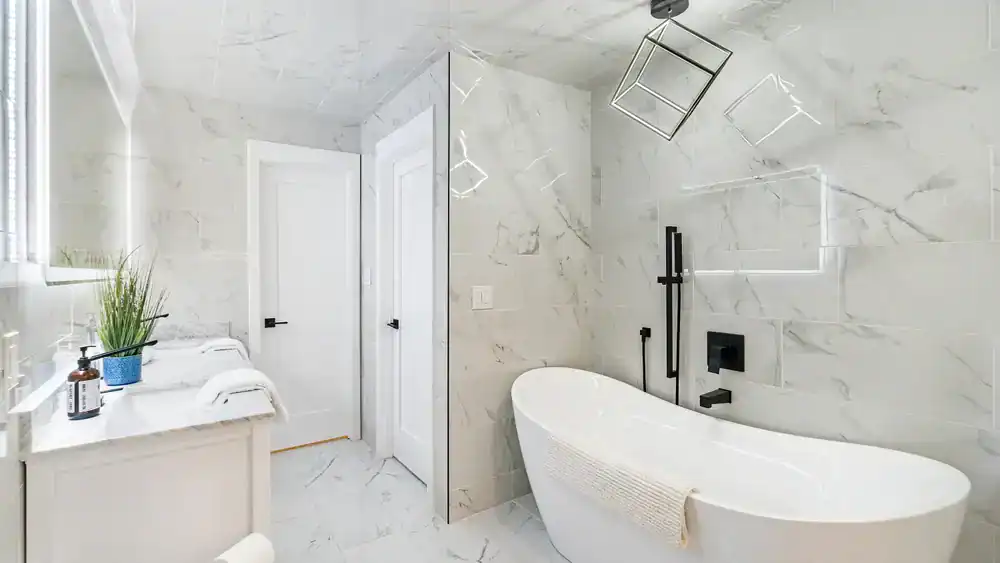
Luxury bathroom with modern tile, custom vanity, and upscale design in Tarrant County, Texas

Summary:

Adding a bathroom is one of the bigger investments you can make in your home — and one of the easier ones to get wrong if you’re not asking the right questions upfront. This page breaks down what drives bathroom addition cost in the DFW area, what permits are actually required in Texas, and what the difference looks like between a contractor who protects you and one who doesn’t. Understanding the full picture before you sign anything can save you thousands — and a lot of headaches down the road.
Table of contents

Most homeowners searching for bathroom addition cost are really asking two questions: what’s this going to cost me, and how do I make sure I don’t get burned? Both are fair. A bathroom addition is a significant project — one where the gap between a good contractor and a bad one shows up fast, and sometimes expensively. We’ve put together this breakdown to give you the honest picture: what you can expect to spend, what actually moves the number up or down, why permits matter more than most contractors let on, and what to look for when you’re ready to hire someone in the Tarrant County area.

What Does a Bathroom Addition Cost in 2025?

The honest answer is that it depends — but not in a way that should leave you guessing. A powder room addition, which is just a toilet and sink in an existing space, typically runs $4,000 to $12,500. A full bathroom with a shower or tub combination lands somewhere between $10,000 and $45,000 depending on size, layout, and finishes. A master bath with separate shower, soaking tub, and custom tile can reach $75,000 or more.

The single biggest cost variable is whether you’re converting an existing space or building a true room addition. Converting a closet, laundry room, or underused corner of the house into a bathroom costs roughly $200 to $250 per square foot — and can save you close to 50% compared to adding square footage to the home’s footprint. If you’re building out, expect $400 to $550 per square foot once framing, plumbing rough-in, electrical, and finishes are factored in.

What's Actually Driving the Cost of a Bathroom Addition?

Labor and materials split the bill pretty evenly, with materials accounting for roughly 45% of total project cost. That means the choices you make on tile, fixtures, vanity, and shower systems have a real impact on where you land in the range. Plumbing is the other major driver — and it’s the one most homeowners underestimate. Expect plumbing alone to run $1,000 to $10,000 depending on how far the new bathroom sits from your existing supply and drain lines. The further away, the more pipe, the more labor, and the more the number climbs.

Electrical typically adds $500 to $2,500. That covers GFCI outlets, exhaust fan wiring, and lighting — all of which are code requirements in Texas, not optional upgrades. Skipping or cutting corners on any of these doesn’t save money; it just moves the cost to a future inspection or repair.

In Tarrant County specifically, there’s another variable that rarely gets mentioned in national cost guides: soil. The expansive clay soil throughout the area — sometimes called black gumbo — shifts seasonally as it absorbs and releases moisture. That movement can affect where and how drain lines are positioned during rough-in. A contractor who hasn’t worked in North Texas may not account for this. We’ve spent decades pulling permits in Arlington, Fort Worth, and Mansfield, and we know how to position drain lines so they stay functional year-round as the soil moves beneath your home.

The resale math is worth understanding too. A midrange bathroom addition recoups roughly 53% of its cost at resale according to the 2025 Journal of Light Construction Cost vs. Value Report. That’s not a dollar-for-dollar return — but it also doesn’t include the daily value of having a functional bathroom that works for your household right now. Most homeowners who add a bathroom don’t regret it. Most who skip the permits do.

Bathroom Addition Contractor: What to Look for Before You Sign Anything

Texas does not require general contractors to hold a state license, carry a surety bond, or contribute to a recovery fund. That’s not a technicality — it means there’s no automatic financial backstop if an unqualified contractor causes damage to your home. The burden of vetting is entirely on you as the homeowner.

What that means practically: ask for proof of insurance before anyone sets foot in your house. Verify that the plumber and electrician on the project hold active licenses through the Texas State Board of Plumbing Examiners and the Texas Department of Licensing and Regulation respectively. These are searchable databases — any contractor worth hiring will encourage you to check rather than ask you to take their word for it.

Beyond licensing, look at how a contractor communicates before the project starts. Do they return calls promptly? Do they show up when they say they will? Do they explain the process clearly, or do they rush you toward a signature? The way a contractor behaves during the estimate phase is a preview of how they’ll behave once your walls are open and you have fewer options.

Written contracts matter more than most homeowners realize. A fixed-price estimate — one where the number on the paper is the number you pay unless you request changes to the scope — removes the most common source of conflict between homeowners and contractors. Open-ended “time and materials” billing creates uncertainty that tends to resolve in the contractor’s favor. Get the price in writing. Get the scope in writing. Get the warranty in writing.

We offer fixed-price estimates on every project we take on. Your written estimate is your final price. If something unexpected turns up behind the walls, we communicate it immediately and walk you through the options before any additional work is done. That’s how we’ve operated for over 30 years in this market.

Bathroom Renovation Permit Requirements in Texas: What You Actually Need to Know

Permits are the part of a bathroom addition that homeowners most often want to skip — and the part that causes the most problems when they do. The permit fee itself is real: expect $200 to $1,500 or more depending on the scope of work and the municipality. But that fee buys you something most people don’t think about until it’s too late.

A permitted bathroom addition has been inspected by the city at rough-in and at final. That means a licensed inspector confirmed the plumbing, electrical, and structural work met code before the walls were closed. An unpermitted bathroom has none of that documentation — and in an active real estate market like DFW, that gap shows up fast when you try to sell.

Which Permits Are Required for a Bathroom Addition in Tarrant County?

Adding a bathroom almost always requires at least three separate permits: a building permit for the structural work, a plumbing permit for the supply and drain lines, and an electrical permit for outlets, exhaust fan wiring, and lighting circuits. These aren’t optional depending on the size of the project — they’re triggered by the type of work being done.

The plumbing permit is the one that surprises most homeowners. It’s required any time you install or relocate water supply lines, drain lines, waste stacks, or venting systems. Even moving a toilet a few feet in the same room requires a plumbing inspection. The reason is straightforward: improperly vented drain lines cause sewer gas to back up into the home. That’s a health issue, not just a code technicality.

In Tarrant County, each municipality runs its own permit office with its own fee schedule and inspection process. The City of Arlington handles permits through Development Services. Fort Worth uses its own Development Services Department. Mansfield, Keller, Southlake, Euless, Bedford, Hurst, Grapevine, and Colleyville each have separate processes. We’ve worked across all of these cities for decades, which means we move through the process faster and avoid the common delays that come from learning a new system on your project’s timeline.

There’s also the HOA layer. Many Tarrant County communities — especially in Mansfield, Keller, Southlake, and Colleyville — require HOA approval for additions that affect the home’s exterior, including new window openings or room additions. City permit and HOA approval are separate processes that often run on different timelines. We handle both, so you don’t have to track down two separate approval chains while a crew is waiting to break ground.

What Happens If You Skip the Permit for a Bathroom Remodel?

This is where the “I’ll save the permit fee” math falls apart. An unpermitted bathroom addition doesn’t just create a paperwork gap — it creates a chain of downstream risks that can cost far more than the permit ever would have.

The most immediate risk is at resale. Home inspectors in the DFW market routinely flag unpermitted work, and buyers’ agents know what to look for. When an unpermitted bathroom is discovered during the inspection period, the seller typically faces one of three outcomes: renegotiate the price downward, agree to tear out and redo the work to pass inspection before closing, or watch the deal fall apart entirely. None of those are good options when you’re under contract and on a timeline.

The insurance angle is less talked about but equally serious. If a water line fails or a drain backs up in an unpermitted bathroom and causes damage to your home, your homeowner’s insurance carrier may deny the claim on the grounds that the work was never inspected and approved. You’d be absorbing the cost of both the original damage and the remediation out of pocket.

There’s also personal liability to consider. If a guest or family member is injured in a space that was never properly permitted and inspected, the legal exposure is real. Permits exist because inspections catch the things that cause injuries — improperly wired outlets, incorrectly vented plumbing, inadequate structural support. Skipping that process doesn’t make those risks disappear; it just removes the documentation that would have protected you.

We pull permits on every project we take on — not because we’re required to remind you of that, but because it’s the only way to protect the investment you’re making in your home. Thirty years in Tarrant County has shown us what happens when that step gets skipped. It’s not a risk worth taking.

Ready to Get a Real Number for Your Bathroom Addition in Tarrant County?

Bathroom addition cost comes down to a handful of factors: whether you’re converting existing space or building out, how far the new bathroom sits from existing plumbing, what finishes you choose, and whether the contractor you hire handles permits or leaves that problem for you to deal with later.

In Tarrant County, those decisions carry real local weight — clay soil, municipality-by-municipality permitting, active HOA communities, and a resale market that scrutinizes unpermitted work more closely than most homeowners expect. Getting this right from the start matters.

If you want a fixed price, a clear timeline, and a contractor who handles the permits so you don’t have to, reach out to us. We’ve been doing this work in this area for over 30 years, and we’re happy to walk you through what your specific project would actually cost.
Share:

Summary:

Adding a bathroom is one of the bigger investments you can make in your home — and one of the easier ones to get wrong if you’re not asking the right questions upfront. This page breaks down what drives bathroom addition cost in the DFW area, what permits are actually required in Texas, and what the difference looks like between a contractor who protects you and one who doesn’t. Understanding the full picture before you sign anything can save you thousands — and a lot of headaches down the road.
Table of contents

Most homeowners searching for bathroom addition cost are really asking two questions: what’s this going to cost me, and how do I make sure I don’t get burned? Both are fair. A bathroom addition is a significant project — one where the gap between a good contractor and a bad one shows up fast, and sometimes expensively. We’ve put together this breakdown to give you the honest picture: what you can expect to spend, what actually moves the number up or down, why permits matter more than most contractors let on, and what to look for when you’re ready to hire someone in the Tarrant County area.

What Does a Bathroom Addition Cost in 2025?

The honest answer is that it depends — but not in a way that should leave you guessing. A powder room addition, which is just a toilet and sink in an existing space, typically runs $4,000 to $12,500. A full bathroom with a shower or tub combination lands somewhere between $10,000 and $45,000 depending on size, layout, and finishes. A master bath with separate shower, soaking tub, and custom tile can reach $75,000 or more.

The single biggest cost variable is whether you’re converting an existing space or building a true room addition. Converting a closet, laundry room, or underused corner of the house into a bathroom costs roughly $200 to $250 per square foot — and can save you close to 50% compared to adding square footage to the home’s footprint. If you’re building out, expect $400 to $550 per square foot once framing, plumbing rough-in, electrical, and finishes are factored in.

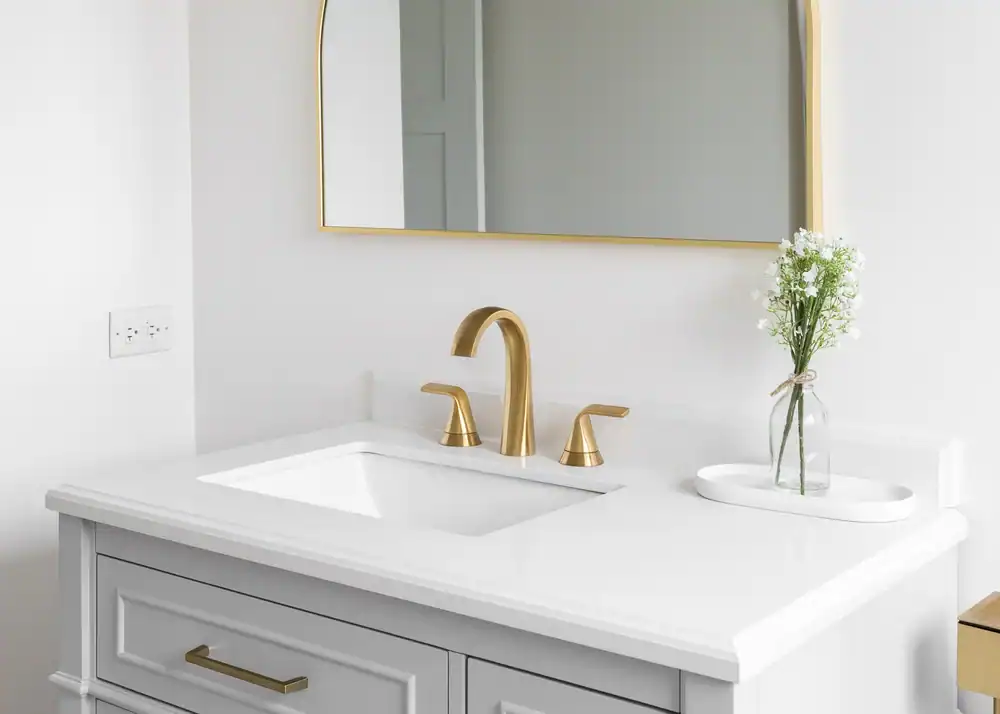
A modern bathroom vanity with a white countertop, gold faucet and handles, a rectangular sink, a large mirror with a thin gold frame, and a small vase of white flowers on a tray.

What's Actually Driving the Cost of a Bathroom Addition?

Labor and materials split the bill pretty evenly, with materials accounting for roughly 45% of total project cost. That means the choices you make on tile, fixtures, vanity, and shower systems have a real impact on where you land in the range. Plumbing is the other major driver — and it’s the one most homeowners underestimate. Expect plumbing alone to run $1,000 to $10,000 depending on how far the new bathroom sits from your existing supply and drain lines. The further away, the more pipe, the more labor, and the more the number climbs.

Electrical typically adds $500 to $2,500. That covers GFCI outlets, exhaust fan wiring, and lighting — all of which are code requirements in Texas, not optional upgrades. Skipping or cutting corners on any of these doesn’t save money; it just moves the cost to a future inspection or repair.

In Tarrant County specifically, there’s another variable that rarely gets mentioned in national cost guides: soil. The expansive clay soil throughout the area — sometimes called black gumbo — shifts seasonally as it absorbs and releases moisture. That movement can affect where and how drain lines are positioned during rough-in. A contractor who hasn’t worked in North Texas may not account for this. We’ve spent decades pulling permits in Arlington, Fort Worth, and Mansfield, and we know how to position drain lines so they stay functional year-round as the soil moves beneath your home.

The resale math is worth understanding too. A midrange bathroom addition recoups roughly 53% of its cost at resale according to the 2025 Journal of Light Construction Cost vs. Value Report. That’s not a dollar-for-dollar return — but it also doesn’t include the daily value of having a functional bathroom that works for your household right now. Most homeowners who add a bathroom don’t regret it. Most who skip the permits do.

Bathroom Addition Contractor: What to Look for Before You Sign Anything

Texas does not require general contractors to hold a state license, carry a surety bond, or contribute to a recovery fund. That’s not a technicality — it means there’s no automatic financial backstop if an unqualified contractor causes damage to your home. The burden of vetting is entirely on you as the homeowner.

What that means practically: ask for proof of insurance before anyone sets foot in your house. Verify that the plumber and electrician on the project hold active licenses through the Texas State Board of Plumbing Examiners and the Texas Department of Licensing and Regulation respectively. These are searchable databases — any contractor worth hiring will encourage you to check rather than ask you to take their word for it.

Beyond licensing, look at how a contractor communicates before the project starts. Do they return calls promptly? Do they show up when they say they will? Do they explain the process clearly, or do they rush you toward a signature? The way a contractor behaves during the estimate phase is a preview of how they’ll behave once your walls are open and you have fewer options.

Written contracts matter more than most homeowners realize. A fixed-price estimate — one where the number on the paper is the number you pay unless you request changes to the scope — removes the most common source of conflict between homeowners and contractors. Open-ended “time and materials” billing creates uncertainty that tends to resolve in the contractor’s favor. Get the price in writing. Get the scope in writing. Get the warranty in writing.

We offer fixed-price estimates on every project we take on. Your written estimate is your final price. If something unexpected turns up behind the walls, we communicate it immediately and walk you through the options before any additional work is done. That’s how we’ve operated for over 30 years in this market.

Want live answers?

Connect with a A Plus Home Remodel expert for fast, friendly support.

Bathroom Renovation Permit Requirements in Texas: What You Actually Need to Know

Permits are the part of a bathroom addition that homeowners most often want to skip — and the part that causes the most problems when they do. The permit fee itself is real: expect $200 to $1,500 or more depending on the scope of work and the municipality. But that fee buys you something most people don’t think about until it’s too late.

A permitted bathroom addition has been inspected by the city at rough-in and at final. That means a licensed inspector confirmed the plumbing, electrical, and structural work met code before the walls were closed. An unpermitted bathroom has none of that documentation — and in an active real estate market like DFW, that gap shows up fast when you try to sell.

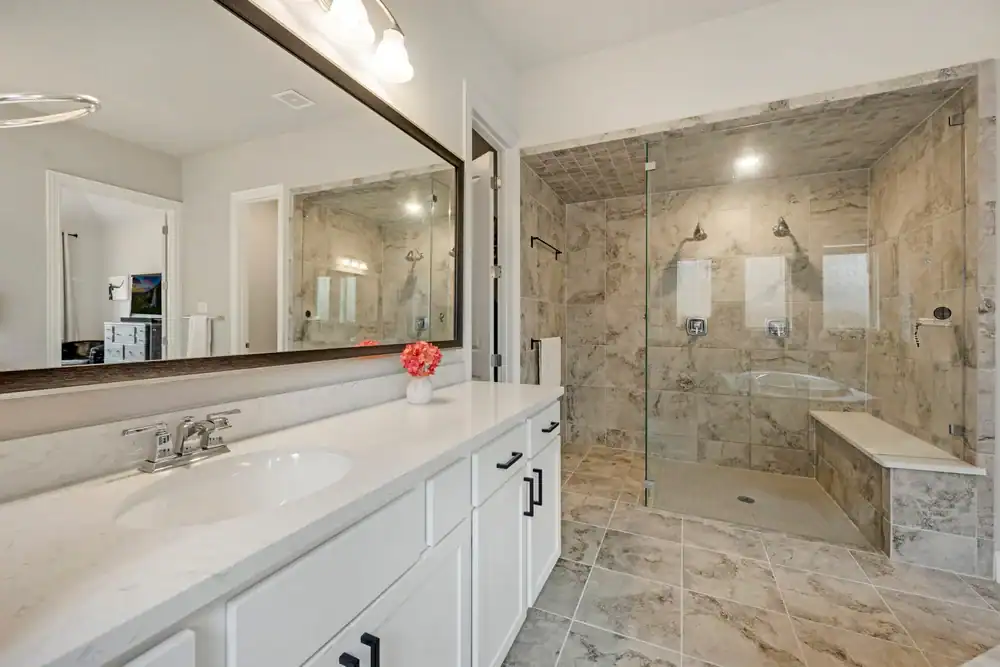
Modern bathroom with white cabinets, a large mirror, and a marble countertop. There is a spacious walk-in glass shower with dual showerheads and a built-in bench, plus light beige tiled floors and walls.

Which Permits Are Required for a Bathroom Addition in Tarrant County?

Adding a bathroom almost always requires at least three separate permits: a building permit for the structural work, a plumbing permit for the supply and drain lines, and an electrical permit for outlets, exhaust fan wiring, and lighting circuits. These aren’t optional depending on the size of the project — they’re triggered by the type of work being done.

The plumbing permit is the one that surprises most homeowners. It’s required any time you install or relocate water supply lines, drain lines, waste stacks, or venting systems. Even moving a toilet a few feet in the same room requires a plumbing inspection. The reason is straightforward: improperly vented drain lines cause sewer gas to back up into the home. That’s a health issue, not just a code technicality.

In Tarrant County, each municipality runs its own permit office with its own fee schedule and inspection process. The City of Arlington handles permits through Development Services. Fort Worth uses its own Development Services Department. Mansfield, Keller, Southlake, Euless, Bedford, Hurst, Grapevine, and Colleyville each have separate processes. We’ve worked across all of these cities for decades, which means we move through the process faster and avoid the common delays that come from learning a new system on your project’s timeline.

There’s also the HOA layer. Many Tarrant County communities — especially in Mansfield, Keller, Southlake, and Colleyville — require HOA approval for additions that affect the home’s exterior, including new window openings or room additions. City permit and HOA approval are separate processes that often run on different timelines. We handle both, so you don’t have to track down two separate approval chains while a crew is waiting to break ground.

What Happens If You Skip the Permit for a Bathroom Remodel?

This is where the “I’ll save the permit fee” math falls apart. An unpermitted bathroom addition doesn’t just create a paperwork gap — it creates a chain of downstream risks that can cost far more than the permit ever would have.

The most immediate risk is at resale. Home inspectors in the DFW market routinely flag unpermitted work, and buyers’ agents know what to look for. When an unpermitted bathroom is discovered during the inspection period, the seller typically faces one of three outcomes: renegotiate the price downward, agree to tear out and redo the work to pass inspection before closing, or watch the deal fall apart entirely. None of those are good options when you’re under contract and on a timeline.

The insurance angle is less talked about but equally serious. If a water line fails or a drain backs up in an unpermitted bathroom and causes damage to your home, your homeowner’s insurance carrier may deny the claim on the grounds that the work was never inspected and approved. You’d be absorbing the cost of both the original damage and the remediation out of pocket.

There’s also personal liability to consider. If a guest or family member is injured in a space that was never properly permitted and inspected, the legal exposure is real. Permits exist because inspections catch the things that cause injuries — improperly wired outlets, incorrectly vented plumbing, inadequate structural support. Skipping that process doesn’t make those risks disappear; it just removes the documentation that would have protected you.

We pull permits on every project we take on — not because we’re required to remind you of that, but because it’s the only way to protect the investment you’re making in your home. Thirty years in Tarrant County has shown us what happens when that step gets skipped. It’s not a risk worth taking.

Ready to Get a Real Number for Your Bathroom Addition in Tarrant County?

Bathroom addition cost comes down to a handful of factors: whether you’re converting existing space or building out, how far the new bathroom sits from existing plumbing, what finishes you choose, and whether the contractor you hire handles permits or leaves that problem for you to deal with later.

In Tarrant County, those decisions carry real local weight — clay soil, municipality-by-municipality permitting, active HOA communities, and a resale market that scrutinizes unpermitted work more closely than most homeowners expect. Getting this right from the start matters.

If you want a fixed price, a clear timeline, and a contractor who handles the permits so you don’t have to, reach out to us. We’ve been doing this work in this area for over 30 years, and we’re happy to walk you through what your specific project would actually cost.

Article details:

Share: