
5 Questions to Ask Concrete Driveway Contractors Before You Sign

Before you hire anyone to pour your driveway, there are five questions that separate the professionals from the ones who'll cost you more in the long run.

A Plus Arlington Texas home exterior with clean curb appeal and professional local service branding

Summary:

Hiring a concrete driveway contractor without asking the right questions is how homeowners end up with cracked slabs, surprise invoices, and permits that were never pulled. This guide walks you through the five questions that actually matter — the ones that reveal whether a contractor is worth hiring or worth avoiding. Read this before you sign anything. It takes ten minutes and could save you thousands.
Table of contents

Most homeowners don’t realize how much rides on the conversation before the work starts. You can get three quotes, compare prices, and still end up with a contractor who disappears mid-project, sends a crew you’ve never met, or hands you a change order after your old driveway is already torn out. The price you agreed to suddenly isn’t the price anymore.

These five questions won’t make you a concrete expert. But they will tell you — fast — whether the contractor sitting across from you is the real deal or someone you’ll regret hiring.

Questions to Ask Concrete Driveway Contractors That Actually Reveal Who You're Hiring

A good contractor won’t flinch at any of these. We answer directly, offer documentation without being asked, and give specifics — not vague reassurances. That confidence is itself a signal.

A contractor who stumbles, deflects, or gets defensive? That’s your answer too. The goal here isn’t to interrogate anyone. It’s to have a real conversation that helps you make a smart decision with your money and your property.

Will You Pull the Permits — and What Happens If You Don't?

This is the question most homeowners forget to ask, and it’s one of the most important ones on the list. In [TOWN NAME] and across the region, permits are required for most concrete driveway installations — especially when the work affects drainage, right-of-way, or easements. Skipping that step isn’t just a technicality. It’s a problem that follows you.

If you try to sell your home and an inspector finds unpermitted work, you’re the one who has to deal with it. The contractor is long gone. You’re left either paying to have the work redone to code or negotiating with a buyer who now has leverage over you. Neither is a good situation.

We pull permits as a matter of course — not as an add-on or an afterthought. When you ask this question, you’re not just checking a box. You’re finding out whether your contractor operates above board in every respect or cuts corners when they think no one is looking.

One more thing worth knowing: Texas does not require a state-level general contractor license the way many other states do. That means the burden of vetting falls almost entirely on you as the homeowner. There’s no central licensing board to call. Asking about permits, insurance, and local registration is how you protect yourself in a market where the regulatory framework is thinner than most people assume.

Is Your Crew In-House, or Are You Subcontracting the Work?

This question catches a lot of contractors off guard, and the answer tells you a great deal. The scenario plays out more often than most homeowners know: you meet a professional, polished salesperson, you like them, you sign the contract — and then a completely different crew shows up to do the actual work. You have no idea who they are, what their experience level is, or whether they’ve ever poured a driveway on the regional soil conditions.

The clay soil in [TOWN NAME] and surrounding areas swells significantly when it rains and shrinks hard when it dries out. That constant movement is brutal on concrete that wasn’t properly prepared for it. A crew that’s been working this specific ground for years knows how to handle subbase compaction, reinforcement, and joint placement in a way that holds up. A crew that was called last week does not.

When the work is done entirely in-house by licensed professionals who work together regularly, the accountability is clear. There’s no finger-pointing between the contractor and the sub when something goes wrong. One team owns the project from start to finish, and you have one number to call if you ever need to.

Ask this question directly. “Is the crew that shows up your crew, or will you be subcontracting any part of this?” A confident, honest answer is what you’re looking for.

More Questions to Ask Before Any Money Changes Hands

The first two questions filter out a lot of the risk. These next three get into the specifics of what you’re actually paying for — and what protection you have after the job is done.

Concrete is a long-term investment. A properly installed driveway can last 30 to 50 years. A poorly installed one can start showing serious problems within two or three. The difference usually comes down to decisions made before the pour — decisions you have every right to ask about.

What Does Your Estimate Actually Include — and Is the Price Fixed?

This is where a lot of homeowners get hurt. They receive a quote that looks reasonable, they sign, and then the change orders start. The old driveway gets removed — which means you now have a hole where your driveway used to be and very little leverage — and suddenly there are “unforeseen” costs. More material needed. Additional labor. Disposal fees that weren’t mentioned. The price climbs.

A detailed, fixed-price estimate eliminates this entirely. Before you sign anything, you should know exactly what concrete thickness you’re getting (four inches is standard for residential driveways; five is better for heavier vehicles and adds roughly 20% to cost but improves durability significantly), whether the price includes reinforcement like rebar or fiber, whether sealing is included or billed separately, how site cleanup is handled, and what the payment schedule looks like.

Vague quotes lead to disputes. A contractor who can hand you a written estimate with line-item clarity — and stand behind that number — is one who has done this enough times to know exactly what a job costs. That confidence isn’t just reassuring. It’s a sign of professionalism.

In [TOWN NAME], where summer heat and seasonal weather patterns affect how concrete cures, you want a contractor who has priced the job correctly the first time — not one who underbid to win the work and plans to make it up later.

What Warranty Do You Provide, and Do You Have Local References?

These are two separate questions, but they work together. The warranty tells you what happens if something goes wrong. The references tell you whether something is likely to.

On the warranty side, you want something in writing that covers both materials and workmanship. Not just “we’ll come back if there’s a problem” — an actual written warranty with clear terms. What’s covered? For how long? What voids it? A contractor who provides a written warranty is putting something real on the line. One who offers only a verbal promise is not.

On the references side, ask specifically for local ones — neighbors in [TOWN NAME] who had similar work done on similar soil in similar climate conditions. Not just a star rating on a national platform. An actual person who had their driveway installed and can speak to how it’s held up. Someone you could drive by and look at the finished work. That kind of reference is worth more than any marketing claim, because concrete doesn’t lie after a few seasons and weather cycles. Anyone who was around for Winter Storm Uri in February 2021 knows that even a mild freeze can stress a slab that wasn’t properly sealed or reinforced.

A contractor with 30-plus years of completed projects in this region should be able to give you references without hesitation. If they can’t, or if their references are all from out of the area, that’s worth noting.

The fifth question, which ties everything together, is simply this: can I see the written contract before I commit to anything? A contractor who hands you a clear, complete contract — one that specifies everything discussed — is one who has nothing to hide and no intention of surprising you later.

How to Choose a Concrete Driveway Contractor You Can Trust

The right contractor answers all five of these questions without hesitation. We pull permits, use our own crew, give you a fixed price in writing, back our work with a real warranty, and can point you to finished driveways right here in [TOWN NAME]. That’s not a high bar — it’s just the baseline for doing the job professionally.

What makes the difference in this market specifically is local experience. The soil composition, the seasonal weather patterns, the freeze-thaw cycles — these aren’t abstract concerns. They’re the conditions your driveway will live in for the next 30 to 40 years. The contractor you hire should understand all of it before they ever break ground.

If you’re ready to have that conversation with a team that’s been doing this work in the region for over three decades, we’re a good place to start.

Share:

Summary:

Hiring a concrete driveway contractor without asking the right questions is how homeowners end up with cracked slabs, surprise invoices, and permits that were never pulled. This guide walks you through the five questions that actually matter — the ones that reveal whether a contractor is worth hiring or worth avoiding. Read this before you sign anything. It takes ten minutes and could save you thousands.
Table of contents

Most homeowners don’t realize how much rides on the conversation before the work starts. You can get three quotes, compare prices, and still end up with a contractor who disappears mid-project, sends a crew you’ve never met, or hands you a change order after your old driveway is already torn out. The price you agreed to suddenly isn’t the price anymore.

These five questions won’t make you a concrete expert. But they will tell you — fast — whether the contractor sitting across from you is the real deal or someone you’ll regret hiring.

Questions to Ask Concrete Driveway Contractors That Actually Reveal Who You're Hiring

A good contractor won’t flinch at any of these. We answer directly, offer documentation without being asked, and give specifics — not vague reassurances. That confidence is itself a signal.

A contractor who stumbles, deflects, or gets defensive? That’s your answer too. The goal here isn’t to interrogate anyone. It’s to have a real conversation that helps you make a smart decision with your money and your property.

A woman in casual clothes sits on a ladder in an unfinished room, studying architectural blueprints. The walls behind her are partially drywalled, suggesting ongoing renovation or construction work.

Will You Pull the Permits — and What Happens If You Don't?

This is the question most homeowners forget to ask, and it’s one of the most important ones on the list. In [TOWN NAME] and across the region, permits are required for most concrete driveway installations — especially when the work affects drainage, right-of-way, or easements. Skipping that step isn’t just a technicality. It’s a problem that follows you.

If you try to sell your home and an inspector finds unpermitted work, you’re the one who has to deal with it. The contractor is long gone. You’re left either paying to have the work redone to code or negotiating with a buyer who now has leverage over you. Neither is a good situation.

We pull permits as a matter of course — not as an add-on or an afterthought. When you ask this question, you’re not just checking a box. You’re finding out whether your contractor operates above board in every respect or cuts corners when they think no one is looking.

One more thing worth knowing: Texas does not require a state-level general contractor license the way many other states do. That means the burden of vetting falls almost entirely on you as the homeowner. There’s no central licensing board to call. Asking about permits, insurance, and local registration is how you protect yourself in a market where the regulatory framework is thinner than most people assume.

Is Your Crew In-House, or Are You Subcontracting the Work?

This question catches a lot of contractors off guard, and the answer tells you a great deal. The scenario plays out more often than most homeowners know: you meet a professional, polished salesperson, you like them, you sign the contract — and then a completely different crew shows up to do the actual work. You have no idea who they are, what their experience level is, or whether they’ve ever poured a driveway on the regional soil conditions.

The clay soil in [TOWN NAME] and surrounding areas swells significantly when it rains and shrinks hard when it dries out. That constant movement is brutal on concrete that wasn’t properly prepared for it. A crew that’s been working this specific ground for years knows how to handle subbase compaction, reinforcement, and joint placement in a way that holds up. A crew that was called last week does not.

When the work is done entirely in-house by licensed professionals who work together regularly, the accountability is clear. There’s no finger-pointing between the contractor and the sub when something goes wrong. One team owns the project from start to finish, and you have one number to call if you ever need to.

Ask this question directly. “Is the crew that shows up your crew, or will you be subcontracting any part of this?” A confident, honest answer is what you’re looking for.

Want live answers?

Connect with a A Plus Home Remodel expert for fast, friendly support.

More Questions to Ask Before Any Money Changes Hands

The first two questions filter out a lot of the risk. These next three get into the specifics of what you’re actually paying for — and what protection you have after the job is done.

Concrete is a long-term investment. A properly installed driveway can last 30 to 50 years. A poorly installed one can start showing serious problems within two or three. The difference usually comes down to decisions made before the pour — decisions you have every right to ask about.

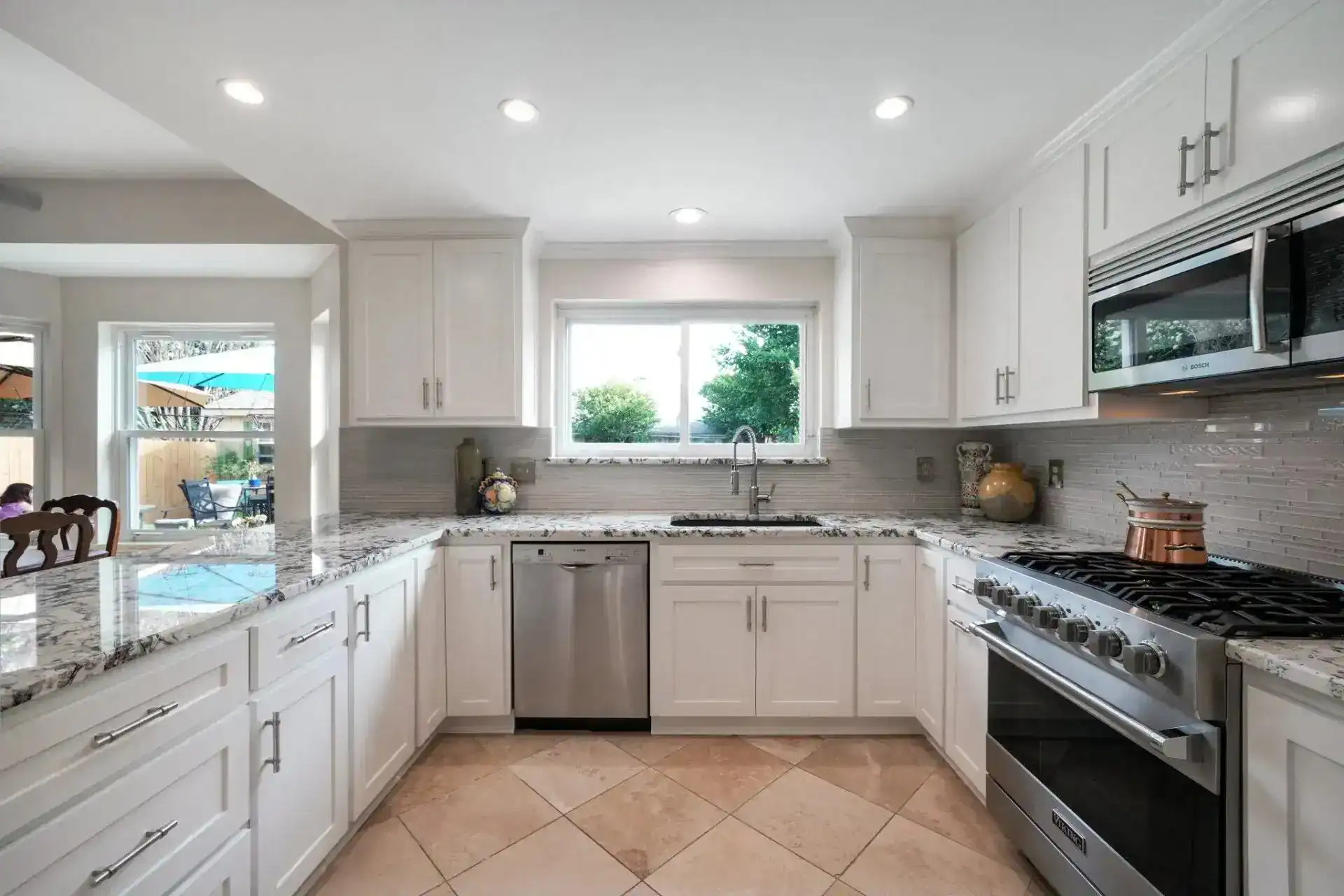
Arlington kitchen remodeling project with updated cabinets, countertops, lighting, and modern home design.

What Does Your Estimate Actually Include — and Is the Price Fixed?

This is where a lot of homeowners get hurt. They receive a quote that looks reasonable, they sign, and then the change orders start. The old driveway gets removed — which means you now have a hole where your driveway used to be and very little leverage — and suddenly there are “unforeseen” costs. More material needed. Additional labor. Disposal fees that weren’t mentioned. The price climbs.

A detailed, fixed-price estimate eliminates this entirely. Before you sign anything, you should know exactly what concrete thickness you’re getting (four inches is standard for residential driveways; five is better for heavier vehicles and adds roughly 20% to cost but improves durability significantly), whether the price includes reinforcement like rebar or fiber, whether sealing is included or billed separately, how site cleanup is handled, and what the payment schedule looks like.

Vague quotes lead to disputes. A contractor who can hand you a written estimate with line-item clarity — and stand behind that number — is one who has done this enough times to know exactly what a job costs. That confidence isn’t just reassuring. It’s a sign of professionalism.

In [TOWN NAME], where summer heat and seasonal weather patterns affect how concrete cures, you want a contractor who has priced the job correctly the first time — not one who underbid to win the work and plans to make it up later.

What Warranty Do You Provide, and Do You Have Local References?

These are two separate questions, but they work together. The warranty tells you what happens if something goes wrong. The references tell you whether something is likely to.

On the warranty side, you want something in writing that covers both materials and workmanship. Not just “we’ll come back if there’s a problem” — an actual written warranty with clear terms. What’s covered? For how long? What voids it? A contractor who provides a written warranty is putting something real on the line. One who offers only a verbal promise is not.

On the references side, ask specifically for local ones — neighbors in [TOWN NAME] who had similar work done on similar soil in similar climate conditions. Not just a star rating on a national platform. An actual person who had their driveway installed and can speak to how it’s held up. Someone you could drive by and look at the finished work. That kind of reference is worth more than any marketing claim, because concrete doesn’t lie after a few seasons and weather cycles. Anyone who was around for Winter Storm Uri in February 2021 knows that even a mild freeze can stress a slab that wasn’t properly sealed or reinforced.

A contractor with 30-plus years of completed projects in this region should be able to give you references without hesitation. If they can’t, or if their references are all from out of the area, that’s worth noting.

The fifth question, which ties everything together, is simply this: can I see the written contract before I commit to anything? A contractor who hands you a clear, complete contract — one that specifies everything discussed — is one who has nothing to hide and no intention of surprising you later.

How to Choose a Concrete Driveway Contractor You Can Trust

The right contractor answers all five of these questions without hesitation. We pull permits, use our own crew, give you a fixed price in writing, back our work with a real warranty, and can point you to finished driveways right here in [TOWN NAME]. That’s not a high bar — it’s just the baseline for doing the job professionally.

What makes the difference in this market specifically is local experience. The soil composition, the seasonal weather patterns, the freeze-thaw cycles — these aren’t abstract concerns. They’re the conditions your driveway will live in for the next 30 to 40 years. The contractor you hire should understand all of it before they ever break ground.

If you’re ready to have that conversation with a team that’s been doing this work in the region for over three decades, we’re a good place to start.

Article details:

Share: