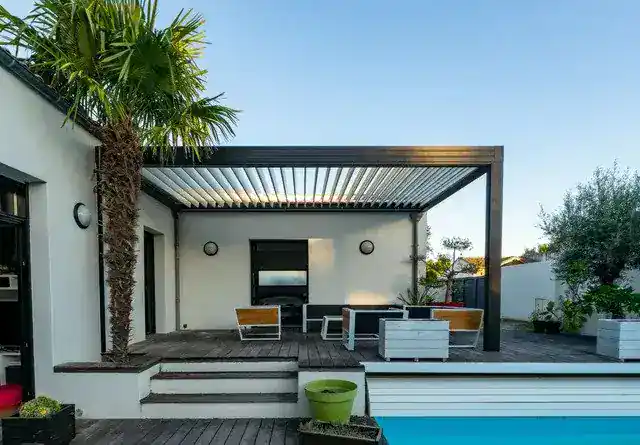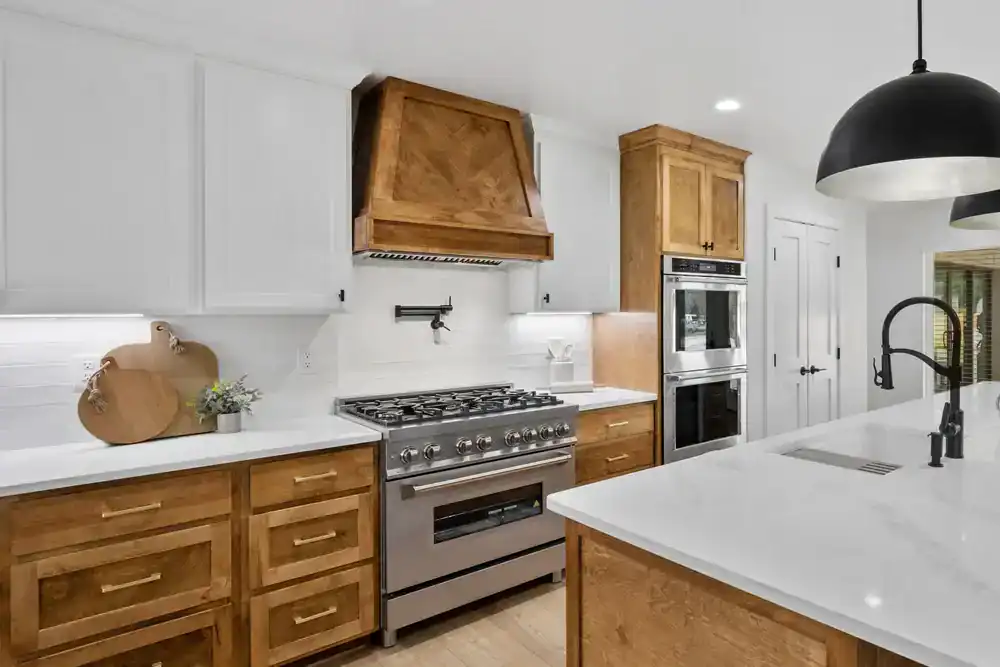
Your backyard has potential you're not using. Here's what a real outdoor transformation looks like — and what to expect from the process.
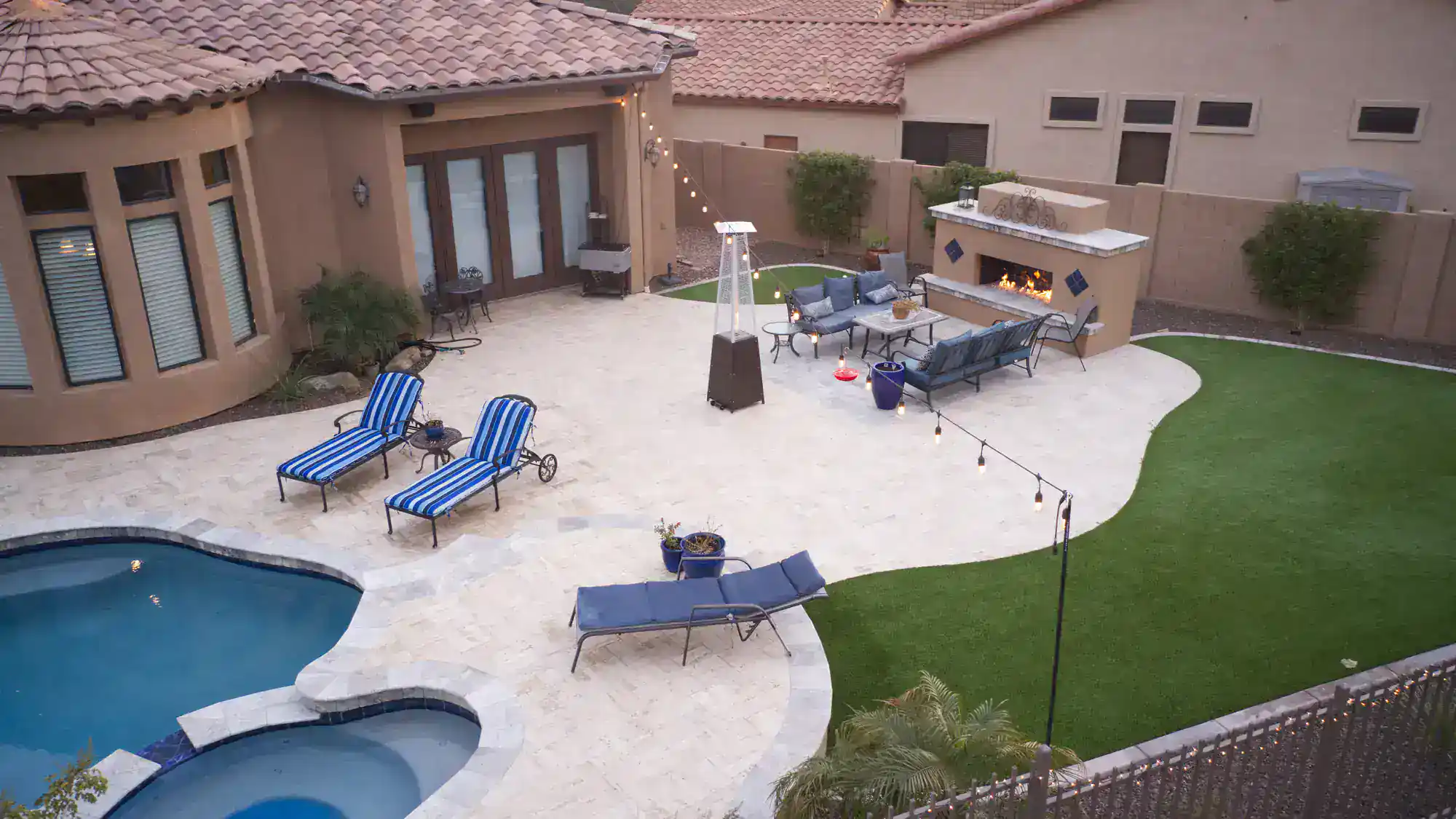
Share:
Summary:
If you’ve been looking out at your backyard and thinking “I should do something with that,” you’re not alone. Most homeowners in Arlington Heights, Colleyville, Pantego, Lake Worth, Bluebonnet Hills, and across Tarrant County are sitting on outdoor space they barely use — not because they don’t want to, but because the space isn’t set up for real life. No shade, no structure, nowhere to actually sit and enjoy it. We’ve been remodeling backyards in this area for over 30 years, and the conversation almost always starts the same way. Here’s what the process actually looks like, what it costs, and how to know you’re working with the right contractor.
Backyard remodeling isn’t one thing — it’s a category that ranges from a basic concrete patio to a full outdoor living space with a covered structure, built-in kitchen, lighting, fencing, and fresh landscaping. What it looks like for your home depends on how you want to use the space, what your lot allows, and what your budget supports.
In Arlington Heights, Colleyville, Pantego, Lake Worth, Bluebonnet Hills, and across Tarrant County, the most common projects we complete are covered patios, stamped or decorative concrete surfaces, pergola installations, outdoor kitchens, cedar fencing, and backyard regrading for drainage. Some homeowners want one piece of that. Others want the whole thing done at once.
Either way, the goal is the same: a backyard that works for your life, built to handle this climate.
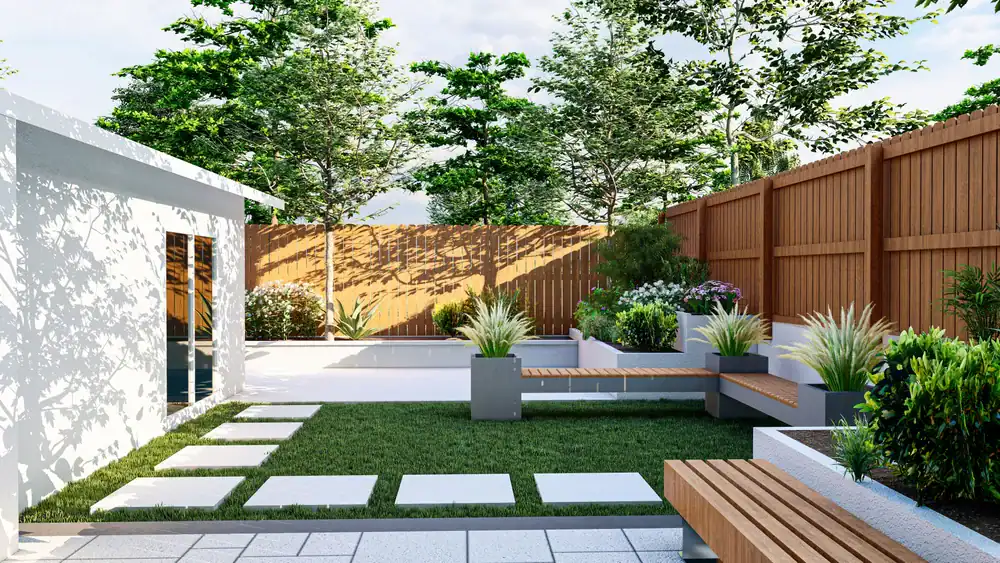
The part most homeowners don’t think about until they’re in the middle of it is how many moving pieces a backyard project actually involves. Concrete, carpentry, electrical, drainage, landscaping — these trades have to happen in a specific sequence, and if they’re not coordinated, you end up with delays, gaps in the design, and a job site that sits untouched for days at a time.
We manage the entire process under one contract. That means one point of contact, one project timeline, and one team accountable for every phase. You’re not calling a concrete company on Monday and a fence company on Wednesday and hoping they show up in the right order. We handle the scheduling, the coordination, and the day-to-day communication so you’re not spending your evenings chasing updates.
Before any work starts, we use digital design technology to show you exactly what your finished backyard will look like. Not a rough sketch — an actual visualization of your space with the features you’ve chosen. This step matters more than most people expect. It’s where you catch the things you want to change before they’re poured in concrete, and it’s where the project stops feeling abstract and starts feeling real.
We also pull every required permit and coordinate all inspections. In Arlington, Colleyville, Lake Worth, and throughout Tarrant County, permits are required for patio covers, decks, carports, and any structural work. Contractors who skip that step are cutting a corner that creates real problems for you — failed inspections at resale, legal exposure, and in some cases, structures you’re required to tear down. That’s not a risk worth taking, and it’s not how we operate.
For homeowners in HOA-governed neighborhoods — which covers a significant portion of Colleyville, Pantego, and parts of Arlington Heights — we handle the HOA coordination as well. Plans get submitted, correspondence gets managed, and construction doesn’t start until approval is confirmed. It’s one less thing on your plate.
This is the question almost everyone asks first, and it’s a fair one. The honest answer is that it depends on scope — but that’s not a dodge, it’s just the reality of how these projects work.
For a basic covered patio with a concrete surface in Arlington Heights, Colleyville, Lake Worth, and across Tarrant County, projects typically start around $15,000. If you’re adding an outdoor kitchen, custom tile work, a pergola, or more elaborate hardscaping, you’re generally looking at $40,000 to $60,000. A full backyard transformation — regrading, drainage, covered structure, outdoor kitchen, fencing, and landscaping — can run from $50,000 to $75,000 or more depending on the materials and size of the space.
Those numbers might feel significant until you look at what they return. According to the National Association of Realtors, patios recover approximately 95% of their installation cost at resale. Outdoor kitchens carry a 100% ROI by the same measure. In a Tarrant County housing market where median home values hit nearly $320,000 in May 2025 — up 7.7% year-over-year — a well-executed backyard remodel isn’t just a lifestyle upgrade. It’s equity.
What we offer every homeowner before any of that money changes hands is a written, fixed-price estimate. What you’re quoted is what you pay. Change orders only happen if you change the scope — not because something unexpected came up on our end, not because materials shifted, not because we underestimated the job. That commitment matters in a market where cost overruns are one of the most common complaints homeowners have about contractors.
The average home in Arlington is about 41 years old. A lot of the outdoor spaces we work on haven’t been touched since the house was built. If that sounds familiar, the gap between what your backyard is and what it could be is probably larger than you think — and so is the return on closing it.
Want live answers?
Connect with a A Plus Home Remodel expert for fast, friendly support.
Building a backyard in Tarrant County isn’t the same as building one anywhere else. The heat, the soil, the storms — they all create conditions that generic contractors and out-of-area crews regularly underestimate, and homeowners end up with cracked concrete, warped structures, and drainage problems that didn’t have to happen.
We’ve been working in this specific climate for over 30 years. That experience shows up in the decisions we make before you ever see the finished product — the materials we specify, the way we prep the ground, the drainage systems we design, and the way we engineer covered structures to meet local wind load requirements. It’s not something you can learn from a manual. It comes from doing this work here, in this soil, through this weather, for this long.
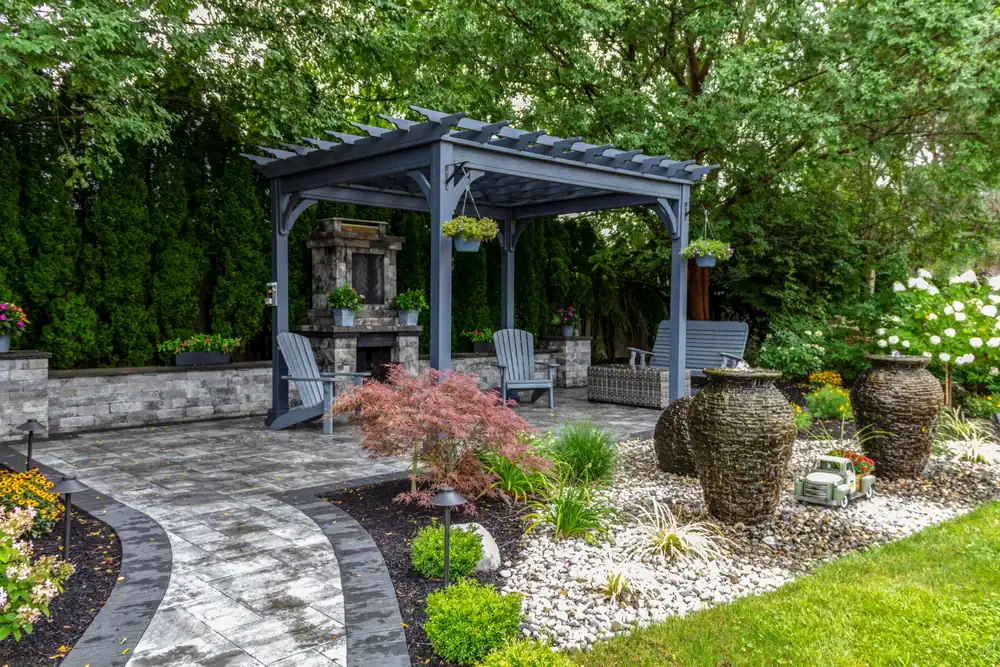
North Texas summers are brutal in a way that’s hard to overstate if you haven’t lived through one. Temperatures regularly exceed 100°F, and they stay there — not for a day or two, but for weeks. Without a shade structure, your backyard is effectively unusable from June through August, and even evenings can be punishing well into September.
A properly designed covered patio changes that equation. With the right structure, the right orientation, and ceiling fans to keep air moving, you can use your outdoor space comfortably through the hottest parts of the year. Add outdoor lighting and a fire feature, and you’ve got a space that’s usable 10 months out of 12 — which is the whole point.
The design matters as much as the structure itself. A patio cover that blocks afternoon sun without making the space feel closed in requires thought about roof pitch, overhang depth, and material choices. A pergola that looks great in a showroom but funnels rain directly onto your seating area is a design failure. We’ve seen both, and we build neither.
For homeowners in Arlington Heights, Colleyville, and near the Cultural District and Camp Bowie Boulevard corridor, there’s also an aesthetic dimension worth taking seriously. These are character-rich neighborhoods with homes that have real architectural personality. An outdoor space that looks like it was bolted on as an afterthought undermines everything the rest of the house communicates. The design work we do upfront — including the digital visualization — is specifically meant to make sure the finished product feels like it belongs there.
This is the part of backyard remodeling that doesn’t show up in the photos but determines whether your project holds up five years from now or starts showing problems in two.
North Texas clay soil is notorious for its movement. It expands when it absorbs water and contracts when it dries out, and that cycle puts real stress on any concrete surface that isn’t installed correctly. Proper site preparation — excavation to the right depth, compacted base material, reinforcement with rebar or wire mesh, and expansion joints placed at the right intervals — is what separates a concrete patio that lasts from one that cracks. We’ve repaired enough of the latter to know exactly what was skipped the first time.
Drainage is the other piece that gets underestimated. Tarrant County gets sudden, heavy rainstorms — the kind that dump several inches in an hour and overwhelm unprepared yards. If your backyard doesn’t drain properly, you end up with standing water, erosion, and in some cases, moisture working its way toward your foundation. Regrading and proper drainage design aren’t optional add-ons for homeowners in Lake Worth, Bluebonnet Hills, Pantego, or anywhere else in this area — they’re foundational to a backyard that functions.
For homeowners in Colleyville and Pantego, where lot sizes tend to be larger and outdoor investments tend to be more significant, getting the technical foundation right matters even more. A premium outdoor kitchen or a custom stamped concrete patio is only as good as the surface it’s sitting on. We don’t skip steps to come in lower on a bid, because the problems that creates aren’t our problem — they become yours. That’s not how we want to do business, and it’s not how we’ve stayed in this market for over 30 years.
If your backyard has been an afterthought for a few years — or a few decades — the path forward is simpler than it might feel right now. A clear scope, a fixed price, a real timeline, and a team that handles everything from permits to final cleanup. That’s what every project we take on looks like.
We’ve been doing this work in Arlington Heights, Pantego, Colleyville, Lake Worth, Bluebonnet Hills, and across Tarrant County since before most of the contractors you’ll find online were in business. That history means something — in the relationships we have with local inspectors, in the knowledge we bring to every material decision, and in the references we can put you in touch with right here in your community.
When you’re ready to talk through what your backyard could look like, reach out to us. We’ll start with a conversation, not a sales pitch.
Article details:
Share:
Continue learning: