Patio Installation Contractor Cost in Fort Worth and Arlington

What does a patio installation actually cost in Fort Worth and Arlington — and how do you find a contractor you can trust? Here's what you need to know.

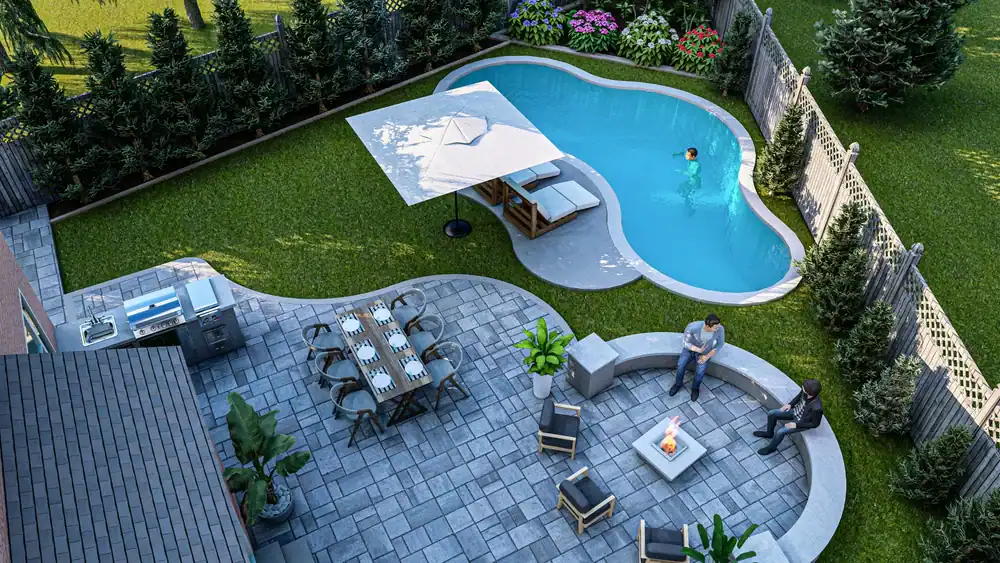
A backyard with a pool, lounge chairs under a large umbrella, a dining table set, a BBQ grill, a fire pit area with seating.

Summary:

Installing a patio in Fort Worth or Arlington is one of the smartest investments you can make in your home — but the cost varies more than most people expect, and the contractor you choose matters just as much as the materials. This guide breaks down real cost ranges for the North Texas market, explains what drives the price up or down, and walks you through what to look for when hiring a patio installation contractor. If you’re in the planning stage, this is the page that saves you from expensive surprises.
Table of contents

If you’ve been pricing out a patio in Fort Worth or Arlington, you’ve probably noticed that the numbers online don’t quite add up. National averages don’t account for Texas heat, Tarrant County’s clay soil, or the fact that a covered patio here isn’t a luxury — it’s practically a necessity when summers push past 100°F. This guide gives you a clearer picture of what patio installation actually costs in this market, what separates a solid contractor from a risky one, and how to move forward without second-guessing every decision. Let’s start with the numbers.

Concrete Patio Contractors: What You'll Actually Pay in the DFW Market

Most cost guides throw out a national average and call it a day. That’s not especially useful if you’re in Tarrant County, where soil conditions, permit requirements, and local labor rates all affect the final number. For a standard concrete patio in Fort Worth and Arlington, most homeowners are looking at somewhere between $8 and $18 per square foot, depending on size, finish type, and whether you’re adding a covered structure.

A plain, functional slab sits at the lower end of that range. Decorative finishes — stained concrete, stamped patterns, contrasting borders — push the cost higher, but they also protect the surface from UV exposure and moisture, which matters in a climate that swings between scorching summers and wet spring seasons. Labor typically accounts for 40 to 60 percent of the total project cost, which is why the contractor you hire has a direct impact on your final bill, not just the quality of the work.

Why Tarrant County's Clay Soil Changes the Cost Equation

Here’s something most online cost calculators completely ignore: the ground underneath your patio matters as much as what goes on top of it. Tarrant County sits on expansive clay soil — sometimes called “black gumbo” by locals — that swells when it absorbs moisture and contracts when it dries out. That constant movement is the reason so many concrete slabs in Fort Worth and Arlington develop cracks within a few years of being poured.

A contractor who understands this will factor in proper subgrade preparation before a single cubic yard of concrete is ordered. That means compacting the base correctly, setting the right depth, placing control joints strategically to manage expansion and contraction, and selecting a concrete mix designed for this soil environment. These aren’t optional steps — they’re the difference between a patio that lasts 20 years and one that starts cracking by year three.

The cost of doing this right is built into a legitimate estimate. If you get a quote that seems unusually low, it’s worth asking what the subgrade prep process looks like. Skipping or shortcutting that phase is one of the most common ways low-bid contractors cut corners, and fixing bad concrete work after the fact costs significantly more than getting it right the first time. In Fort Worth and Arlington, where the soil is as challenging as any in Texas, this is not a detail you want to leave to chance.

We’ve been working in Tarrant County for over 30 years, and the clay soil issue comes up on nearly every patio project we take on. It’s not something you can eyeball on the day of the pour — it requires preparation, experience, and knowing what this specific ground does under different weather conditions. That local knowledge is part of what you’re paying for when you hire a contractor who’s been doing this work here for decades.

Do You Need a Permit for a Patio in Fort Worth or Arlington?

This is one of the most common questions we hear, and the answer depends on what you’re building. A basic concrete slab may or may not require a permit depending on its size and whether it’s attached to your home. But if you’re adding a covered structure — a porch roof, a pergola, anything that connects to the house — the City of Fort Worth and the City of Arlington both require a building permit before work begins.

Skipping the permit process might seem like a way to save time, but it creates real problems down the road. Unpermitted structures can complicate a home sale, create liability if someone is injured, and in some cases require the structure to be torn down entirely. It’s not a risk worth taking.

There’s another layer that catches a lot of homeowners off guard: HOA approval. Many neighborhoods throughout Tarrant County — in areas like Mansfield, Keller, Hurst, Euless, and Richland Hills — have active homeowners associations that regulate exterior changes, including patios, patio covers, and fencing. The approval process can take anywhere from two to six weeks, which means the earlier you start it, the better. If you’re hoping to have your patio ready for spring or summer, getting the HOA process moving in late winter is the smart play.

We handle permits and HOA approvals as a standard part of every project we manage. That’s not something every contractor does — some leave it entirely to the homeowner — but we’ve found that taking it off your plate is one of the things our clients appreciate most. Several of our customers have specifically mentioned it in their reviews, and it’s one of the reasons the project process tends to feel smoother than people expect.

Outdoor Living Space Design: What's Possible in a Fort Worth Backyard

Fort Worth and Arlington average around 229 sunny days a year. That’s a genuine advantage — it means your backyard is usable for ten or eleven months out of twelve. A well-designed outdoor living space in this climate isn’t just a nice addition; it’s one of the highest-return improvements you can make to a home in North Texas, with estimates suggesting 80 to 90 percent ROI on patio installation in the Texas market.

The question isn’t really whether a patio is worth it. The question is what kind of outdoor space actually fits how you live — and what’s realistic for your budget and your lot.

Outdoor Living Remodel: From Basic Slab to Full Backyard Transformation

A lot of homeowners come to us thinking they just want a concrete slab. By the time we’ve talked through how they actually use their backyard — or how they’d like to — the project often grows into something more complete. That’s not upselling; it’s just the natural result of thinking through the space properly.

A basic poured concrete patio gives you a clean, durable surface. But if you’re in Fort Worth or Arlington, where summer afternoons regularly hit triple digits, an open slab without shade becomes uncomfortable by noon from June through August. A covered porch extension — matched to your home’s existing roofline — changes how the space functions entirely. You get shade, protection from the hail that rolls through Tarrant County every spring, and a space that’s genuinely usable in the middle of summer rather than just on mild days.

Beyond the cover, we regularly work with homeowners on full outdoor living remodels that include fire pit areas, stained or stamped concrete finishes, cedar fencing, gravel and mulch landscaping integration, and concrete walkways that tie the whole yard together. These projects don’t have to happen all at once — but thinking about the full picture from the start means the individual pieces work together instead of feeling like disconnected add-ons.

One recent project in Arlington involved removing an old unattached slab, pouring a new 20-by-12-foot concrete patio anchored to the house, and building a covered porch structure to match the home’s existing architecture — all as a single integrated project with one crew, one point of contact, and one fixed price. That’s the kind of outcome that’s hard to replicate when you’re coordinating multiple contractors.

What to Look for When Hiring a Patio Installation Contractor in Tarrant County

The contractor market in Fort Worth and Arlington is competitive, and not every company operating here brings the same level of accountability. There are a few things worth checking before you sign anything.

First, make sure the contractor is licensed and insured. Texas doesn’t require a statewide general contractor license for concrete and patio work, but any legitimate operation will carry general liability insurance and workers’ compensation coverage. If a contractor can’t provide proof of insurance, that’s your liability if something goes wrong on your property.

Second, ask about permits upfront. A contractor who pulls permits for every project — including the HOA process where applicable — is one who’s committed to doing the work correctly and protecting you at resale. A contractor who suggests skipping the permit to save time or money is one to walk away from.

Third, get everything in writing. A fixed-price estimate with no change orders is the clearest signal that a contractor is confident in their scope and their process. Verbal agreements and open-ended pricing are how unexpected bills happen. The estimate you receive should be the price you pay.

Finally, look for local experience — not just years in business, but years in this specific market. A contractor who understands Tarrant County’s clay soil, knows the Fort Worth and Arlington permit processes, and has completed projects in your type of neighborhood is a fundamentally different hire than someone who learned their trade somewhere else and is new to North Texas conditions. References from recent local projects are worth asking for, and a contractor with nothing to hide will offer them without hesitation.

We offer written warranties on both materials and workmanship, fixed-price estimates that don’t change after you sign, and a named, on-site owner who stays involved from the first conversation through the final walkthrough. That’s the kind of accountability that’s hard to fake — and easy to verify through the reviews our past clients have left.

Ready to Install a Patio in Fort Worth or Arlington? Here's Your Next Step.

The biggest mistake most homeowners make is waiting too long to start the process. Spring is the busiest season for patio work in North Texas, and quality contractors book out fast. If HOA approval is part of your project, add another two to six weeks to that timeline. Starting the conversation now — even if you’re not ready to commit — puts you ahead of the rush.

What you’ve read here covers the real cost drivers, the permit and HOA realities specific to Tarrant County, and the questions worth asking before you hire anyone. The short version: concrete patio costs in this market range from $8 to $18 per square foot depending on finish and scope, the ground prep matters as much as the pour itself, and the contractor you choose determines whether the project goes smoothly or becomes a headache.

If you’re ready to get a real number for your specific yard, we offer fixed-price estimates with no obligation and no hidden fees — just a straight answer from a contractor who’s been doing this work in Tarrant County for over 30 years.
Share:

Summary:

Installing a patio in Fort Worth or Arlington is one of the smartest investments you can make in your home — but the cost varies more than most people expect, and the contractor you choose matters just as much as the materials. This guide breaks down real cost ranges for the North Texas market, explains what drives the price up or down, and walks you through what to look for when hiring a patio installation contractor. If you’re in the planning stage, this is the page that saves you from expensive surprises.
Table of contents

If you’ve been pricing out a patio in Fort Worth or Arlington, you’ve probably noticed that the numbers online don’t quite add up. National averages don’t account for Texas heat, Tarrant County’s clay soil, or the fact that a covered patio here isn’t a luxury — it’s practically a necessity when summers push past 100°F. This guide gives you a clearer picture of what patio installation actually costs in this market, what separates a solid contractor from a risky one, and how to move forward without second-guessing every decision. Let’s start with the numbers.

Concrete Patio Contractors: What You'll Actually Pay in the DFW Market

Most cost guides throw out a national average and call it a day. That’s not especially useful if you’re in Tarrant County, where soil conditions, permit requirements, and local labor rates all affect the final number. For a standard concrete patio in Fort Worth and Arlington, most homeowners are looking at somewhere between $8 and $18 per square foot, depending on size, finish type, and whether you’re adding a covered structure.

A plain, functional slab sits at the lower end of that range. Decorative finishes — stained concrete, stamped patterns, contrasting borders — push the cost higher, but they also protect the surface from UV exposure and moisture, which matters in a climate that swings between scorching summers and wet spring seasons. Labor typically accounts for 40 to 60 percent of the total project cost, which is why the contractor you hire has a direct impact on your final bill, not just the quality of the work.

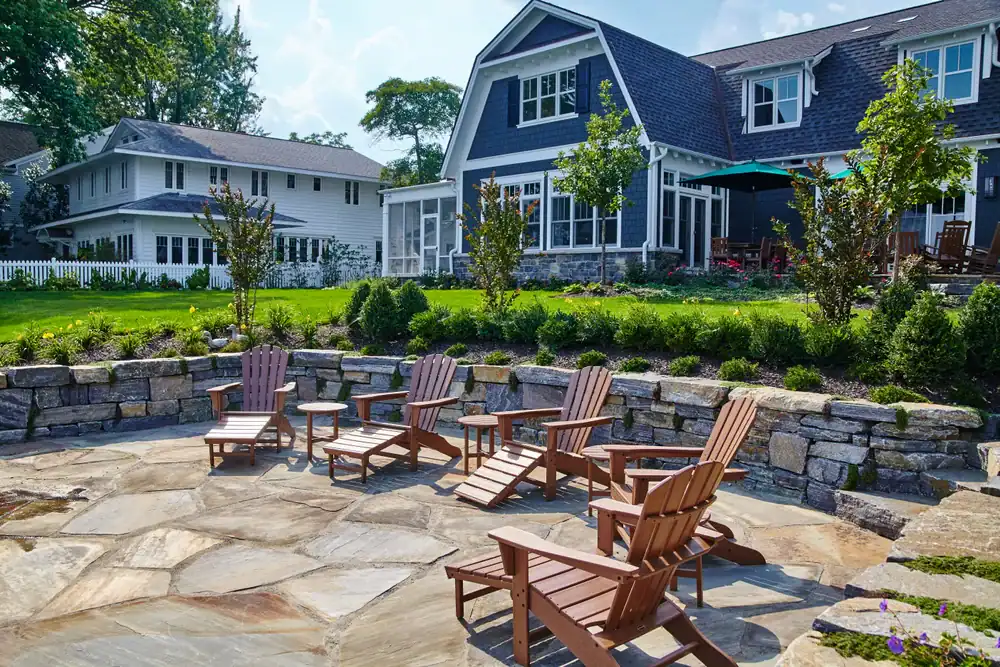
A stone patio with six wooden Adirondack chairs arranged in a circle, surrounded by low stone walls, with lawn and shrubs.

Why Tarrant County's Clay Soil Changes the Cost Equation

Here’s something most online cost calculators completely ignore: the ground underneath your patio matters as much as what goes on top of it. Tarrant County sits on expansive clay soil — sometimes called “black gumbo” by locals — that swells when it absorbs moisture and contracts when it dries out. That constant movement is the reason so many concrete slabs in Fort Worth and Arlington develop cracks within a few years of being poured.

A contractor who understands this will factor in proper subgrade preparation before a single cubic yard of concrete is ordered. That means compacting the base correctly, setting the right depth, placing control joints strategically to manage expansion and contraction, and selecting a concrete mix designed for this soil environment. These aren’t optional steps — they’re the difference between a patio that lasts 20 years and one that starts cracking by year three.

The cost of doing this right is built into a legitimate estimate. If you get a quote that seems unusually low, it’s worth asking what the subgrade prep process looks like. Skipping or shortcutting that phase is one of the most common ways low-bid contractors cut corners, and fixing bad concrete work after the fact costs significantly more than getting it right the first time. In Fort Worth and Arlington, where the soil is as challenging as any in Texas, this is not a detail you want to leave to chance.

We’ve been working in Tarrant County for over 30 years, and the clay soil issue comes up on nearly every patio project we take on. It’s not something you can eyeball on the day of the pour — it requires preparation, experience, and knowing what this specific ground does under different weather conditions. That local knowledge is part of what you’re paying for when you hire a contractor who’s been doing this work here for decades.

Do You Need a Permit for a Patio in Fort Worth or Arlington?

This is one of the most common questions we hear, and the answer depends on what you’re building. A basic concrete slab may or may not require a permit depending on its size and whether it’s attached to your home. But if you’re adding a covered structure — a porch roof, a pergola, anything that connects to the house — the City of Fort Worth and the City of Arlington both require a building permit before work begins.

Skipping the permit process might seem like a way to save time, but it creates real problems down the road. Unpermitted structures can complicate a home sale, create liability if someone is injured, and in some cases require the structure to be torn down entirely. It’s not a risk worth taking.

There’s another layer that catches a lot of homeowners off guard: HOA approval. Many neighborhoods throughout Tarrant County — in areas like Mansfield, Keller, Hurst, Euless, and Richland Hills — have active homeowners associations that regulate exterior changes, including patios, patio covers, and fencing. The approval process can take anywhere from two to six weeks, which means the earlier you start it, the better. If you’re hoping to have your patio ready for spring or summer, getting the HOA process moving in late winter is the smart play.

We handle permits and HOA approvals as a standard part of every project we manage. That’s not something every contractor does — some leave it entirely to the homeowner — but we’ve found that taking it off your plate is one of the things our clients appreciate most. Several of our customers have specifically mentioned it in their reviews, and it’s one of the reasons the project process tends to feel smoother than people expect.

Want live answers?

Connect with a A Plus Home Remodel expert for fast, friendly support.

Outdoor Living Space Design: What's Possible in a Fort Worth Backyard

Fort Worth and Arlington average around 229 sunny days a year. That’s a genuine advantage — it means your backyard is usable for ten or eleven months out of twelve. A well-designed outdoor living space in this climate isn’t just a nice addition; it’s one of the highest-return improvements you can make to a home in North Texas, with estimates suggesting 80 to 90 percent ROI on patio installation in the Texas market.

The question isn’t really whether a patio is worth it. The question is what kind of outdoor space actually fits how you live — and what’s realistic for your budget and your lot.

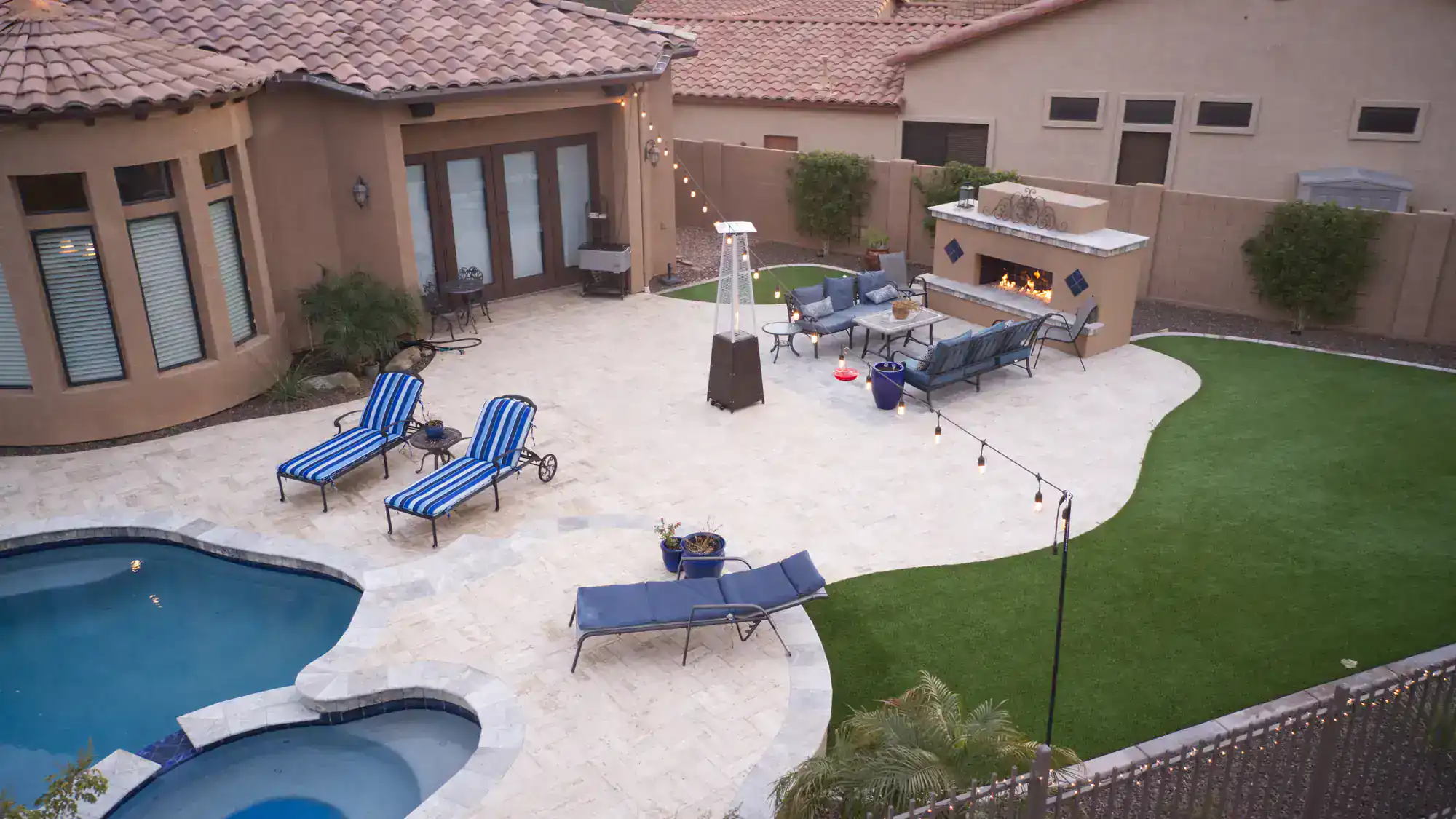
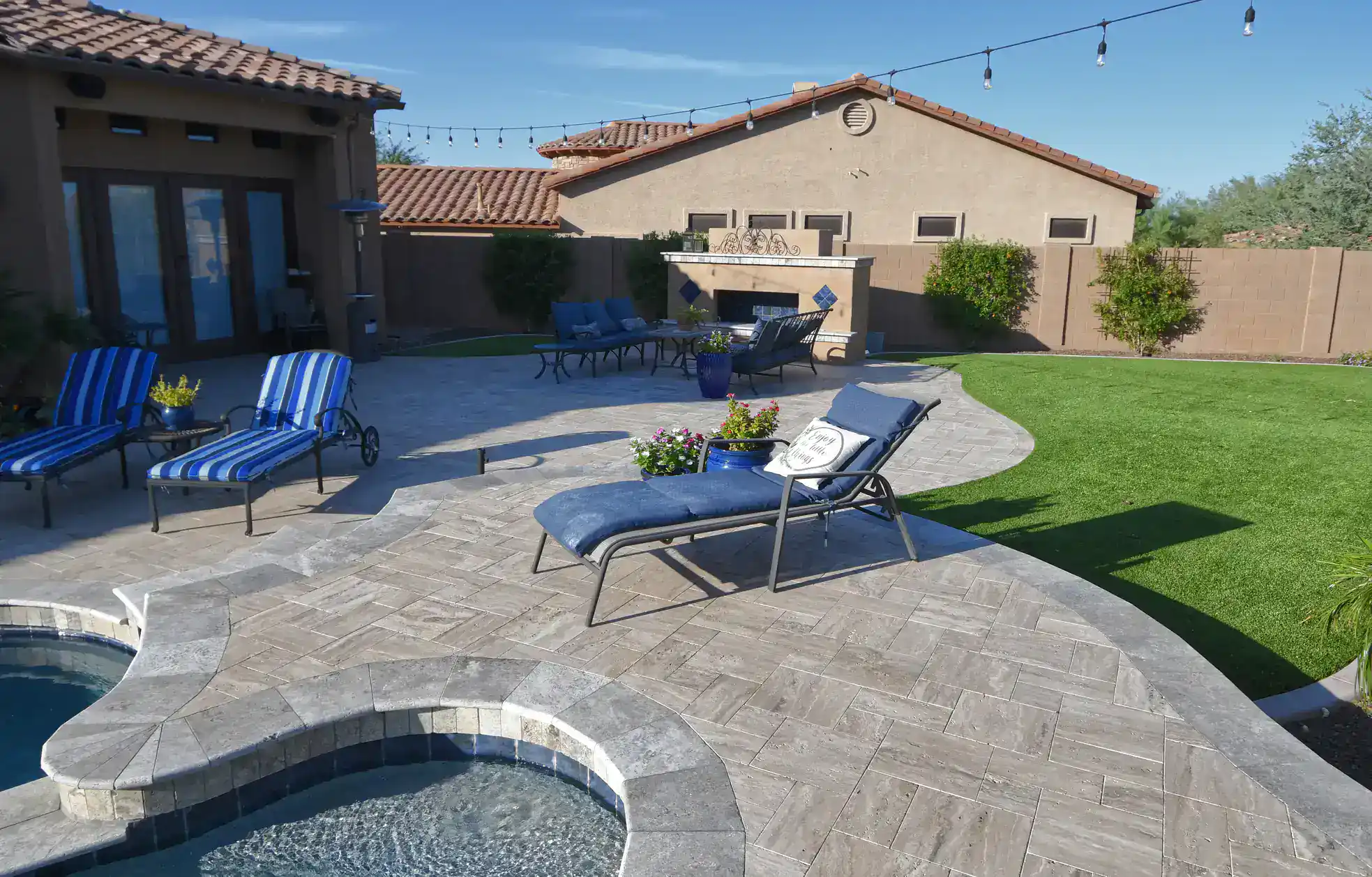
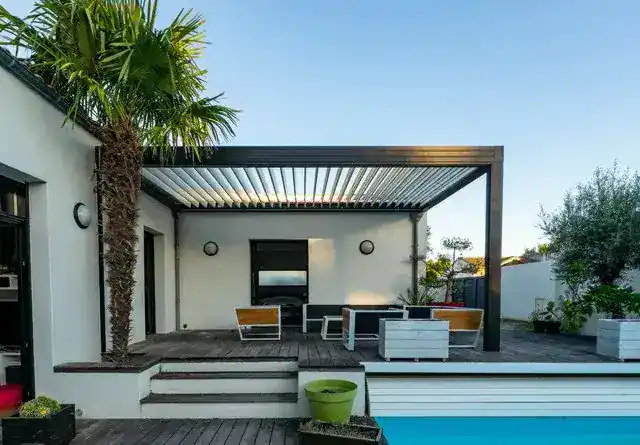
Backyard patio and pool design in Tarrant County, Texas with outdoor seating and landscaping

Outdoor Living Remodel: From Basic Slab to Full Backyard Transformation

A lot of homeowners come to us thinking they just want a concrete slab. By the time we’ve talked through how they actually use their backyard — or how they’d like to — the project often grows into something more complete. That’s not upselling; it’s just the natural result of thinking through the space properly.

A basic poured concrete patio gives you a clean, durable surface. But if you’re in Fort Worth or Arlington, where summer afternoons regularly hit triple digits, an open slab without shade becomes uncomfortable by noon from June through August. A covered porch extension — matched to your home’s existing roofline — changes how the space functions entirely. You get shade, protection from the hail that rolls through Tarrant County every spring, and a space that’s genuinely usable in the middle of summer rather than just on mild days.

Beyond the cover, we regularly work with homeowners on full outdoor living remodels that include fire pit areas, stained or stamped concrete finishes, cedar fencing, gravel and mulch landscaping integration, and concrete walkways that tie the whole yard together. These projects don’t have to happen all at once — but thinking about the full picture from the start means the individual pieces work together instead of feeling like disconnected add-ons.

One recent project in Arlington involved removing an old unattached slab, pouring a new 20-by-12-foot concrete patio anchored to the house, and building a covered porch structure to match the home’s existing architecture — all as a single integrated project with one crew, one point of contact, and one fixed price. That’s the kind of outcome that’s hard to replicate when you’re coordinating multiple contractors.

What to Look for When Hiring a Patio Installation Contractor in Tarrant County

The contractor market in Fort Worth and Arlington is competitive, and not every company operating here brings the same level of accountability. There are a few things worth checking before you sign anything.

First, make sure the contractor is licensed and insured. Texas doesn’t require a statewide general contractor license for concrete and patio work, but any legitimate operation will carry general liability insurance and workers’ compensation coverage. If a contractor can’t provide proof of insurance, that’s your liability if something goes wrong on your property.

Second, ask about permits upfront. A contractor who pulls permits for every project — including the HOA process where applicable — is one who’s committed to doing the work correctly and protecting you at resale. A contractor who suggests skipping the permit to save time or money is one to walk away from.

Third, get everything in writing. A fixed-price estimate with no change orders is the clearest signal that a contractor is confident in their scope and their process. Verbal agreements and open-ended pricing are how unexpected bills happen. The estimate you receive should be the price you pay.

Finally, look for local experience — not just years in business, but years in this specific market. A contractor who understands Tarrant County’s clay soil, knows the Fort Worth and Arlington permit processes, and has completed projects in your type of neighborhood is a fundamentally different hire than someone who learned their trade somewhere else and is new to North Texas conditions. References from recent local projects are worth asking for, and a contractor with nothing to hide will offer them without hesitation.

We offer written warranties on both materials and workmanship, fixed-price estimates that don’t change after you sign, and a named, on-site owner who stays involved from the first conversation through the final walkthrough. That’s the kind of accountability that’s hard to fake — and easy to verify through the reviews our past clients have left.

Ready to Install a Patio in Fort Worth or Arlington? Here's Your Next Step.

The biggest mistake most homeowners make is waiting too long to start the process. Spring is the busiest season for patio work in North Texas, and quality contractors book out fast. If HOA approval is part of your project, add another two to six weeks to that timeline. Starting the conversation now — even if you’re not ready to commit — puts you ahead of the rush.

What you’ve read here covers the real cost drivers, the permit and HOA realities specific to Tarrant County, and the questions worth asking before you hire anyone. The short version: concrete patio costs in this market range from $8 to $18 per square foot depending on finish and scope, the ground prep matters as much as the pour itself, and the contractor you choose determines whether the project goes smoothly or becomes a headache.

If you’re ready to get a real number for your specific yard, we offer fixed-price estimates with no obligation and no hidden fees — just a straight answer from a contractor who’s been doing this work in Tarrant County for over 30 years.
Article details:

Share: