Backyard Remodel ROI: Which Projects Pay Off in Tarrant County

Some backyard projects build real equity. Others just look good on Pinterest. Here's how to tell the difference before you spend a dime.

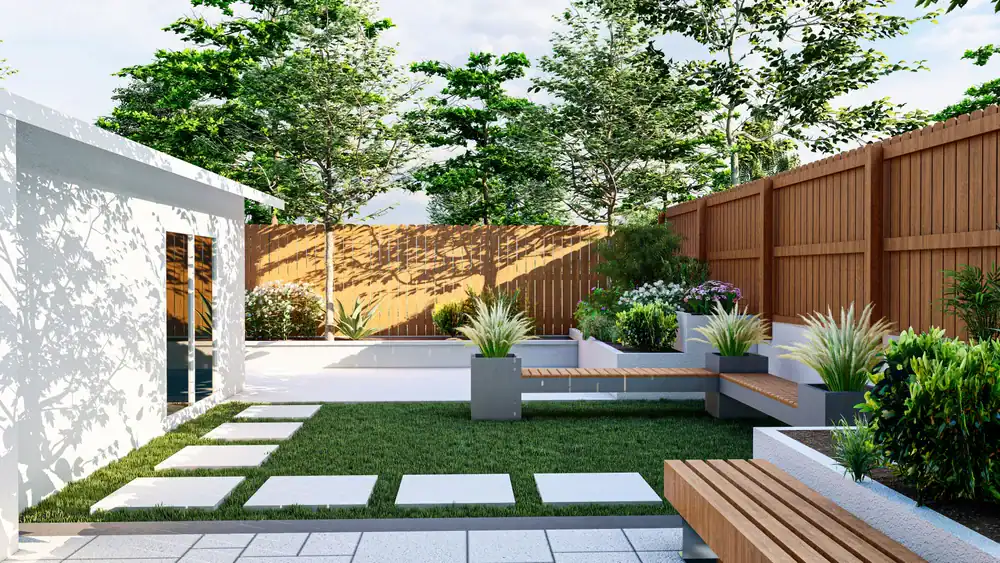
Modern backyard garden with green grass, stepping stones, wooden benches, raised planters with various shrubs.

Summary:

Thinking about a backyard remodel but not sure which projects are actually worth the investment? This page breaks down the ROI on patios, outdoor kitchens, pergolas, cedar fencing, and more — with real numbers and honest context for Tarrant County homeowners specifically. Tarrant County’s climate, soil conditions, and housing market all affect which projects deliver the best return. If you’re staying put and building equity, the decisions you make in your backyard matter more than most people realize.
Table of contents

You’re not trying to flip your house. You’re trying to make it better — and smarter. Maybe you’ve been looking at that empty backyard for a while, wondering whether a patio or an outdoor kitchen is actually worth the money, or whether you’d just be spending for the sake of spending.

That’s the right question to ask. Not every backyard project delivers the same return, and in Tarrant County specifically, a few variables change the math in ways most general advice won’t account for. This page walks through which projects tend to pay off, what the numbers actually look like, and what to watch out for before you commit to anything.

Why Backyard Remodels Make Financial Sense Right Now in Tarrant County

High mortgage rates have done something interesting to the Tarrant County housing market. A lot of homeowners who might have sold and moved up are staying put instead — locked into low rates they don’t want to give up. The result is that more people are choosing to improve what they have rather than chase something new.

That’s not a consolation prize. For homeowners with equity already built up, a well-planned backyard remodel is one of the more rational ways to add value without taking on a new mortgage. The outdoor living market reflects this — 97% of realtors agree that outdoor improvements help sell homes, and 98% of industry professionals say an updated outdoor space has a measurable impact on home value.

In a market like Fort Worth or Keller, where single-family homes sit on generous lots, the backyard is often the most underutilized square footage on the property. That’s not a problem — it’s an opportunity.

Which Backyard Projects Have the Best ROI in Texas?

The answer depends partly on what you’re starting with, but some patterns hold up across the board. Patios consistently deliver strong returns — building a new concrete patio from scratch can yield an ROI exceeding 100%, and refurbishing an existing one can push that number as high as 500% because the labor and material costs are significantly lower relative to the value added. Those aren’t outlier numbers. They reflect what happens when you improve a space that buyers and appraisers can see and use immediately.

Outdoor kitchens are a different story in Texas than they are in, say, Minnesota. In warm climates where outdoor kitchens actually get used year-round, ROI estimates reach as high as 200%. Tarrant County’s outdoor season runs nine to ten months out of the year — that’s not a stretch. When the space gets used constantly, the value is real and buyers recognize it.

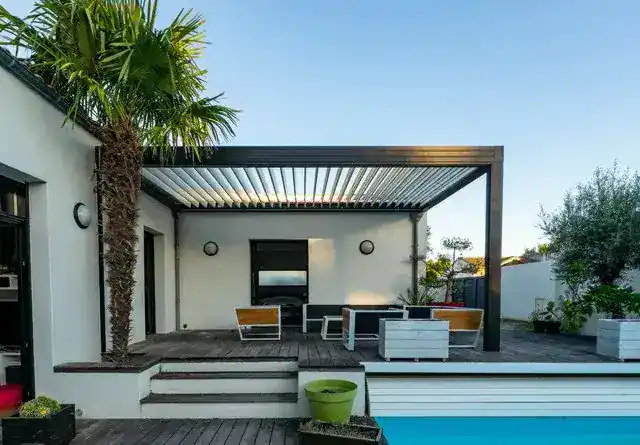
Pergolas and covered patio structures tend to deliver solid returns as well, particularly in Tarrant County where summer temperatures regularly exceed 100°F. An uncovered patio in Fort Worth or Arlington is genuinely unusable from June through August. A covered structure changes that completely — it converts dead space into livable space, and that functional shift translates directly into perceived and actual value.

Cedar fencing and fire features tend to have more modest ROI on their own, but they contribute meaningfully to the overall impression of a finished, intentional backyard. A well-fenced yard with privacy and a fire pit reads as complete. That matters when buyers are walking through or when an appraiser is forming an opinion of value.

The broader point is that outdoor living remodel projects aren’t a single category. The returns vary based on what you’re building, how well it’s built, and how well it fits the way people actually use outdoor spaces in this part of Texas. Getting that right matters more than picking the “highest ROI project” off a list.

How Tarrant County's Clay Soil and Climate Affect Backyard Construction

Here’s something most general remodeling guides won’t tell you: the soil under your backyard matters as much as what you put on top of it. Tarrant County sits on expansive clay that swells when it absorbs moisture and contracts when it dries out. That cycle — repeated over years — is the primary reason concrete cracks prematurely in this area. It’s not inevitable, but it requires a contractor who understands what they’re dealing with.

Properly installed concrete involves excavating to the right depth, compacting a stable base layer, using fiber-reinforced concrete, placing control joints to direct any movement that does occur, and sealing the surface to protect against moisture penetration. When those steps are followed, a concrete patio in Tarrant County should last 20 to 30 years or more. When they’re skipped — which happens more often than it should — you’re looking at visible cracking within a few years.

The heat is the other factor. North Texas summers are not just warm — they’re genuinely extreme. A backyard project that doesn’t account for shade is a project that won’t get used. That’s why covered patio structures, pergolas, and shade solutions aren’t luxury add-ons here. They’re what make the space functional. We’ve seen homeowners spend real money on beautiful concrete work and outdoor furniture, then rarely use it because there’s nowhere to escape the sun. The design has to account for how the space will actually be lived in during a Texas summer.

Drainage is worth mentioning too. Arlington and other parts of Tarrant County can see heavy rain events that overwhelm poorly graded yards. Any hardscape project needs to account for where water goes — otherwise you end up with pooling, erosion, or moisture working its way under your slab. These are the kinds of site-specific details that separate a contractor who knows this area from one who doesn’t.

How We Handle an Outdoor Living Remodel in Tarrant County

One of the most common frustrations homeowners have with remodeling projects is the gap between what they were told and what actually happened. The timeline slips. The price changes. Nobody’s on-site when they said they’d be. That experience — or the fear of it — is often what holds people back from starting a project they actually want.

The way we work is built around eliminating that gap. Every project starts with a consultation and a fixed-price estimate — not a range, not an approximation, but a number that holds. From there, we use digital design technology to render the project before any work begins, so you can see exactly what your backyard will look like before a single shovel hits the ground.

Everything is handled in-house. No subcontractors, no hand-offs, no “we’ll have our guy call you.” One crew, one point of contact, from start to finish.

Do I Need a Permit for a Backyard Remodel in Tarrant County?

This is one of the most common questions we hear, and the honest answer is: it depends on what you’re building. In most Tarrant County cities, pouring a concrete slab at grade for an open-air patio doesn’t require a building permit. The moment you add a roof, posts, or any kind of structural cover over that slab, you’re building a structure — and that requires a permit.

The rules vary by municipality. In Bedford, a permit is required for concrete flatwork and patios, and any shade structure 50 square feet or larger triggers a building permit requirement. Fort Worth, Arlington, Keller, and North Richland Hills each have their own versions of these rules, and they don’t always align neatly. HOA requirements add another layer — some neighborhoods in Keller, Southlake, and Colleyville require design approval before construction begins, and a few HOAs require signed acknowledgment from adjacent neighbors.

We pull every required permit as a standard part of our process. This isn’t something we charge extra for or treat as optional. Unpermitted work creates real problems — it can affect your homeowner’s insurance, complicate a future sale, and leave you personally liable if something goes wrong. Handling permits properly protects you, and it’s something every contractor you talk to should be doing automatically. If they’re not, that’s worth asking about directly.

How Do I Know If a Backyard Contractor in Tarrant County Is Actually Worth Hiring?

The contractor question is where a lot of homeowners get stuck. Everyone has a website. Everyone has photos. The reviews look good until you dig into them, and half the time you can’t tell whether the company that did the work three years ago is even the same company operating today.

A few things cut through the noise. First, ask directly whether the crew doing your project is employed by the company or subcontracted out. Subcontracting isn’t automatically bad, but it means less control over quality, scheduling, and accountability. When the same licensed crew handles every phase of the project, you’re not dealing with a chain of hand-offs — you’re dealing with one team that owns the outcome.

Second, ask for a written fixed-price estimate and a written warranty. Verbal commitments don’t hold up when something goes wrong. A contractor who’s confident in their work will put both in writing without hesitation. If they push back on that, it tells you something.

Third, local tenure matters more than it might seem. We’ve been doing this in Tarrant County since the early 1990s — more than three decades. That’s not just a number. It means we’ve worked in Fort Worth neighborhoods and Keller subdivisions and Arlington backyards through every kind of weather this area produces. We know what the soil does in a wet spring. We know which HOAs are strict about setbacks. We know how to build something that holds up here, not just something that looks good in a photo.

Customer reviews that mention specific people by name — not just “great job” — are also worth paying attention to. When someone takes the time to write that communication was exceptional, that the project finished on time, that they’d hire the same contractor again, those are signals worth trusting. Those details don’t show up in generic reviews.

Ready to Start Your Backyard Remodel in Tarrant County?

The bottom line is straightforward. A well-planned backyard remodel in Tarrant County isn’t just a nice thing to do with your yard — it’s one of the more reliable ways to build equity in a home you’re planning to stay in. The projects that pay off best are the ones built correctly, permitted properly, and designed for how people actually live in North Texas.

That means accounting for the heat, the soil, the drainage, and the HOA rules that vary from one neighborhood to the next. It means getting a fixed price in writing before work starts and a warranty that covers both materials and workmanship when it’s done.

If you’re thinking through a backyard project and want to talk through what makes sense for your specific situation, we’re a good place to start. No pressure, no runaround — just an honest conversation about what the work involves and what it will cost.
Share:

Summary:

Thinking about a backyard remodel but not sure which projects are actually worth the investment? This page breaks down the ROI on patios, outdoor kitchens, pergolas, cedar fencing, and more — with real numbers and honest context for Tarrant County homeowners specifically. Tarrant County’s climate, soil conditions, and housing market all affect which projects deliver the best return. If you’re staying put and building equity, the decisions you make in your backyard matter more than most people realize.
Table of contents

You’re not trying to flip your house. You’re trying to make it better — and smarter. Maybe you’ve been looking at that empty backyard for a while, wondering whether a patio or an outdoor kitchen is actually worth the money, or whether you’d just be spending for the sake of spending.

That’s the right question to ask. Not every backyard project delivers the same return, and in Tarrant County specifically, a few variables change the math in ways most general advice won’t account for. This page walks through which projects tend to pay off, what the numbers actually look like, and what to watch out for before you commit to anything.

Why Backyard Remodels Make Financial Sense Right Now in Tarrant County

High mortgage rates have done something interesting to the Tarrant County housing market. A lot of homeowners who might have sold and moved up are staying put instead — locked into low rates they don’t want to give up. The result is that more people are choosing to improve what they have rather than chase something new.

That’s not a consolation prize. For homeowners with equity already built up, a well-planned backyard remodel is one of the more rational ways to add value without taking on a new mortgage. The outdoor living market reflects this — 97% of realtors agree that outdoor improvements help sell homes, and 98% of industry professionals say an updated outdoor space has a measurable impact on home value.

In a market like Fort Worth or Keller, where single-family homes sit on generous lots, the backyard is often the most underutilized square footage on the property. That’s not a problem — it’s an opportunity.

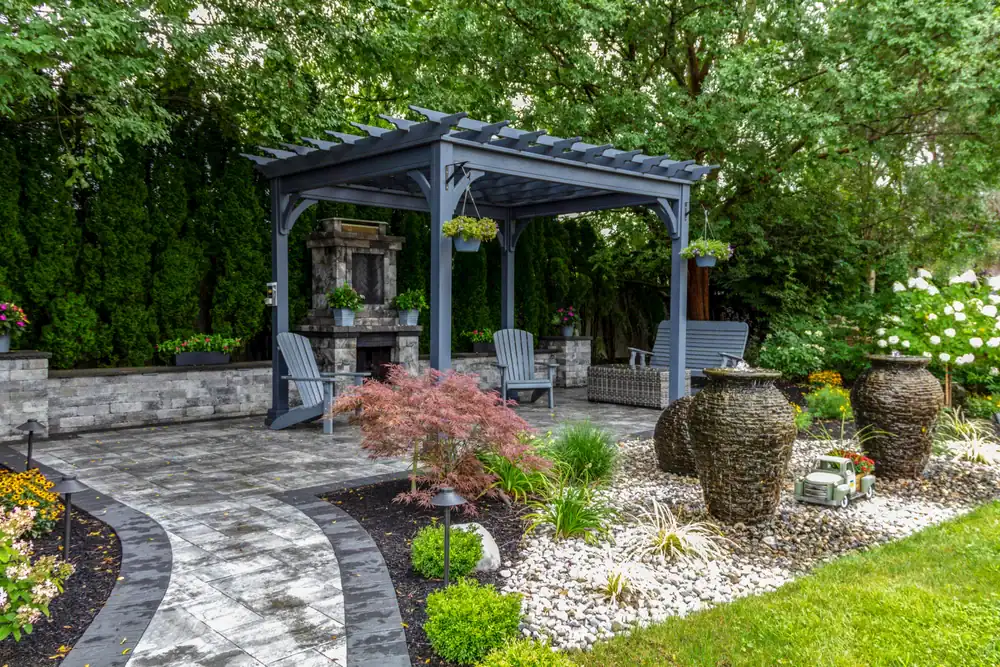
A landscaped backyard features a gray pergola with outdoor chairs on a stone patio, surrounded by lush greenery and bushes.

Which Backyard Projects Have the Best ROI in Texas?

The answer depends partly on what you’re starting with, but some patterns hold up across the board. Patios consistently deliver strong returns — building a new concrete patio from scratch can yield an ROI exceeding 100%, and refurbishing an existing one can push that number as high as 500% because the labor and material costs are significantly lower relative to the value added. Those aren’t outlier numbers. They reflect what happens when you improve a space that buyers and appraisers can see and use immediately.

Outdoor kitchens are a different story in Texas than they are in, say, Minnesota. In warm climates where outdoor kitchens actually get used year-round, ROI estimates reach as high as 200%. Tarrant County’s outdoor season runs nine to ten months out of the year — that’s not a stretch. When the space gets used constantly, the value is real and buyers recognize it.

Pergolas and covered patio structures tend to deliver solid returns as well, particularly in Tarrant County where summer temperatures regularly exceed 100°F. An uncovered patio in Fort Worth or Arlington is genuinely unusable from June through August. A covered structure changes that completely — it converts dead space into livable space, and that functional shift translates directly into perceived and actual value.

Cedar fencing and fire features tend to have more modest ROI on their own, but they contribute meaningfully to the overall impression of a finished, intentional backyard. A well-fenced yard with privacy and a fire pit reads as complete. That matters when buyers are walking through or when an appraiser is forming an opinion of value.

The broader point is that outdoor living remodel projects aren’t a single category. The returns vary based on what you’re building, how well it’s built, and how well it fits the way people actually use outdoor spaces in this part of Texas. Getting that right matters more than picking the “highest ROI project” off a list.

How Tarrant County's Clay Soil and Climate Affect Backyard Construction

Here’s something most general remodeling guides won’t tell you: the soil under your backyard matters as much as what you put on top of it. Tarrant County sits on expansive clay that swells when it absorbs moisture and contracts when it dries out. That cycle — repeated over years — is the primary reason concrete cracks prematurely in this area. It’s not inevitable, but it requires a contractor who understands what they’re dealing with.

Properly installed concrete involves excavating to the right depth, compacting a stable base layer, using fiber-reinforced concrete, placing control joints to direct any movement that does occur, and sealing the surface to protect against moisture penetration. When those steps are followed, a concrete patio in Tarrant County should last 20 to 30 years or more. When they’re skipped — which happens more often than it should — you’re looking at visible cracking within a few years.

The heat is the other factor. North Texas summers are not just warm — they’re genuinely extreme. A backyard project that doesn’t account for shade is a project that won’t get used. That’s why covered patio structures, pergolas, and shade solutions aren’t luxury add-ons here. They’re what make the space functional. We’ve seen homeowners spend real money on beautiful concrete work and outdoor furniture, then rarely use it because there’s nowhere to escape the sun. The design has to account for how the space will actually be lived in during a Texas summer.

Drainage is worth mentioning too. Arlington and other parts of Tarrant County can see heavy rain events that overwhelm poorly graded yards. Any hardscape project needs to account for where water goes — otherwise you end up with pooling, erosion, or moisture working its way under your slab. These are the kinds of site-specific details that separate a contractor who knows this area from one who doesn’t.

Want live answers?

Connect with a A Plus Home Remodel expert for fast, friendly support.

How We Handle an Outdoor Living Remodel in Tarrant County

One of the most common frustrations homeowners have with remodeling projects is the gap between what they were told and what actually happened. The timeline slips. The price changes. Nobody’s on-site when they said they’d be. That experience — or the fear of it — is often what holds people back from starting a project they actually want.

The way we work is built around eliminating that gap. Every project starts with a consultation and a fixed-price estimate — not a range, not an approximation, but a number that holds. From there, we use digital design technology to render the project before any work begins, so you can see exactly what your backyard will look like before a single shovel hits the ground.

Everything is handled in-house. No subcontractors, no hand-offs, no “we’ll have our guy call you.” One crew, one point of contact, from start to finish.

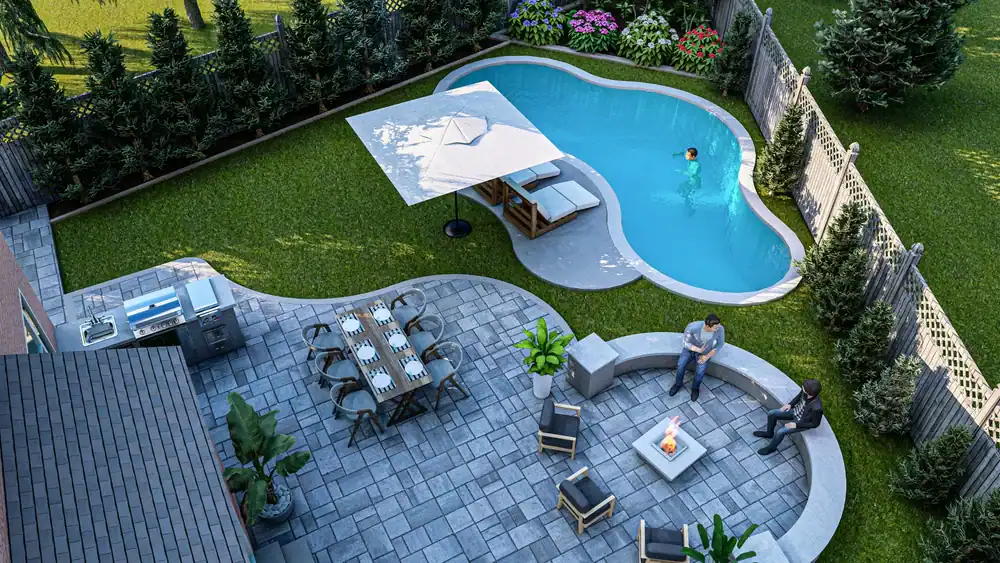
A backyard with a pool, lounge chairs under a large umbrella, a dining table set, a BBQ grill, a fire pit area with seating.

Do I Need a Permit for a Backyard Remodel in Tarrant County?

This is one of the most common questions we hear, and the honest answer is: it depends on what you’re building. In most Tarrant County cities, pouring a concrete slab at grade for an open-air patio doesn’t require a building permit. The moment you add a roof, posts, or any kind of structural cover over that slab, you’re building a structure — and that requires a permit.

The rules vary by municipality. In Bedford, a permit is required for concrete flatwork and patios, and any shade structure 50 square feet or larger triggers a building permit requirement. Fort Worth, Arlington, Keller, and North Richland Hills each have their own versions of these rules, and they don’t always align neatly. HOA requirements add another layer — some neighborhoods in Keller, Southlake, and Colleyville require design approval before construction begins, and a few HOAs require signed acknowledgment from adjacent neighbors.

We pull every required permit as a standard part of our process. This isn’t something we charge extra for or treat as optional. Unpermitted work creates real problems — it can affect your homeowner’s insurance, complicate a future sale, and leave you personally liable if something goes wrong. Handling permits properly protects you, and it’s something every contractor you talk to should be doing automatically. If they’re not, that’s worth asking about directly.

How Do I Know If a Backyard Contractor in Tarrant County Is Actually Worth Hiring?

The contractor question is where a lot of homeowners get stuck. Everyone has a website. Everyone has photos. The reviews look good until you dig into them, and half the time you can’t tell whether the company that did the work three years ago is even the same company operating today.

A few things cut through the noise. First, ask directly whether the crew doing your project is employed by the company or subcontracted out. Subcontracting isn’t automatically bad, but it means less control over quality, scheduling, and accountability. When the same licensed crew handles every phase of the project, you’re not dealing with a chain of hand-offs — you’re dealing with one team that owns the outcome.

Second, ask for a written fixed-price estimate and a written warranty. Verbal commitments don’t hold up when something goes wrong. A contractor who’s confident in their work will put both in writing without hesitation. If they push back on that, it tells you something.

Third, local tenure matters more than it might seem. We’ve been doing this in Tarrant County since the early 1990s — more than three decades. That’s not just a number. It means we’ve worked in Fort Worth neighborhoods and Keller subdivisions and Arlington backyards through every kind of weather this area produces. We know what the soil does in a wet spring. We know which HOAs are strict about setbacks. We know how to build something that holds up here, not just something that looks good in a photo.

Customer reviews that mention specific people by name — not just “great job” — are also worth paying attention to. When someone takes the time to write that communication was exceptional, that the project finished on time, that they’d hire the same contractor again, those are signals worth trusting. Those details don’t show up in generic reviews.

Ready to Start Your Backyard Remodel in Tarrant County?

The bottom line is straightforward. A well-planned backyard remodel in Tarrant County isn’t just a nice thing to do with your yard — it’s one of the more reliable ways to build equity in a home you’re planning to stay in. The projects that pay off best are the ones built correctly, permitted properly, and designed for how people actually live in North Texas.

That means accounting for the heat, the soil, the drainage, and the HOA rules that vary from one neighborhood to the next. It means getting a fixed price in writing before work starts and a warranty that covers both materials and workmanship when it’s done.

If you’re thinking through a backyard project and want to talk through what makes sense for your specific situation, we’re a good place to start. No pressure, no runaround — just an honest conversation about what the work involves and what it will cost.
Article details:

Share: