Summary:
You’ve probably spent more time looking at your backyard than actually using it. In a Texas summer, an exposed concrete slab isn’t an outdoor living space — it’s just wasted square footage. And finding a contractor you actually trust to fix that? That’s its own project. Between vague estimates, no-show crews, and surprise invoices, the process of hiring someone can feel worse than the problem itself. This page is for homeowners in the DFW area who are done guessing. We’ll walk through what outdoor remodeling actually involves, what separates a reliable contractor from a costly one, and what questions you should be asking before anyone sets foot in your backyard.
What Hardscaping Services Actually Include
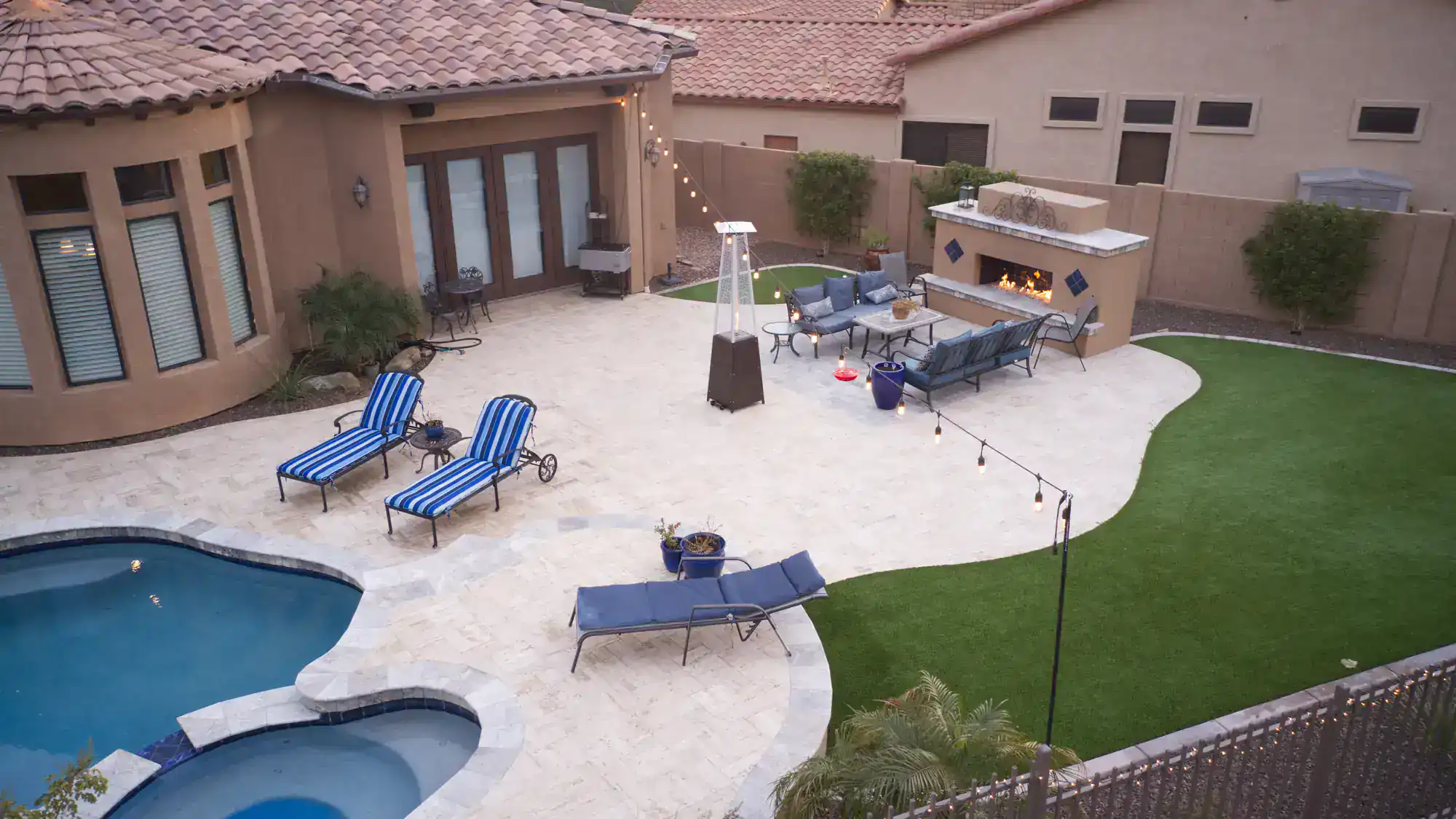
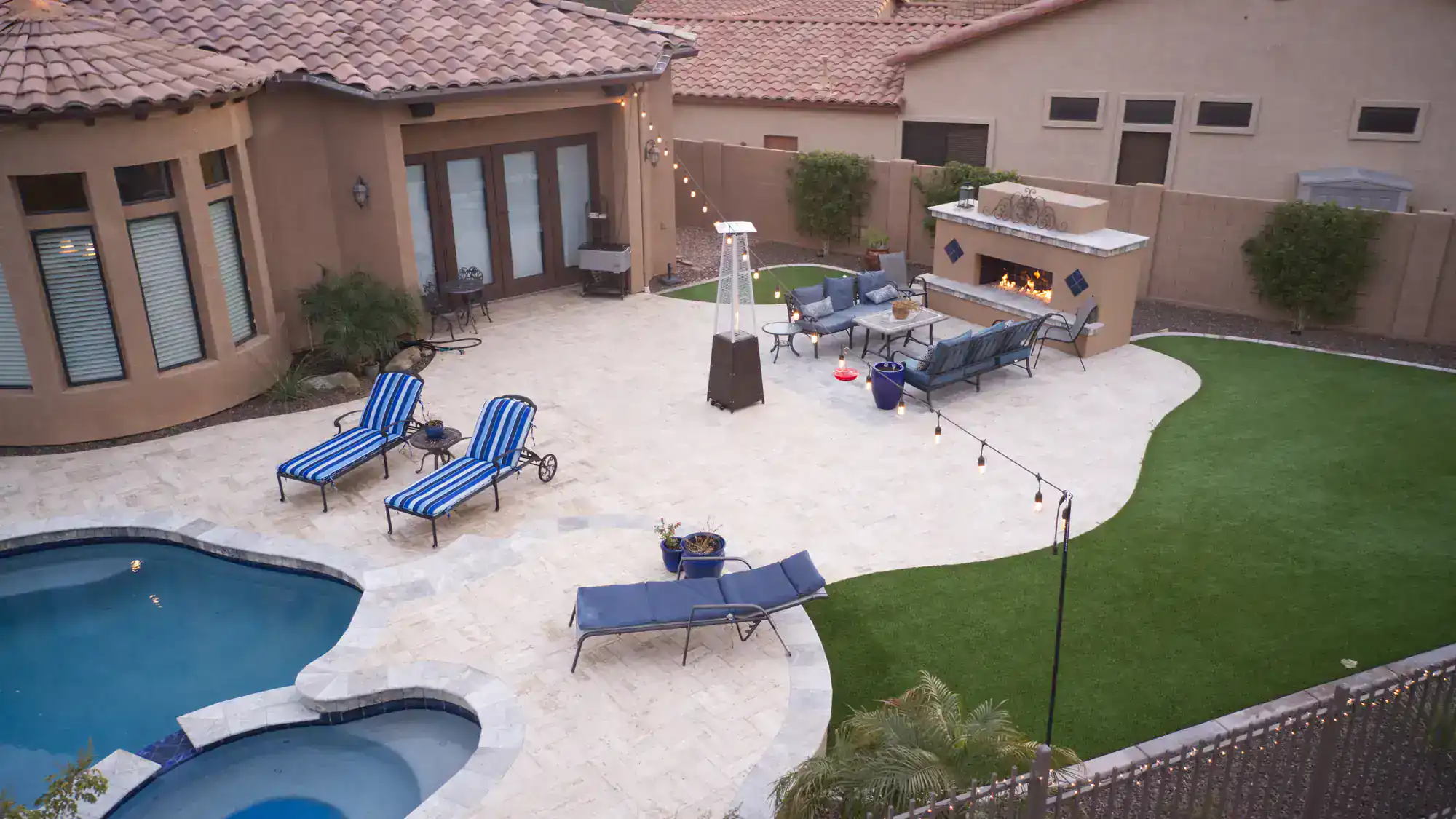
Hardscaping gets used as a catch-all term, but it’s worth being clear about what it means. Unlike landscaping — which deals with plants, grass, and softscape elements — hardscaping refers to the permanent, structural parts of your outdoor space. Concrete patios, stamped concrete finishes, paved walkways, retaining walls, cedar fencing, pergolas, covered porch additions — all of that falls under hardscaping.
It’s also where most of the real money goes, and where most of the problems happen when a contractor cuts corners. A patio poured without accounting for drainage will pool water after every rain. A pergola attached to the house without a proper permit can become a legal and financial headache when you go to sell. The structural nature of hardscaping is exactly why who you hire matters so much.
Why DFW's Clay Soil Changes Everything for Outdoor Concrete Work
If you’ve lived in Tarrant County for more than a few years, you already know about the clay. North Texas sits on some of the most expansive clay soil in the country — it swells when it’s wet and shrinks when it dries out, and it does both aggressively. That movement is the reason so many driveways, patios, and walkways in this area crack, shift, and heave within a few years of being installed.
It’s not bad luck. It’s what happens when a contractor treats a DFW concrete project the same way they’d treat one in, say, Colorado or the Pacific Northwest. The base preparation has to account for that soil movement. The concrete mix, the thickness, the reinforcement, the control joints — all of it needs to be spec’d for what North Texas actually does to materials, not just what looks good in a portfolio photo.
This is one of the clearest ways to tell whether a contractor has real local experience or just a truck and a sales pitch. Someone who’s been doing outdoor remodeling work in Tarrant County for decades has watched what happens when these details get skipped. They’ve seen the callbacks, the cracked slabs, the frustrated homeowners. That experience shapes how they approach every pour, every base layer, every project from the ground up.
We’ve been working in this area since the early 1990s, and the clay soil question comes up on nearly every outdoor project we do. It’s not a minor detail — it’s one of the first things we account for in the design and installation process.
Covered Patios and Pergolas in Tarrant County — What Requires a Permit?
This is one of the most common questions we hear, and it’s worth answering directly because a lot of homeowners get caught off guard by the answer. In most Tarrant County municipalities — Fort Worth, Arlington, Keller, North Richland Hills, Colleyville — any roofed or covered structure attached to your home requires a building permit. That includes patio covers, pergolas with solid roofing, and screen rooms. Even some freestanding structures require permits depending on size and placement.
The reason this matters isn’t just compliance. It’s what happens later. If an outdoor structure was built without a permit, it can create real problems when you sell the home. Buyers’ lenders sometimes require unpermitted structures to be brought into compliance — or removed entirely — before closing. That’s an expensive conversation to have when you’re already under contract.
There’s also the HOA factor. Many neighborhoods in Keller, NRH, Colleyville, and parts of Arlington have active homeowners associations with their own approval requirements on top of city permits. Fencing height and materials, patio cover styles, exterior colors — all of it may need HOA sign-off before a single post goes in the ground. A contractor who isn’t familiar with local HOA requirements can build something that technically passes city inspection but still violates your neighborhood’s covenants.
We pull permits on every project, without exception. It’s not an upsell or an add-on — it’s part of how we work. And because we’ve been operating in Tarrant County for over 30 years, we know the local requirements across the municipalities we serve. You don’t have to research it yourself or hope your contractor figured it out.
What a Backyard Remodel Actually Costs — And What It Gives Back
Most homeowners think about outdoor remodeling in terms of what it costs upfront. That’s a fair starting point, but it’s only half the picture. According to the National Association of Realtors, patios can recover up to 95% of their installation cost at resale. For a home valued at $400,000 in Tarrant County — which is well within the range of established neighborhoods in North Richland Hills, Arlington, and Keller — a well-executed outdoor renovation can translate to a $32,000–$40,000 increase in appraised value.
That math changes how you think about the decision. It’s not just a lifestyle upgrade. It’s an investment in an asset you already own.
Outdoor Living Renovation in North Texas: Why the ROI Is Better Here Than Most Markets
Here’s something that doesn’t get said enough: outdoor living renovations deliver better returns in southern markets than in most of the country. The reason is simple — usability. A patio or covered outdoor space in DFW can be enjoyed roughly nine to ten months out of the year. In a northern market, that same space might sit unused under snow for four or five months. Appraisers and buyers factor in livable square footage, and outdoor spaces that are genuinely usable year-round carry more weight.
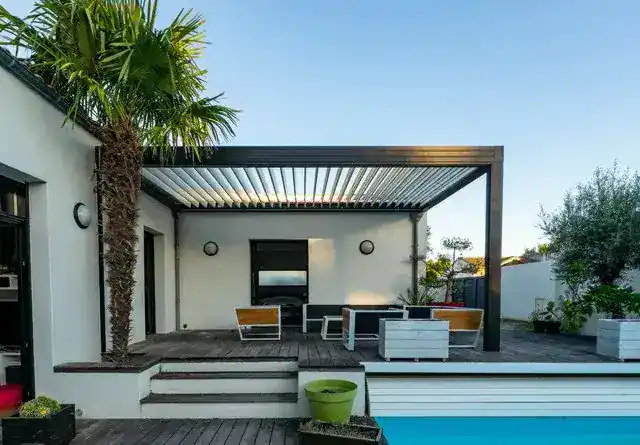
That’s a real financial advantage for Tarrant County homeowners. The same covered patio that might be a modest upgrade in Minneapolis is a meaningful extension of your home’s functional space in Fort Worth or Keller. Add a pergola with ceiling fans, use heat-resistant stamped concrete that doesn’t absorb and radiate heat the way standard gray concrete does, and you’ve created an outdoor room that works even on those 95-degree October evenings that DFW is known for.
What pulls those numbers down is quality. A patio that cracks in two years, a pergola that wasn’t permitted, a fence installed with the wrong materials for Texas humidity — these things don’t add value. They subtract it. The investment case for outdoor remodeling is real, but it depends entirely on the work being done right.
How to Vet an Outdoor Remodeling Contractor in DFW Before You Sign Anything
The DFW construction market is booming, which is good news for homeowners in some ways and a real problem in others. High demand means more contractors are operating in the area — including ones who shouldn’t be. Licensing, insurance, and quality vary enormously, and the gap between a reliable contractor and a costly mistake isn’t always obvious from a website or a first phone call.
A few things worth checking before you commit to anyone. First, ask whether we pull permits for outdoor projects. A contractor who hesitates on that question or suggests you don’t need one for a covered patio is a contractor who’s either uninformed or cutting corners — neither is acceptable. Second, ask who actually does the work. Subcontracting isn’t inherently wrong, but if you hire a company and a different crew shows up with no clear accountability structure, you have no clear answer when something goes wrong six months later. Third, get the pricing in writing and ask directly whether the estimate is fixed. “Free estimate” language doesn’t tell you whether that number will change once work begins.
Written warranties matter too — and the specifics matter. A warranty that covers materials but not workmanship leaves you exposed on the most common failure points. Ask for documentation, not just a verbal promise.
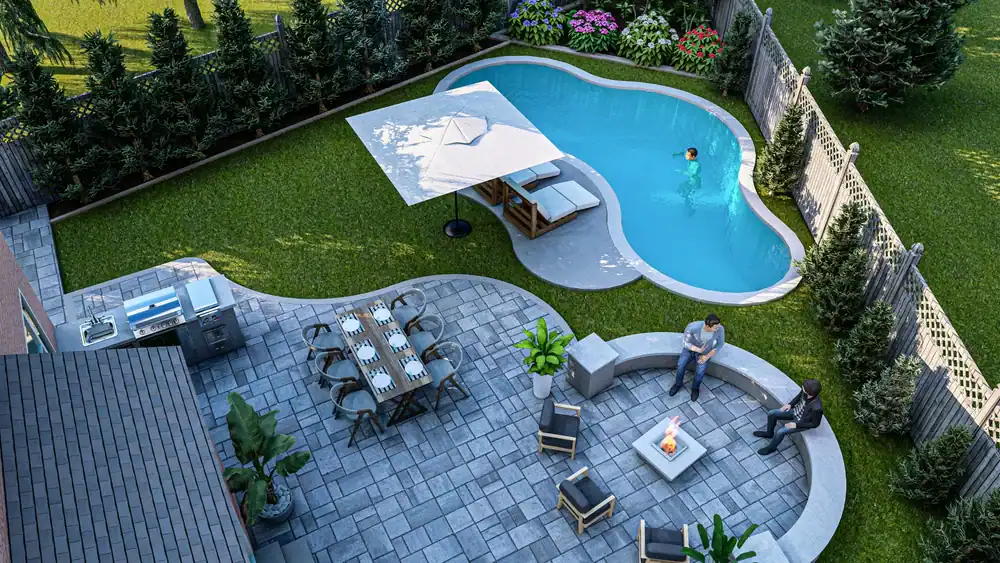
We work with a fully in-house licensed crew. No subcontractor surprises. Every project comes with a fixed-price estimate — what we quote is what you pay, unless you change the scope. We also use digital design technology so you can see what your outdoor space will look like before anything is built. For homeowners who’ve been burned before, or who just want to avoid the experience entirely, that combination of transparency and process accountability makes a real difference.
We’ve completed over 400 projects in Tarrant County. That’s not a marketing number — it’s the kind of track record that comes from doing this work in this specific area for more than three decades, and from the fact that customers come back and send their neighbors.
Finding Outdoor Remodeling Contractors in DFW You Can Actually Trust
The outdoor space you’ve been putting off is closer to reality than you might think — but who you hire will determine whether it becomes something you love or something you regret. In a market like DFW, where demand is high and contractor quality varies widely, the vetting process isn’t optional. It’s the difference between a backyard that holds up to Texas weather and adds real equity to your home, and one that needs repairs before you’ve finished enjoying it.
The things that matter most aren’t complicated: fixed pricing, proper permits, in-house licensed crews, written warranties, and enough local experience to know what North Texas actually does to outdoor materials. Those aren’t premium add-ons — they’re the baseline for work done right.
If you’re ready to talk through what your outdoor space could look like, we’re based right here in Tarrant County and have been doing this work since the early 1990s. Reach out and let’s start with a conversation.