What Your Bathroom Renovation Process Looks Like

Not sure what a bathroom remodel actually involves? This guide walks you through every phase — so nothing catches you off guard.

A stunning modern bathroom remodel in Tarrant County, Texas by A Plus Home Remodel.

Summary:

Most homeowners don’t delay a bathroom remodel because they can’t afford it or don’t want it. They delay because they don’t know what they’re walking into. This guide breaks down the bathroom renovation process from the first consultation to the final inspection — in plain language, with real timelines specific to Tarrant County homes. Read this before you call anyone. You’ll ask better questions, spot red flags faster, and feel a lot more confident about what comes next.
Table of contents

Most people don’t stall on a bathroom remodel because of the money. They stall because the whole thing feels like a black box — too many unknowns, too many chances for something to go sideways. What if it takes forever? What if the price balloons? What if the work isn’t done right?

Those are fair concerns. And the best way to deal with them is to understand exactly what the process looks like before you commit to anything. Once you know the phases, the timelines, and what a well-run project actually involves, the decision gets a lot easier. Let’s walk through it.

The Bathroom Renovation Process: What Happens at Every Stage

A bathroom renovation doesn’t start with demolition — it starts with a conversation. Before anyone picks up a tool, there’s a planning phase that sets the foundation for everything else. This is where you talk through what you want, what the space can support, and what the project will actually cost.

From there, the process moves through a clear sequence: design and material selection, permits, demolition, rough-in trade work, waterproofing, tile, fixtures, and final finishes. Each phase builds on the one before it. When we manage this well, the whole thing flows. When it’s mishandled, you feel every gap.

Renovation Experts Walk You Through Design Before Construction Starts

One of the biggest sources of regret in bathroom remodels isn’t the construction — it’s the design decisions made too quickly. Homeowners pick tile under pressure, choose a vanity without seeing it in context, or approve a layout that doesn’t work the way they imagined. By the time they realize it, the work is already done.

That’s why the pre-construction phase matters as much as the build itself. We walk you through your options before anything is ordered or installed. We use digital design technology that lets you see your new bathroom — tile, fixtures, layout, finishes — before a single wall comes down. You’re not guessing. You’re approving something you’ve actually looked at.

Material selection also happens here, and it’s worth taking seriously. Lead times on custom tile, vanities, and specialty fixtures can run two to four weeks or longer. If materials aren’t ordered before demolition begins, you end up with a gutted bathroom sitting idle while you wait on a backordered faucet. We order everything in advance so your project stays on schedule once it starts.

Permitting is the other piece of the pre-construction phase that homeowners often don’t think about until it becomes a problem. In Tarrant County, most bathroom renovations that involve plumbing, electrical, or ventilation changes require permits. This isn’t optional — it’s a legal requirement, and skipping it creates real liability when you go to sell the home. We handle all permit applications and coordinate directly with local inspectors, so you don’t have to navigate that process yourself.

What Actually Happens During the Construction Phase

Once permits are approved and materials are staged, construction begins. The first step is demolition — removing the existing fixtures, tile, drywall, and anything else that’s being replaced. For most bathrooms, this takes one to three days. It’s the loudest, messiest part of the project, and it’s also when surprises tend to surface.

Hidden water damage, outdated plumbing that doesn’t meet current code, inadequate ventilation that’s been quietly causing moisture problems — these things don’t show up on an estimate because they’re not visible until the walls come open. We’ve been working in Tarrant County homes since 1990, and a lot of those homes were built in the 1970s and 1980s. We’ve seen what’s behind the walls, and we know what to look for without letting unexpected discoveries derail your project.

After demolition, the rough-in work begins. This is plumbing and electrical — moving drain lines, repositioning supply lines, adding circuits, installing GFCI outlets in wet areas. All of this gets inspected before walls are closed. That inspection step isn’t a formality. It’s what ensures the work is done correctly and that your home is protected.

Waterproofing comes next, before any tile goes up. This is the step that separates a bathroom that holds up for twenty years from one that develops mold behind the tile in three. Cement board substrate, properly applied waterproof membrane in wet areas, correctly rated caulk at transitions — these details matter, and they’re invisible once the tile is set. After waterproofing, tile installation, vanity and fixture installation, and final finish work follow in sequence. A full master bathroom remodel typically runs five to eight weeks in construction. A hall or guest bathroom usually comes in around three weeks.

Steps to Renovating a Bathroom — In the Right Order

The sequence of a bathroom renovation isn’t arbitrary — each step depends on the one before it. Plumbing rough-in has to be inspected before walls close. Waterproofing has to cure before tile sets. Tile has to be grouted and sealed before fixtures are installed. When a contractor skips steps or works out of order to save time, you pay for it later.

A well-run project also accounts for what can go wrong. Material delays, inspection scheduling, and the occasional discovery behind a wall — these are normal parts of the process. The difference between a project that finishes on time and one that drags on for months usually comes down to how well we planned for them.

What Causes Bathroom Renovation Delays — and How to Avoid Them

Timeline overruns are the most common complaint homeowners have after a remodel. The project was supposed to take six weeks and it took four months. The contractor disappeared for two weeks waiting on a part. The inspector failed the rough-in and the plumber had to come back.

Most of these delays are preventable. Materials ordered before demolition begins eliminates the waiting-on-backordered-items problem. Permits pulled before work starts eliminates the scramble to get inspections scheduled mid-project. An in-house crew — rather than a rotating cast of subcontractors — eliminates the scheduling gaps that happen when trades are juggling multiple jobs.

The delays that aren’t preventable are the ones discovered during demo: water damage that has to be remediated before construction continues, or plumbing that has to be brought up to code before it can be worked around. These things happen, and we’ll tell you upfront that they’re possible. What separates a good contractor from a bad one isn’t that nothing unexpected ever happens — it’s how we handle it when it does. Clear communication, a fixed-price structure that protects you from runaway costs, and a project manager who keeps you informed daily make the difference between a stressful experience and a smooth one.

How Tarrant County's Homes and Climate Affect the Renovation Process

Bathroom renovation in Tarrant County comes with a few local considerations that don’t apply everywhere, and they’re worth understanding before you start.

The clay-heavy soil across much of the county — the same Blackland Prairie soil that causes foundation movement in older Tarrant County homes — puts long-term stress on plumbing lines. If your home was built in the 1970s or 1980s and the plumbing hasn’t been touched since, a bathroom remodel is a smart time to have it inspected. We’ve seen supply lines and drain connections that were technically functional but one hard freeze away from a serious problem. Catching that during a planned renovation is a lot better than dealing with it as an emergency.

Texas humidity is the other factor that shapes how a bathroom should be built. Inadequate ventilation is one of the most common causes of mold growth in Tarrant County bathrooms — not because of leaks, but because exhaust fans are undersized, improperly installed, or vented into the attic instead of to the exterior. We spec ventilation based on the actual square footage of the space and make sure it’s routed correctly. The materials we use are also selected for the climate — moisture-resistant substrates, properly rated grout and caulk, finishes that hold up to daily use in a humid environment.

Permit requirements vary slightly across Tarrant County municipalities. Arlington, Fort Worth, Haltom City, Watauga, Benbrook — each city has its own building department, and what triggers a permit requirement in one city may be handled differently in another. We know these distinctions because we’ve been pulling permits in this county for over thirty years. That local familiarity speeds up the approval process and keeps your project on schedule.

What to Expect When You're Ready to Start Your Bathroom Renovation

The bathroom renovation process isn’t complicated — but it does require the right sequence, the right materials, and a contractor who manages the whole thing so you don’t have to. From the first design consultation through permits, construction, and final walkthrough, every phase has a purpose. Understanding that sequence is what turns an intimidating project into a manageable one.

If you’re in Tarrant County and you’ve been sitting on a bathroom remodel because you weren’t sure what you were getting into, now you have a clearer picture. The construction phase typically runs four to eight weeks. The total project, including planning and permitting, usually lands between six and twelve weeks. And with fixed-price estimates, an in-house crew, and a single point of contact managing the project from start to finish, there are no surprises along the way.

When you’re ready to take the next step, we’re here to walk you through it — starting with a free consultation and a look at what your specific bathroom could become.
Share:

Summary:

Most homeowners don’t delay a bathroom remodel because they can’t afford it or don’t want it. They delay because they don’t know what they’re walking into. This guide breaks down the bathroom renovation process from the first consultation to the final inspection — in plain language, with real timelines specific to Tarrant County homes. Read this before you call anyone. You’ll ask better questions, spot red flags faster, and feel a lot more confident about what comes next.
Table of contents

Most people don’t stall on a bathroom remodel because of the money. They stall because the whole thing feels like a black box — too many unknowns, too many chances for something to go sideways. What if it takes forever? What if the price balloons? What if the work isn’t done right?

Those are fair concerns. And the best way to deal with them is to understand exactly what the process looks like before you commit to anything. Once you know the phases, the timelines, and what a well-run project actually involves, the decision gets a lot easier. Let’s walk through it.

The Bathroom Renovation Process: What Happens at Every Stage

A bathroom renovation doesn’t start with demolition — it starts with a conversation. Before anyone picks up a tool, there’s a planning phase that sets the foundation for everything else. This is where you talk through what you want, what the space can support, and what the project will actually cost.

From there, the process moves through a clear sequence: design and material selection, permits, demolition, rough-in trade work, waterproofing, tile, fixtures, and final finishes. Each phase builds on the one before it. When we manage this well, the whole thing flows. When it’s mishandled, you feel every gap.

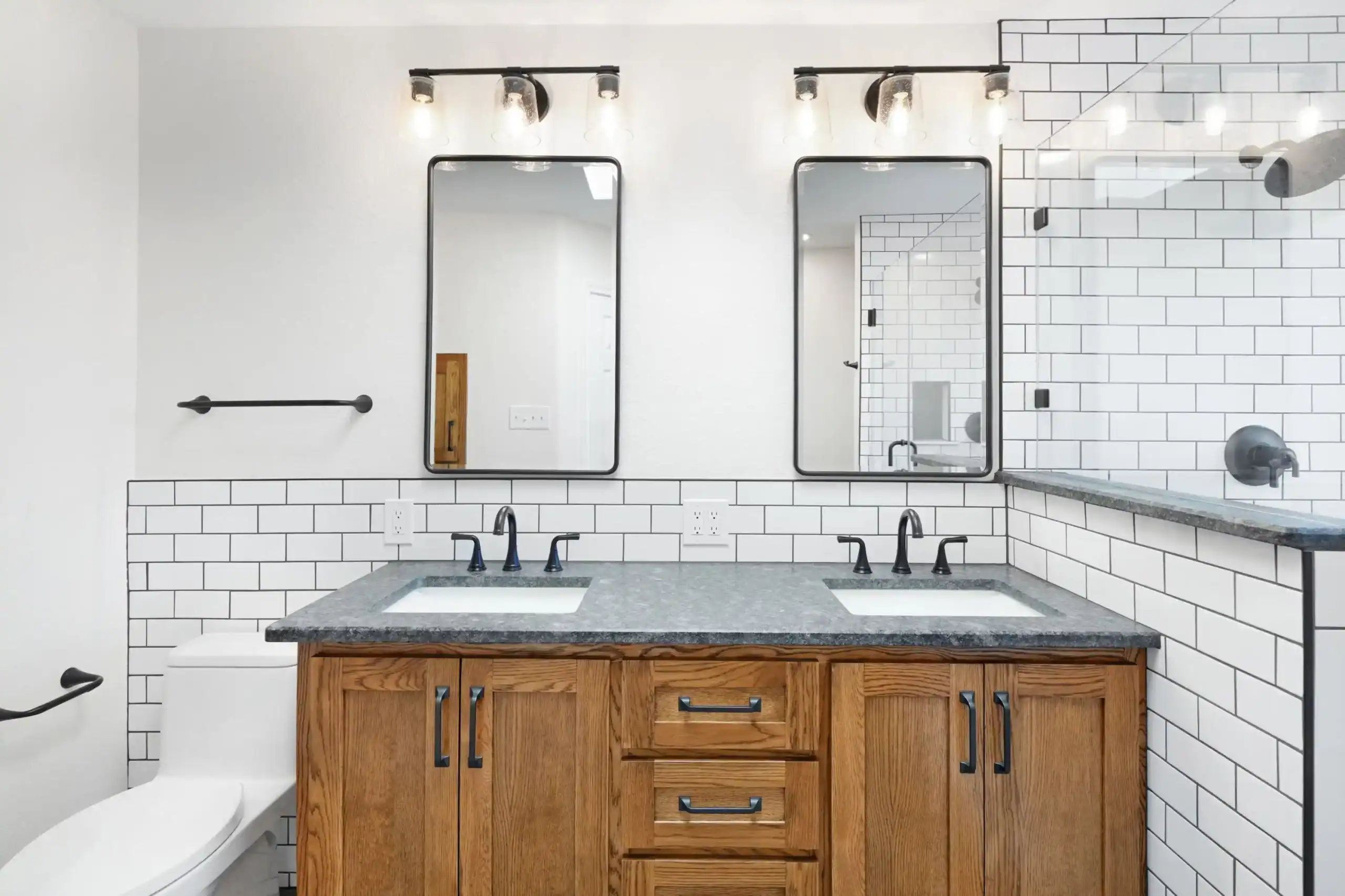
Modern bathroom with a double sink vanity featuring wooden cabinets, two square mirrors and black fixtures.

Renovation Experts Walk You Through Design Before Construction Starts

One of the biggest sources of regret in bathroom remodels isn’t the construction — it’s the design decisions made too quickly. Homeowners pick tile under pressure, choose a vanity without seeing it in context, or approve a layout that doesn’t work the way they imagined. By the time they realize it, the work is already done.

That’s why the pre-construction phase matters as much as the build itself. We walk you through your options before anything is ordered or installed. We use digital design technology that lets you see your new bathroom — tile, fixtures, layout, finishes — before a single wall comes down. You’re not guessing. You’re approving something you’ve actually looked at.

Material selection also happens here, and it’s worth taking seriously. Lead times on custom tile, vanities, and specialty fixtures can run two to four weeks or longer. If materials aren’t ordered before demolition begins, you end up with a gutted bathroom sitting idle while you wait on a backordered faucet. We order everything in advance so your project stays on schedule once it starts.

Permitting is the other piece of the pre-construction phase that homeowners often don’t think about until it becomes a problem. In Tarrant County, most bathroom renovations that involve plumbing, electrical, or ventilation changes require permits. This isn’t optional — it’s a legal requirement, and skipping it creates real liability when you go to sell the home. We handle all permit applications and coordinate directly with local inspectors, so you don’t have to navigate that process yourself.

What Actually Happens During the Construction Phase

Once permits are approved and materials are staged, construction begins. The first step is demolition — removing the existing fixtures, tile, drywall, and anything else that’s being replaced. For most bathrooms, this takes one to three days. It’s the loudest, messiest part of the project, and it’s also when surprises tend to surface.

Hidden water damage, outdated plumbing that doesn’t meet current code, inadequate ventilation that’s been quietly causing moisture problems — these things don’t show up on an estimate because they’re not visible until the walls come open. We’ve been working in Tarrant County homes since 1990, and a lot of those homes were built in the 1970s and 1980s. We’ve seen what’s behind the walls, and we know what to look for without letting unexpected discoveries derail your project.

After demolition, the rough-in work begins. This is plumbing and electrical — moving drain lines, repositioning supply lines, adding circuits, installing GFCI outlets in wet areas. All of this gets inspected before walls are closed. That inspection step isn’t a formality. It’s what ensures the work is done correctly and that your home is protected.

Waterproofing comes next, before any tile goes up. This is the step that separates a bathroom that holds up for twenty years from one that develops mold behind the tile in three. Cement board substrate, properly applied waterproof membrane in wet areas, correctly rated caulk at transitions — these details matter, and they’re invisible once the tile is set. After waterproofing, tile installation, vanity and fixture installation, and final finish work follow in sequence. A full master bathroom remodel typically runs five to eight weeks in construction. A hall or guest bathroom usually comes in around three weeks.

Want live answers?

Connect with a A Plus Home Remodel expert for fast, friendly support.

Steps to Renovating a Bathroom — In the Right Order

The sequence of a bathroom renovation isn’t arbitrary — each step depends on the one before it. Plumbing rough-in has to be inspected before walls close. Waterproofing has to cure before tile sets. Tile has to be grouted and sealed before fixtures are installed. When a contractor skips steps or works out of order to save time, you pay for it later.

A well-run project also accounts for what can go wrong. Material delays, inspection scheduling, and the occasional discovery behind a wall — these are normal parts of the process. The difference between a project that finishes on time and one that drags on for months usually comes down to how well we planned for them.

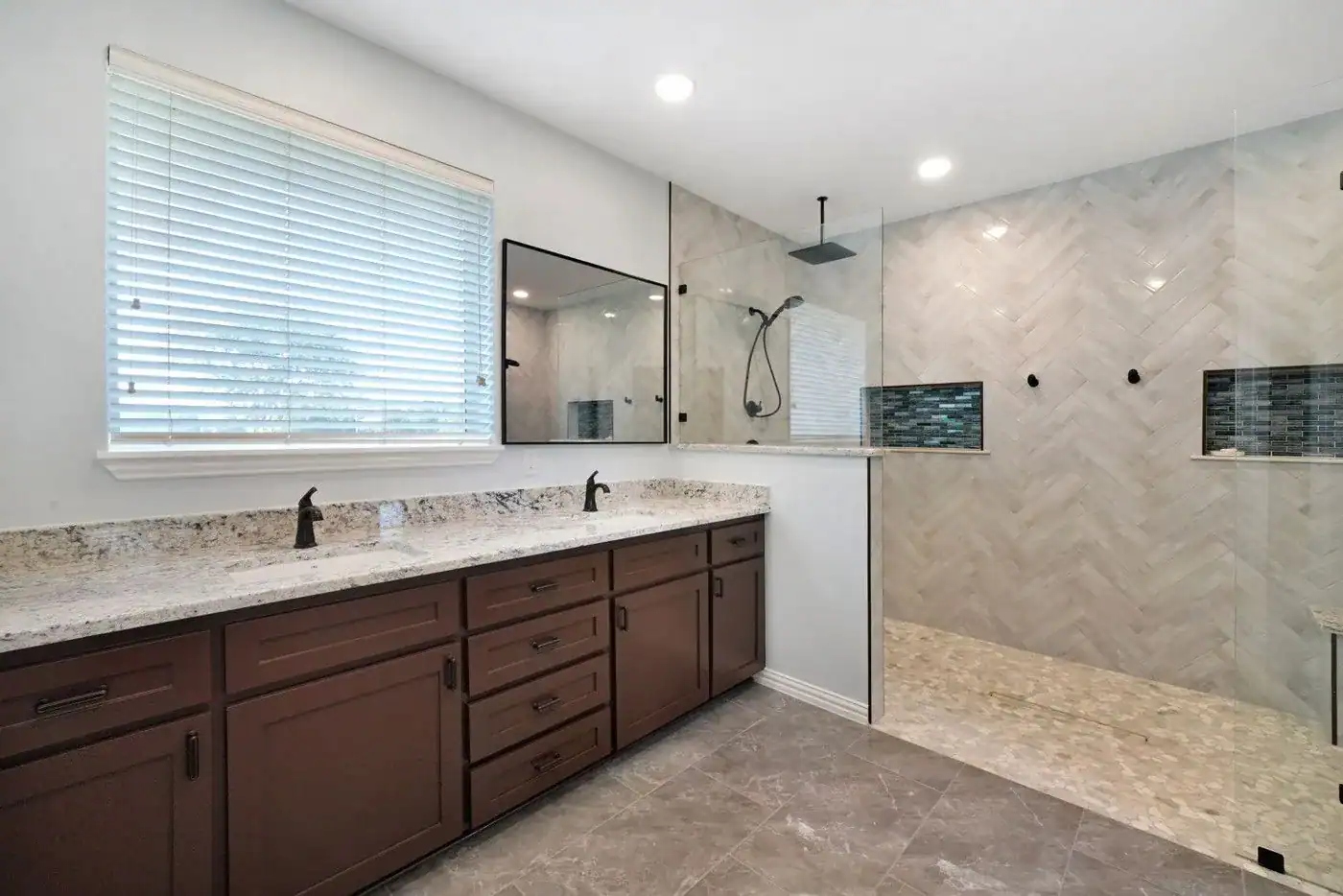
Modern bathroom with a double sink vanity, dark wood cabinets, granite countertop and large mirror.

What Causes Bathroom Renovation Delays — and How to Avoid Them

Timeline overruns are the most common complaint homeowners have after a remodel. The project was supposed to take six weeks and it took four months. The contractor disappeared for two weeks waiting on a part. The inspector failed the rough-in and the plumber had to come back.

Most of these delays are preventable. Materials ordered before demolition begins eliminates the waiting-on-backordered-items problem. Permits pulled before work starts eliminates the scramble to get inspections scheduled mid-project. An in-house crew — rather than a rotating cast of subcontractors — eliminates the scheduling gaps that happen when trades are juggling multiple jobs.

The delays that aren’t preventable are the ones discovered during demo: water damage that has to be remediated before construction continues, or plumbing that has to be brought up to code before it can be worked around. These things happen, and we’ll tell you upfront that they’re possible. What separates a good contractor from a bad one isn’t that nothing unexpected ever happens — it’s how we handle it when it does. Clear communication, a fixed-price structure that protects you from runaway costs, and a project manager who keeps you informed daily make the difference between a stressful experience and a smooth one.

How Tarrant County's Homes and Climate Affect the Renovation Process

Bathroom renovation in Tarrant County comes with a few local considerations that don’t apply everywhere, and they’re worth understanding before you start.

The clay-heavy soil across much of the county — the same Blackland Prairie soil that causes foundation movement in older Tarrant County homes — puts long-term stress on plumbing lines. If your home was built in the 1970s or 1980s and the plumbing hasn’t been touched since, a bathroom remodel is a smart time to have it inspected. We’ve seen supply lines and drain connections that were technically functional but one hard freeze away from a serious problem. Catching that during a planned renovation is a lot better than dealing with it as an emergency.

Texas humidity is the other factor that shapes how a bathroom should be built. Inadequate ventilation is one of the most common causes of mold growth in Tarrant County bathrooms — not because of leaks, but because exhaust fans are undersized, improperly installed, or vented into the attic instead of to the exterior. We spec ventilation based on the actual square footage of the space and make sure it’s routed correctly. The materials we use are also selected for the climate — moisture-resistant substrates, properly rated grout and caulk, finishes that hold up to daily use in a humid environment.

Permit requirements vary slightly across Tarrant County municipalities. Arlington, Fort Worth, Haltom City, Watauga, Benbrook — each city has its own building department, and what triggers a permit requirement in one city may be handled differently in another. We know these distinctions because we’ve been pulling permits in this county for over thirty years. That local familiarity speeds up the approval process and keeps your project on schedule.

What to Expect When You're Ready to Start Your Bathroom Renovation

The bathroom renovation process isn’t complicated — but it does require the right sequence, the right materials, and a contractor who manages the whole thing so you don’t have to. From the first design consultation through permits, construction, and final walkthrough, every phase has a purpose. Understanding that sequence is what turns an intimidating project into a manageable one.

If you’re in Tarrant County and you’ve been sitting on a bathroom remodel because you weren’t sure what you were getting into, now you have a clearer picture. The construction phase typically runs four to eight weeks. The total project, including planning and permitting, usually lands between six and twelve weeks. And with fixed-price estimates, an in-house crew, and a single point of contact managing the project from start to finish, there are no surprises along the way.

When you’re ready to take the next step, we’re here to walk you through it — starting with a free consultation and a look at what your specific bathroom could become.

Article details:

Share: