
Hear from Our Customers
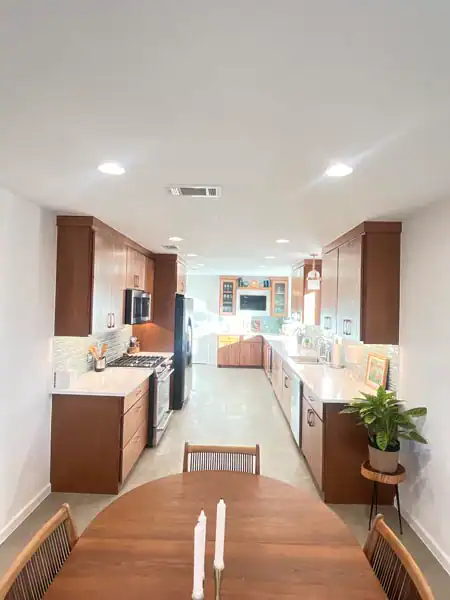
You stop fighting with cabinets that don’t close. Your countertops have room to breathe. Storage makes sense because someone actually planned where things go.
That’s what happens when a kitchen remodeling contractor maps out your space before tearing into walls. You’re not just getting new cabinets—you’re getting a layout that matches how you actually cook, not how a builder thought you might cook 20 years ago.
Most homeowners in Berkshire reach out when their kitchen stops working for them. Appliances are outdated. Storage is a mess. The layout forces you to walk in circles just to make coffee. A proper kitchen renovation fixes the function first, then makes it look good. Both matter, but only one of them affects your daily routine.
The return on investment sits between 60% and 80% depending on finishes and scope. But before you think about resale value, think about the next five years. That’s how long you’ll be using this space every single day.
We’ve been handling kitchen remodeling projects across Tarrant County for over 30 years. That’s more than 400 local projects, most of them within a 20-mile radius of Berkshire.
We’re BBB accredited, licensed, insured, and we don’t subcontract out the critical work. You get one point of contact, one timeline, and one team that shows up when they say they will. No hidden fees means the number we give you at the start is the number you pay at the end.
Berkshire homeowners deal with the same issues we see across Arlington and Fort Worth—older homes with kitchens that weren’t designed for how people live now. Tight layouts. Wasted corners. Cabinets that made sense in 1985 but don’t hold modern appliances. We’ve seen it enough times to know what works and what doesn’t.
First, we walk your space and listen. You tell us what’s broken, what’s annoying, and what you wish worked better. We measure everything and take notes on plumbing, electrical, and structural constraints.
Then we build a digital design so you can see the layout before we touch a single cabinet. This is where you make changes—not halfway through demo when it’s expensive and disruptive. We price it out with a fixed number, no surprises, and give you a timeline that accounts for inspections and material lead times.
Once you approve, we handle permits and coordinate the work. Demo happens first, then rough-in for plumbing and electrical if you’re moving things around. Cabinets go in, countertops get templated and installed, then backsplash, fixtures, and final inspections.
You’re not managing six different contractors. We do that. You get updates, and you get a finished kitchen that works the way you need it to. Most projects in Berkshire take four to eight weeks depending on scope, and we don’t leave until you’re satisfied with the result.
Ready to get started?
Kitchen remodeling services cover more than swapping cabinets. You’re reconfiguring a space that has plumbing, electrical, ventilation, and structural components that all need to work together.
Cabinet installation includes removal of old units, prep work on walls, and installation of new cabinetry with proper leveling and anchoring. Countertops get templated after cabinets are in, then fabricated and installed with cutouts for sinks and cooktops. Backsplash tile goes up after countertops are set.
If you’re upgrading appliances, that means coordinating electrical and plumbing rough-in before walls close up. Adding a pantry or reconfiguring an island means framing, drywall, and sometimes moving outlets or switches. Flooring usually happens toward the end unless we’re matching existing floors in adjacent rooms.
In Berkshire, most homeowners upgrade to wood cabinets, quartz or granite countertops, and add features like pull-out organizers or built-in pantry cabinets. Nearly 91% of kitchen remodels include countertop upgrades, and 85% include new backsplashes. These aren’t luxuries—they’re the baseline for a functional modern kitchen.
We also handle permits and inspections, which matter more than most people realize. Tarrant County has specific codes for electrical, plumbing, and ventilation. Skipping permits might save money up front, but it creates problems when you sell or if something goes wrong.
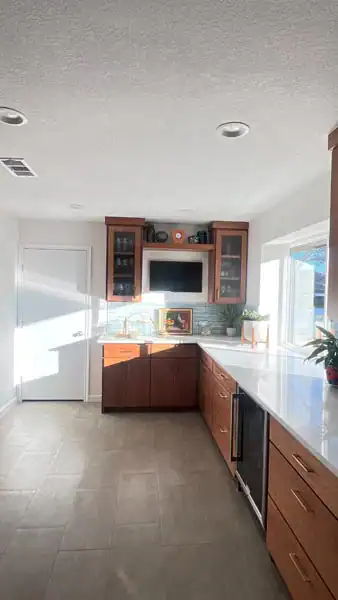
Minor kitchen renovations in the Berkshire area typically run around $20,000. That covers cabinet refacing or replacement, countertop upgrades, new backsplash, and updated fixtures without major layout changes.
Major remodels that involve moving plumbing, reconfiguring layouts, or expanding space average $55,000. Larger kitchens over 250 square feet can hit $75,000 when you’re doing a full gut and rebuild with high-end finishes.
The range is wide because every kitchen is different. Your costs depend on the size of the space, how much you’re changing the layout, what materials you choose, and whether you’re upgrading appliances. We give you a fixed-price estimate after walking your space so you know exactly what you’re spending before work starts.
Most kitchen remodeling projects in Berkshire take four to eight weeks once we start demo. Smaller updates with no layout changes can finish in three to four weeks. Full remodels with plumbing and electrical work take closer to eight weeks.
Delays happen when materials are backordered, inspections get rescheduled, or we find unexpected issues behind walls. We build buffer time into the schedule and keep you updated if anything shifts.
The timeline also depends on how quickly you make design decisions. Picking cabinets, countertops, tile, and fixtures up front keeps the project moving. Changing your mind mid-project adds time because materials have to be reordered and work gets paused.
Yes, and it’s often the smartest move if your layout already works. Keeping plumbing and electrical in place saves money and shortens the timeline because you’re not tearing into walls or rerouting lines.
You can still upgrade cabinets, countertops, backsplash, lighting, and appliances without moving a single pipe. A lot of Berkshire kitchens just need better storage, updated finishes, and appliances that actually work. That doesn’t require a full gut.
If your layout is the problem—if you’re walking in circles or fighting for counter space—then it makes sense to reconfigure. But we don’t push layout changes unless they solve a real problem. Sometimes a fresh coat of paint on the walls and new cabinet doors make a bigger difference than you’d think.
If you’re doing any electrical, plumbing, or structural work, yes. Tarrant County requires permits for anything beyond cosmetic updates like painting or replacing cabinet doors.
Moving a sink, adding outlets, relocating appliances, or removing walls all trigger permit requirements. Inspections happen at rough-in and final stages to make sure everything meets code.
Skipping permits is risky. If something goes wrong—a leak, an electrical fire, a structural issue—your insurance might not cover it. And when you sell, unpermitted work can kill a deal or force you to bring everything up to code at your expense. We handle permits as part of the project so you don’t have to worry about it.
Kitchen remodels return 60% to 80% of what you spend, depending on the scope and quality of finishes. Minor updates with cosmetic changes deliver closer to 80%. Major remodels with layout changes and high-end materials sit around 60%.
But ROI isn’t the only reason to remodel. If you’re planning to stay in your home for the next five to ten years, you’re investing in your own quality of life. A kitchen that functions better makes daily routines easier, and that’s worth something even if it doesn’t show up in resale value.
In Berkshire and the surrounding Tarrant County area, updated kitchens sell faster and attract more buyers. Outdated kitchens with laminate countertops and old appliances turn people away. Even if you’re not selling soon, keeping your home competitive matters if your plans change.
If your layout works and you just want updated finishes, you need a minor remodel. That means new cabinets or refacing, updated countertops, fresh backsplash, new fixtures, and maybe new appliances. No walls move, no plumbing gets rerouted.
If your kitchen doesn’t function—if you’re constantly fighting the layout, running out of counter space, or dealing with a design that makes cooking harder than it should be—you need a major remodel. That involves reconfiguring the space, moving plumbing or electrical, possibly removing walls or adding storage.
We’ll walk your kitchen and tell you what makes sense. Sometimes homeowners think they need to gut everything when a few smart updates would solve the problem. Other times, minor changes won’t fix a layout that’s fundamentally broken. We’re not here to upsell you—we’re here to give you a kitchen that actually works.