
Hear from Our Customers
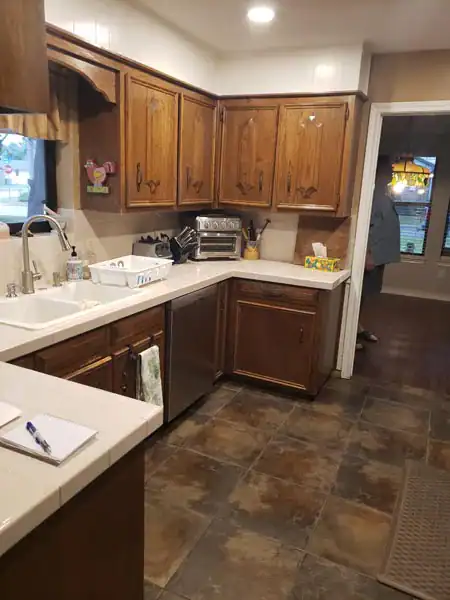
You’re working around dead space. Dodging cabinet doors that won’t stay closed. Running out of counter space before you’ve even started cooking.
Most Arlington Heights homeowners wait years before doing anything about it. They assume kitchen remodeling means months of chaos, blown budgets, and contractors who stop returning calls halfway through the job.
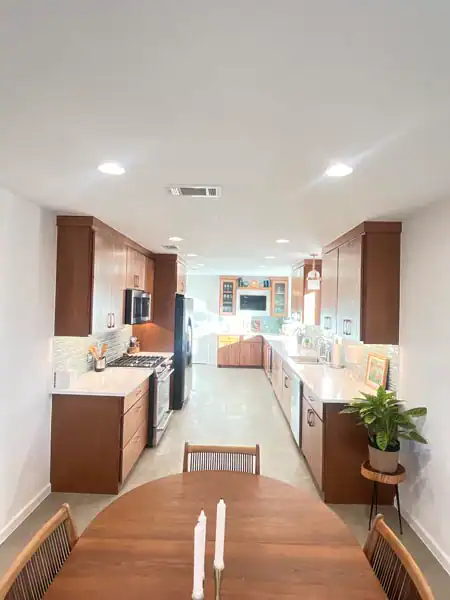
Here’s what actually happens when the project’s done right. You walk into a kitchen that makes sense. Cabinets that close. Enough counter space to prep a meal without playing Tetris with your cutting board. Storage where you actually need it.
The layout works with how you cook, not against it. Appliances that don’t fight each other for outlet space. Lighting that doesn’t leave half the room in shadow. A space that doesn’t make you think about what needs fixing every time you walk in.
That’s not a luxury. That’s what a functional kitchen renovation should deliver.
We’ve been handling kitchen remodeling projects across Tarrant County since before most of the current Arlington Heights subdivisions were built. That’s over 30 years of pulling permits, managing inspections, and dealing with the same building codes you’re about to navigate.
We’re not a crew that shows up, tears out your cabinets, and disappears for two weeks. You get one project manager. One timeline. One estimate that doesn’t change unless you change the scope.
Every contractor on your project carries the proper license and insurance for their trade. We handle the permit process, coordinate inspections, and clean up daily so you’re not living in a construction zone longer than necessary. Arlington Heights homeowners don’t hire us because we’re cheap—they hire us because we show up when we say we will and finish what we start.
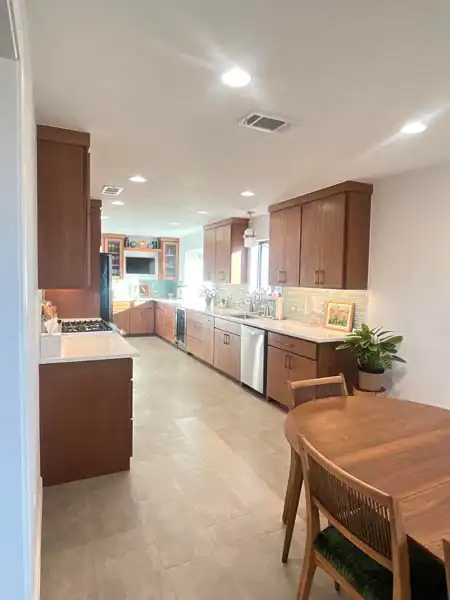
First, we walk your space and listen to what’s not working. You tell us what you’re dealing with—not enough storage, bad layout, outdated appliances—and we map out what’s possible within your budget.
Then you see the design before we touch a single cabinet. We use digital design technology so you’re not guessing what the finished kitchen will look like. You’ll know where everything goes, what it costs, and how long it takes. That estimate is your final price unless you request changes.
Once you approve the design, we pull permits and schedule the work. You get a project timeline upfront with each phase mapped out. Demo, electrical, plumbing, cabinetry, countertops, flooring—we coordinate all of it so you’re not juggling five different contractors.
Most kitchen remodeling projects in Arlington Heights take 6-8 weeks, but we plan for 10-12 to account for material delays and inspection schedules. You’ll get progress updates throughout, and we clean up at the end of each day. When we’re done, we walk the space together to make sure everything works the way it should.
Ready to get started?
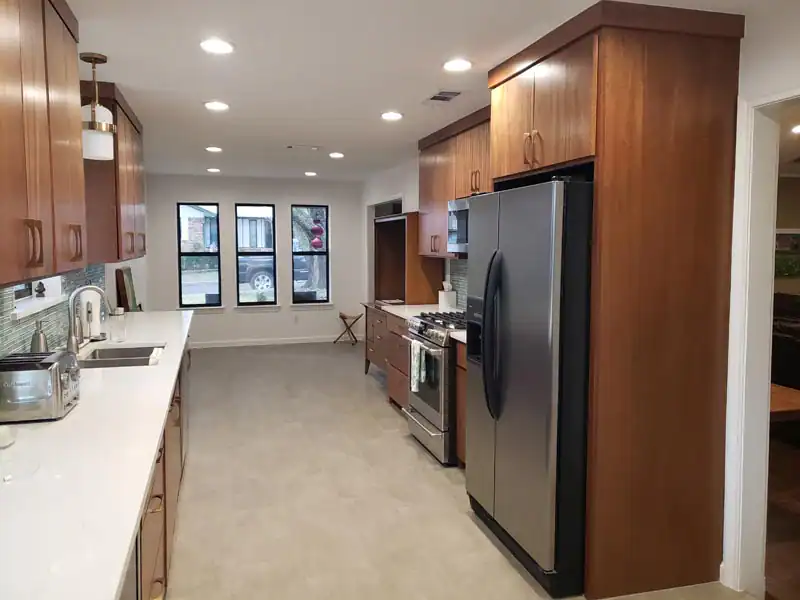
Your kitchen remodeling service covers everything from layout redesign to final finishes. That includes cabinet removal and installation, countertop fabrication and installation, electrical work for new lighting and appliances, plumbing adjustments for sinks and dishwashers, flooring installation, and backsplash tile work.
In Arlington Heights, most homeowners spend between $100 and $250 per square foot depending on materials and layout complexity. A typical project runs $12,800 to $21,200, though larger kitchens with high-end finishes can reach $36,900. We follow the 10-15% rule: your kitchen renovation should cost no more than 10-15% of your home’s current value. For a $300,000 home in Arlington Heights, that means a $30,000 to $45,000 budget makes sense.
The return on investment matters too. Mid-range kitchen remodels in Tarrant County typically add $20,000 to $40,000 in home value. Texas shows a 113% ROI on minor kitchen remodels—the highest return of any interior renovation project.
Current trends in Arlington Heights lean toward multi-color cabinetry, with navy islands contrasting lighter perimeter cabinets. Stained wood finishes are replacing the all-white painted look that dominated the last decade. Homeowners are also adding touchless faucets, smart lighting, and appliances that actually make daily tasks easier instead of just looking impressive in photos.
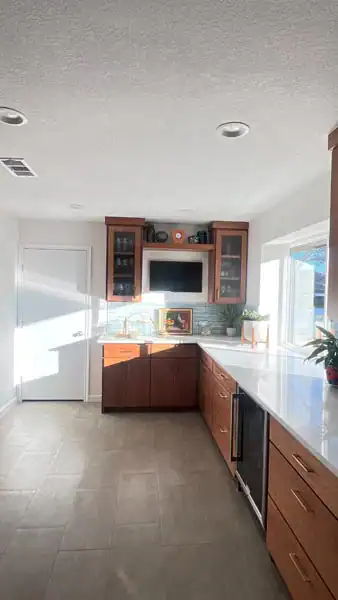
Most kitchen renovations take 6-8 weeks from demo to final walkthrough. That’s the realistic timeline if materials arrive on schedule and inspections don’t get delayed.
But you should plan for 10-12 weeks. Material delays happen, especially with custom cabinetry and countertops. Inspections can push timelines back if the inspector’s schedule is full. Unexpected issues—old plumbing that needs replacing, electrical that’s not up to code—add time too.
Here’s what eats up the most time: cabinet delivery and installation usually takes 2-3 weeks once they arrive. Countertop fabrication adds another 1-2 weeks after cabinets are in. Tile work for backsplashes takes 3-5 days depending on the pattern. Each phase has to finish before the next one starts, so delays compound quickly.
Kitchen remodeling costs in Arlington Heights typically run $100 to $250 per square foot. Most homeowners spend between $12,800 and $21,200 for a mid-range renovation. Larger kitchens with premium materials can reach $36,900.
Your budget should follow the 10-15% rule: don’t spend more than 10-15% of your home’s current value on a kitchen renovation. If your Arlington Heights home is worth $300,000, your kitchen budget should land between $30,000 and $45,000. Go beyond that and you’re over-improving for the neighborhood.
Here’s where the money goes: cabinetry takes 30-40% of your budget. Countertops and installation run 10-15%. Appliances eat another 15-20%. Labor for electrical, plumbing, and installation makes up 20-25%. The remaining 10-15% covers flooring, backsplash, lighting, and finishing details. Plan for a 10% contingency too—something always comes up once walls are opened.
Yes, if you’re moving plumbing, adding electrical circuits, or changing the layout. Arlington Heights requires permits for any work that affects structural, electrical, or plumbing systems. Even replacing a sink in a different location needs a plumbing permit.
You don’t need permits for cosmetic updates—painting cabinets, replacing countertops in the same footprint, or swapping appliances without moving gas or electrical lines. But the moment you start moving walls, adding outlets, or rerouting plumbing, you’re in permit territory.
Skipping permits creates problems when you sell. Home inspectors flag unpermitted work, and buyers either walk or demand price reductions to cover bringing everything up to code. Insurance can deny claims if unpermitted work caused damage. We pull all required permits and handle inspections so your project stays compliant with Tarrant County building codes.
Start with licensing and insurance. Every contractor working on your kitchen should carry proper licensing for their specific trade—electrical, plumbing, general contracting. Ask for proof of insurance too. If someone gets hurt on your property and they’re not insured, you’re liable.
Check recent references, not just online reviews. Talk to homeowners who finished projects in the last six months. Ask about communication, timeline accuracy, and how the contractor handled problems. Every renovation hits snags—what matters is how they respond when things go wrong.
Get a detailed written estimate that breaks down materials, labor, and timeline. Vague estimates lead to budget overruns. You should know exactly what’s included, what’s not, and when each phase happens. Compare at least three estimates, but don’t automatically pick the lowest bid. The cheapest contractor usually cuts corners somewhere—materials, labor quality, or project timeline. You’re better off paying more upfront than dealing with shoddy work that needs fixing later.
Mid-range kitchen remodels in Tarrant County typically return $20,000 to $40,000 in added home value. Texas shows a 113% ROI on minor kitchen remodels—the highest return of any interior renovation project. That means you can actually recoup more than you spend if you keep the project scope reasonable.
Minor remodels deliver better ROI than major overhauls. Replacing cabinet doors, updating countertops, adding a tile backsplash, and installing new appliances gives you the biggest value bump per dollar spent. Gut renovations with custom cabinetry and high-end finishes look impressive but rarely return the full investment unless you’re in a luxury market.
Location matters too. Arlington Heights home values have climbed steadily, so kitchen updates hold their value better than in stagnant markets. But don’t over-improve for your neighborhood. If comparable homes in your area sell for $300,000, sinking $75,000 into a kitchen remodel won’t get that money back. Stick to the 10-15% rule and focus on updates that match what buyers expect in your price range.
Yes, but it requires planning. You won’t have a functioning kitchen for 6-8 weeks, so you need a temporary setup. Most Arlington Heights homeowners set up a makeshift kitchen in another room—microwave, toaster oven, coffee maker, and a mini fridge. Plan on eating out more and budget for the extra takeout expenses.
Water and power get shut off periodically during plumbing and electrical work. You’ll get advance notice, but expect a few days where you can’t use the kitchen sink or certain outlets. Dust travels too, even with plastic barriers. Cover furniture in adjacent rooms and plan for extra cleaning.
Noise is the other factor. Demo work, tile cutting, and cabinet installation are loud. If you work from home, establish quiet hours with your contractor or plan to work elsewhere during the noisiest phases. We clean up daily so you’re not tracking construction debris through the rest of your house, but living through a renovation still means dealing with some level of disruption until the project wraps.